
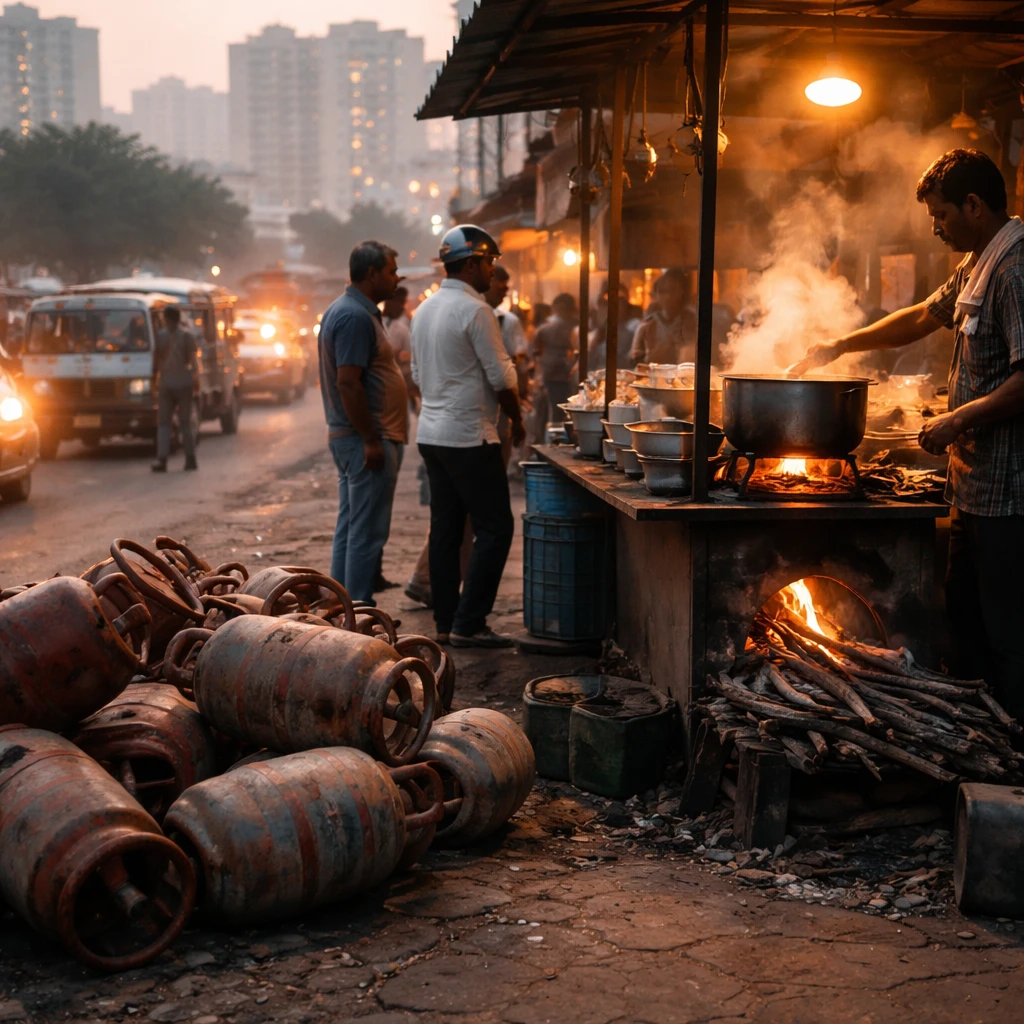
The ongoing month-long conflict in the Persian Gulf and the concurrent closure of the Strait of Hormuz have produced a concentrated LPG shortage across India, rippling from import terminals into everyday kitchens and small-scale businesses.
Shipments have been constrained; only a small number of LPG vessels have reached Indian ports this month, providing coverage that authorities say amounts to just a few days of national demand. That limited inflow has immediately altered fuel choices on city streets. In New Delhi, vendors and compact restaurants have abandoned LPG-powered stoves and turned to kerosene, coal or firewood to prepare food.
Those substitutions come at a price. The cost of preparing basic meals has risen sharply, and the economic pressure is particularly acute for urban laborers who rely on inexpensive street food. Traders and households report that the price of a typical roadside meal in the capital has climbed by 25% in a single month. At the same time, black-market activity has intensified, with reports that LPG cylinder prices in shadow markets have risen to roughly four times normal levels for some low-income families.
Industrial and commercial users are feeling the strain as well. Fuel-related price increases are filtering into sectors linked to food service and hospitality. Large vegetable oil buyers such as Patanjali Foods Ltd. (NSE: PATANJALI) have noted a marked fall in vegetable oil demand as restaurants scale back fried items and families reduce wedding guest lists to contain higher operating costs.
New Delhi's government has responded with several immediate measures. Officials have invoked emergency powers to direct refineries to prioritize domestic LPG output. Parallel efforts to migrate consumers to Piped Natural Gas (PNG) have been stepped up, with officials reporting an installation rate of 10,000 new PNG connections per day. The combination of increased local supply and accelerated PNG connections currently addresses about 60% of national LPG demand, according to government statements.
Despite those moves, the commercial sector has been largely deprioritized as the state directs constrained supplies toward households. Enforcement activity has also intensified: authorities have carried out over 3,000 raids this month seeking to disrupt hoarding and curb black-market distribution.
Official economic data have not yet fully captured the depth of the disruption. Anecdotal reports point to possible secondary effects, including the potential for some urban workers to return to rural homes as living costs rise in cities. The medium-term course of the shortage will hinge on how quickly domestic production can be increased and alternative fuel channels can be stabilized. Until maritime routes in the Middle East return to normal, the elevated risks to India's manufacturing and services sectors are likely to exert downward pressure on regional growth forecasts.