
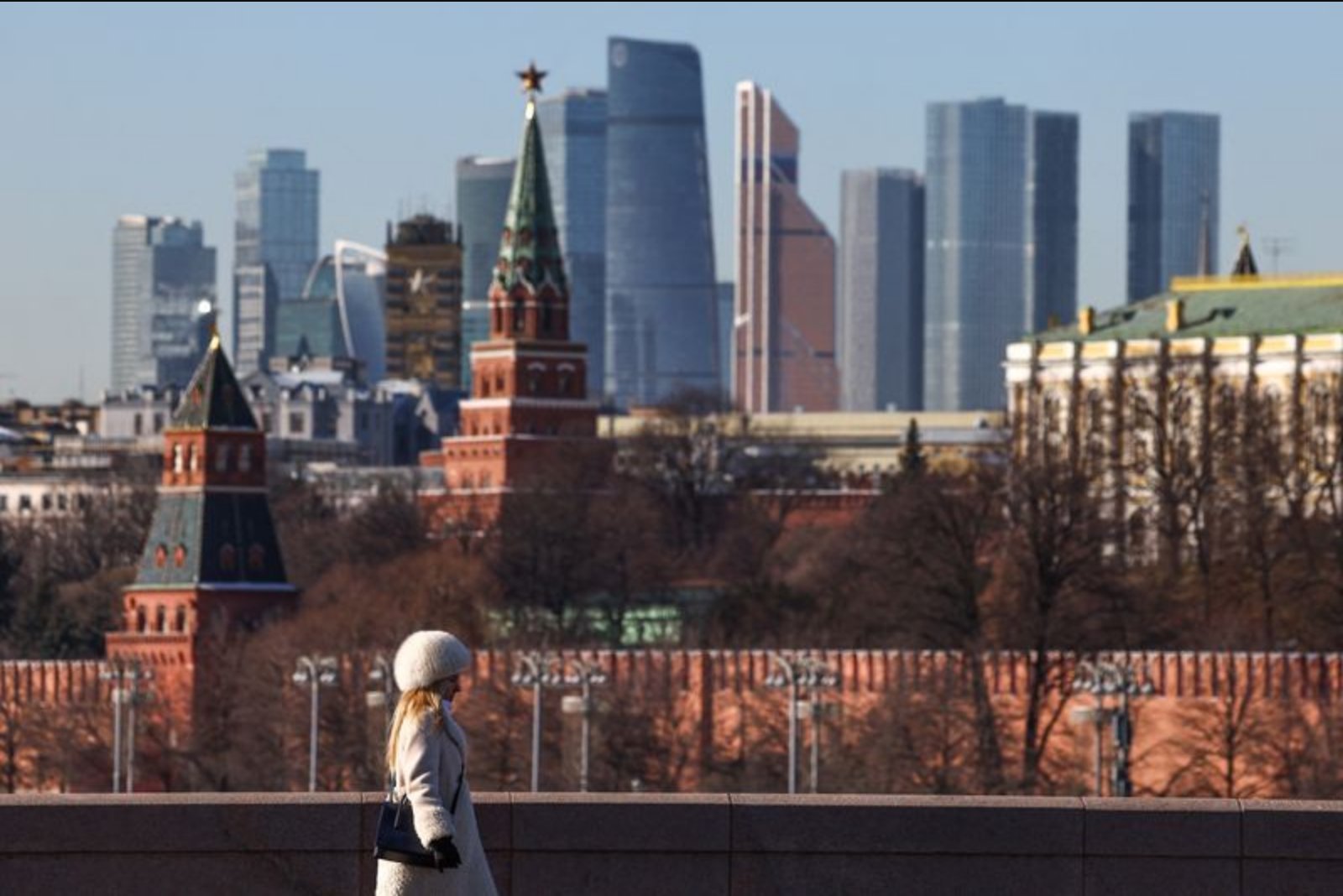
The Kremlin on Tuesday insisted that measures introduced by the government had preserved economic stability, despite revised official projections that substantially reduced expected GDP growth for the next two years.
New figures from the Economy Ministry trimmed the estimated expansion for 2026 to 0.4% from an earlier 1.3%, and lowered the 2027 forecast to 1.4% from 2.8%. Deputy Prime Minister Alexander Novak said growth was expected to reach 2.4% in 2029.
Kremlin spokesman Dmitry Peskov told reporters that President Vladimir Putin remained closely involved in economic decision-making and that, notwithstanding turbulence in global markets driven by the conflict in the Middle East, Russia could "talk confidently" about macroeconomic stability. Peskov said another meeting with government officials on economic matters was expected later in the week.
"Thanks to the measures being implemented by our government, we can confidently speak about macroeconomic stability and promising plans to modestly, but steadily, increase economic growth rates year after year," Peskov said.
Russia's economy, valued at about $3 trillion, contracted by 0.3% in the first quarter, marking the first quarterly decline since early 2023. Officials tied the downturn to a mix of factors cited in government commentary: the war in Ukraine, Western sanctions, high interest rates, tax increases implemented at the start of the year, and deep discounts on Russian oil related to Western sanctions.
President Putin had previously directed the government to ensure growth resumed in 2026, and last month he expressed frustration with senior officials over slowing growth, instructing them to develop new measures to support the economy. Despite that pressure, Peskov ruled out immediate changes to the government prompted by the recent slowdown, observing that the global economy was itself experiencing a volatile period.
The Kremlin's public framing emphasized continuity - pointing to coordinated policy steps and presidential oversight as the basis for its assessment of stability even as official forecasts were pared back. Officials are scheduled to meet again this week to discuss the economic outlook.
For sectors sensitive to the developments referenced by officials, the combination of lower growth projections, persistent sanctions-related oil discounts and higher borrowing costs is likely to influence decision-making across energy and financial markets, and in areas dependent on domestic demand. The government narrative underscores a stated intent to pursue modest, steady growth increases over successive years while managing external and domestic headwinds.