
Economy February 1, 2026

Johnson Says GOP Can End Partial Government Shutdown by Tuesday

Speaker cites lingering travel disruptions but expects funding for most agencies while DHS remains under negotiation

By Leila Farooq
Johnson Says GOP Can End Partial Government Shutdown by Tuesday

House Speaker Mike Johnson told NBC’s Meet the Press that he believes he has enough Republican votes to end a partial federal shutdown by at least Tuesday, while acknowledging logistical hurdles arising from travel disruptions after a southeastern U.S. snowstorm. The Senate has already approved a spending measure that would fund agencies outside the Department of Homeland Security (DHS) while lawmakers negotiate new restrictions on immigration agents.

Key Points

  • Speaker Mike Johnson said he expects to end the partial government shutdown by at least Tuesday, pending lawmakers returning to Washington (Impacted sectors: federal government operations, economy).
  • The Senate approved a spending measure that separates Department of Homeland Security funding, permitting agencies such as the Pentagon and the Department of Labor to be funded while DHS provisions are negotiated (Impacted sectors: defense, labor, federal services).
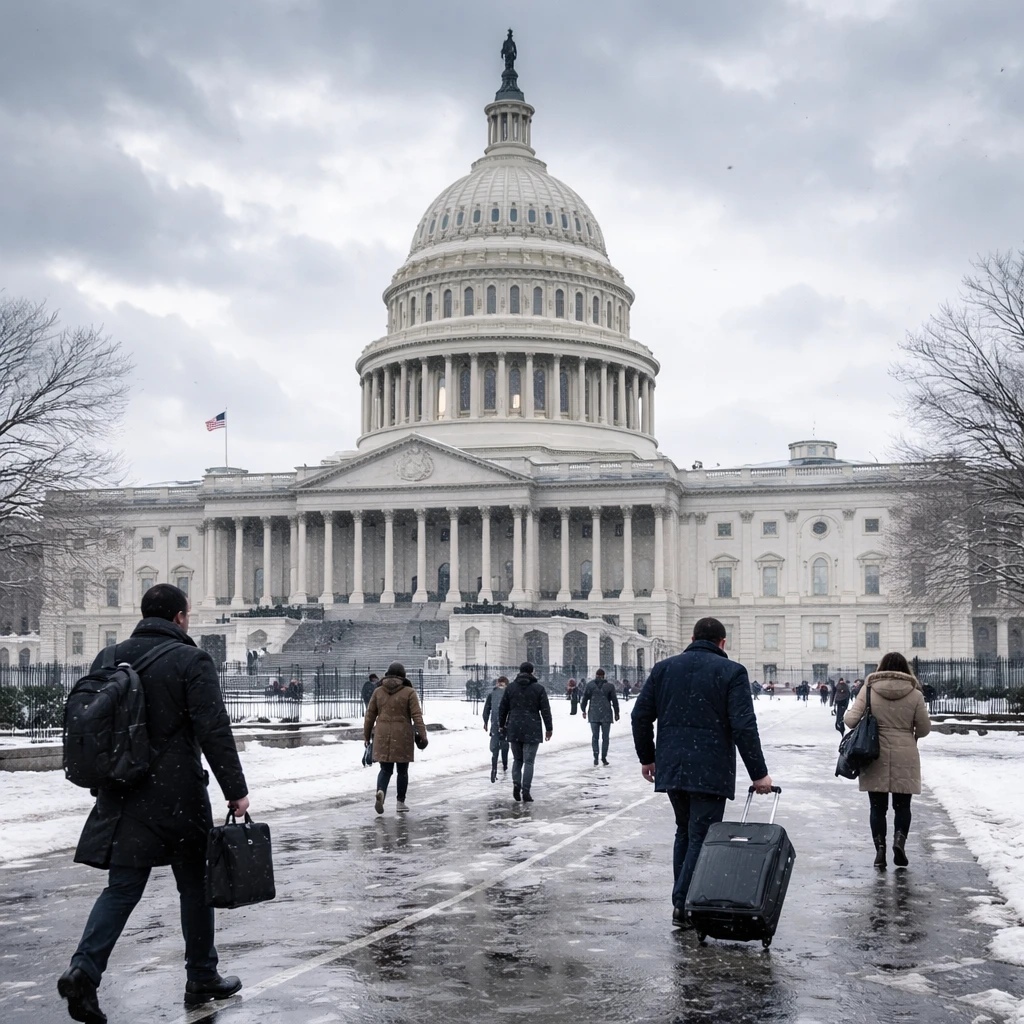
  • Travel disruptions after a southeastern U.S. snowstorm are creating logistical challenges in getting members to Washington, potentially delaying action (Impacted sectors: transportation, timing of government funding).

WASHINGTON, Feb 1 - House Speaker Mike Johnson said in an interview on NBC’s Meet the Press that he expects to secure Republican support to lift a partial government shutdown by at least Tuesday. "I’m confident that we’ll do it at least by Tuesday. We have a logistical challenge of getting everyone in town," he said, noting ongoing transport problems that followed a snowstorm in the southeastern U.S.

The partial shutdown began on Saturday after Congress failed to approve a funding deal. The Senate on Saturday passed a spending measure by a wide margin, but the House was out of town when the government entered what officials described as a shutdown expected to be brief.

The Senate-approved approach would separate the Department of Homeland Security from the remainder of the spending package. That separation would allow lawmakers to approve funding for agencies including the Pentagon and the Department of Labor while new restrictions are considered for federal immigration agents. Those restrictions were prompted by public uproar following the shootings of two U.S. citizens in Minneapolis.

Lawmakers from both parties have been working to prevent a debate over immigration enforcement from disrupting funding for other government operations. That posture contrasts with last autumn, when disputes over healthcare led both parties to harden positions and produce a shutdown that lasted 43 days and cost the U.S. economy an estimated $11 billion.

Johnson described the plan as a near-term fix with a pathway to further negotiation. He said "our intention" is to fund all agencies except DHS by Tuesday, and then enter two weeks of "good faith negotiation to figure it out." The speaker emphasized that the primary immediate obstacle is logistical - getting members back to Washington amid transportation constraints - rather than political arithmetic.

With the Senate having approved legislation and the House preparing to reconvene, the outlook set by Johnson hinges on lawmakers returning despite weather-related travel issues. The coming days will determine whether the temporary gap in funding is closed quickly or whether unresolved differences over DHS provisions prolong disruptions to federal programs.


Summary

Speaker Mike Johnson says he has the votes to end a partial shutdown by Tuesday, subject to lawmakers returning to Washington amid travel delays. The Senate voted to separate DHS funding from other agencies so those agencies can be kept operational while negotiations continue on immigration-enforcement measures.

Risks

  • Transport and logistical delays from the southeastern snowstorm could postpone the House vote and extend the partial shutdown (Impacted sectors: transportation, federal government services).
  • A contentious debate over immigration enforcement and DHS provisions could disrupt approval of funding for other agencies if not contained (Impacted sectors: Department of Homeland Security, immigration enforcement, defense, labor).
  • If DHS funding remains unresolved after the short-term measure, federal agencies and programs could face ongoing uncertainty or service interruptions (Impacted sectors: federal services, economy, defense).

More from Economy

France’s 2026 Budget Clears Parliament After Concessions, Targets 5% Deficit Feb 2, 2026 Cboe Holds Early Talks to Bring Binary Options Back to Retail Traders Feb 2, 2026 Administration to Build $12 Billion Critical Minerals Reserve to Shield U.S. Manufacturing Feb 2, 2026 Investors Pile Into Gold and Miner ETFs in January as Safety Demand Rises Feb 2, 2026 Economists Say Warsh Nomination Unlikely to Shift Fed Policy This Year Feb 2, 2026