
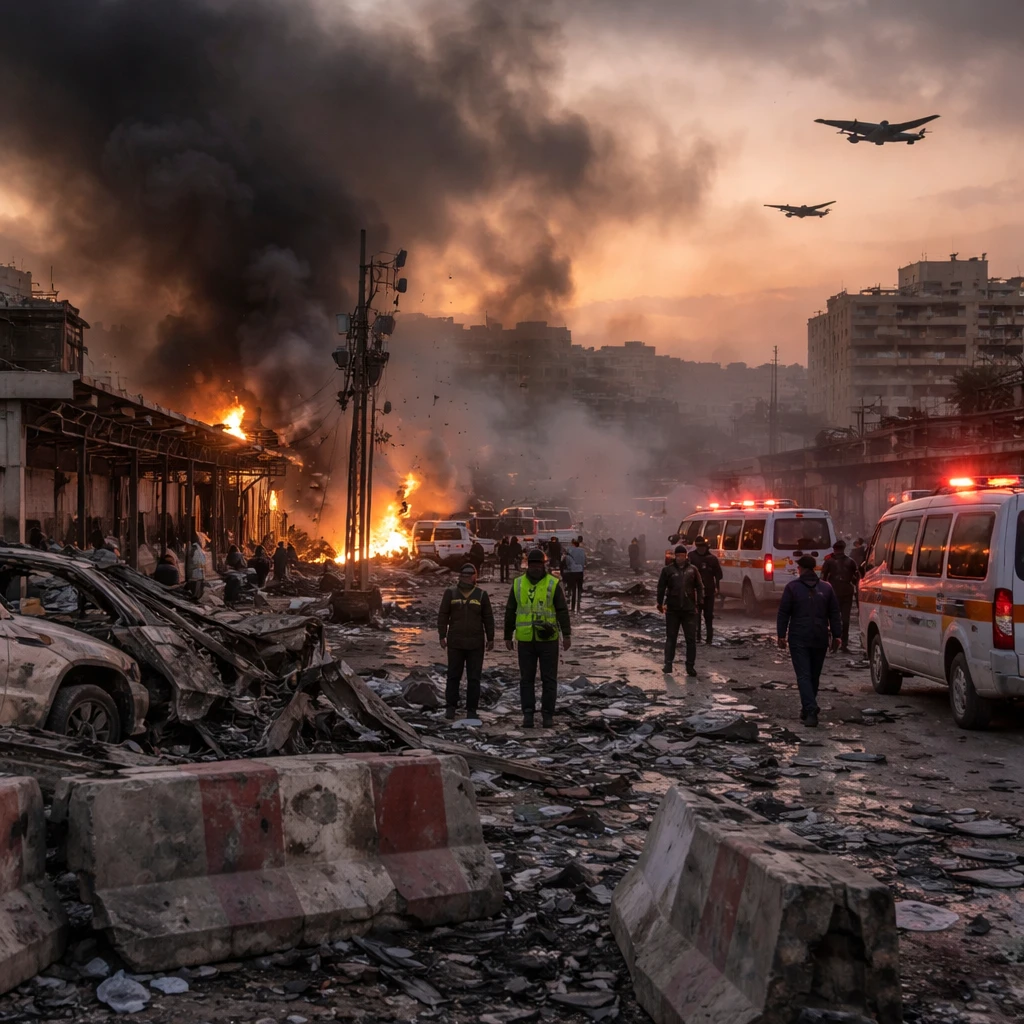
Two airstrikes carried out by Israeli forces hit locations in the southern Gaza Strip on Sunday, targeting checkpoints in Khan Younis manned by the Hamas-led police force, local health officials said. The strikes killed at least six people - three of them police officers and three identified as civilians.
The incidents amount to a fresh breach of a ceasefire agreement brokered by the United States and in effect for over five months. The attacks add to a tense security environment that has implications for regional stability and international markets monitoring the situation.
The Israeli military did not immediately issue a comment on the Khan Younis strikes. Observers note that the flare-up emerges amid a substantially expanded regional conflict. Israel remains engaged on multiple fronts: the country is conducting operations directed at Iran and is also mounting a ground offensive against Hezbollah in southern Lebanon.
Health officials say that since the Iran-focused hostilities began one month ago, at least 50 Palestinians have been killed in Gaza. Those recent casualties contribute to what officials estimate as a total death toll in Gaza since October 2023 of more than 72,000.
Market participants and trade stakeholders are watching the situation closely because localized episodes of violence can drive up risk premia applied to energy shipments and transportation through Mediterranean and Middle Eastern routes. The persistence of fighting despite active diplomatic accords implies that a higher risk premium may continue to be attached to regional energy and transport costs.
Analysts and regional stakeholders are monitoring the resilience of diplomatic and ceasefire frameworks as Israeli military operations in Lebanon and Palestinian territories progress. Continued military activity raises questions about the prospects for broader de-escalation and the durability of existing agreements.
The immediate human toll from the Khan Younis strikes - six fatalities, including both officers and civilians - reflects the ongoing volatility across the area. Beyond the direct casualties, the broader pattern of hostilities and multi-front engagement by Israeli forces underscores persistent uncertainties for security, trade logistics, and energy market participants.
As events unfold, the combination of continued ceasefire breaches, expanding regional combat, and the potential for sustained disruptions to transport and energy routes leaves markets and policymakers facing elevated risks and difficult forecasts for the near term.