
Economy April 1, 2026

Iranian president issues open letter to Americans questioning U.S. priorities

Pezeshkian critiques U.S. portrayal of Iran and warns of motives behind labeling Tehran a threat

By Hana Yamamoto
Iranian president issues open letter to Americans questioning U.S. priorities

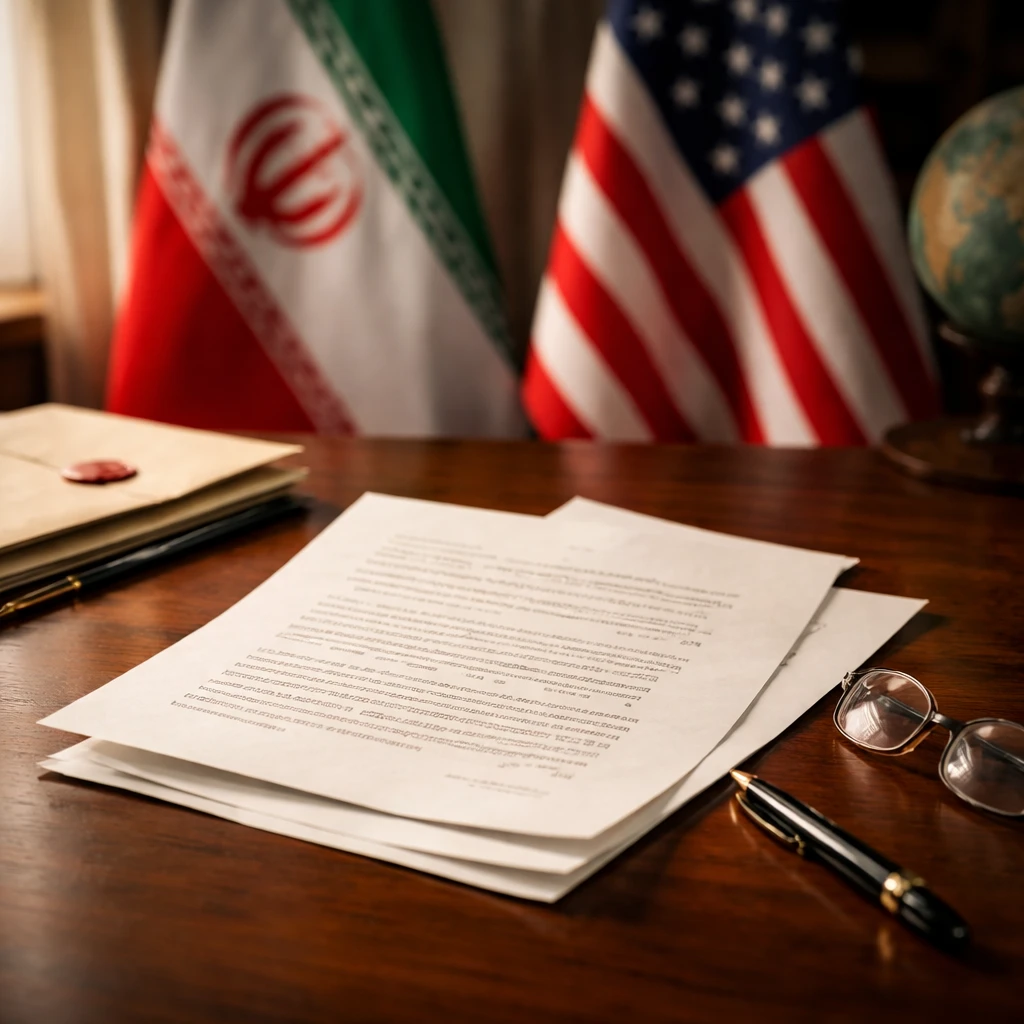
Iranian President Masoud Pezeshkian published an open letter directed to the American people that challenges U.S. foreign policy narratives, traces tensions back to the 1953 coup, and condemns recent attacks on Iranian infrastructure. The letter asserts Iran's peaceful stance toward other nations, highlights domestic advances in education and healthcare, and calls into question whether U.S. actions serve American interests as President Trump prepared to speak to the nation the same evening.

Key Points

  • Iranian President Masoud Pezeshkian published an open letter to Americans challenging the framing of Iran as a threat and tracing tensions to the 1953 coup - sectors impacted: defense and geopolitical risk-sensitive markets.
  • Pezeshkian highlighted Iran's domestic gains, noting literacy rose from 30% to over 90% and that higher education and healthcare services expanded - sectors impacted: healthcare and education-related markets.
  • The letter accuses the U.S. of acting to sustain the arms industry and control strategic markets and suggests U.S. policy may be influenced by other states - sectors impacted: defense manufacturers and strategic commodities markets.

Iranian President Masoud Pezeshkian released an open letter to the American public on Wednesday that questions prevailing U.S. foreign policy priorities and contests the depiction of Iran as a regional menace.

The letter arrived as President Trump prepared to address the American people on Wednesday evening. In his text, Pezeshkian traces the origins of U.S.-Iran tensions to the 1953 coup and condemns recent bombings targeting Iranian infrastructure.

Pezeshkian makes a distinction between governments and ordinary citizens, stating that Iran "harbors no enmity toward other nations, including the people of America." He frames the characterization of Iran as a threat as serving "political and economic whims of the powerful," arguing that such portrayals help "manufacture an enemy in order to justify pressure, maintain military dominance, sustain the arms industry, and control strategic markets."

Highlighting domestic developments, the Iranian president points to social gains since the Islamic Revolution, saying literacy has risen from 30% to over 90% and that higher education and healthcare services have expanded. He frames Iran's military behavior as restrained, describing it as a "measured response grounded in legitimate self-defense" rather than outright aggression.

In the letter, Pezeshkian presses the question of whether U.S. policies actually benefit American interests. He asks rhetorically whether actions such as "the massacre of innocent children, the destruction of cancer-treatment pharmaceutical facilities, or boasting about bombing a country 'back to the stone ages'" accomplish anything other than further harming the United States' global standing.

The message also accuses the United States of acting "as a proxy for Israel," claiming that Israel "seeks to divert global attention away from its crimes toward the Palestinians." He asks if Israel's objective is "to fight Iran to the last American soldier and the last American taxpayer dollar."

Pezeshkian closes by questioning whether "America First" remains the guiding priority of the U.S. government and urges Americans to "look beyond the machinery of misinformation" when forming views about Iran.


Context note: The letter was released publicly on Wednesday and coincided with a planned address by President Trump later that evening.

Risks

  • Continued public accusations and rhetoric could heighten geopolitical tensions, affecting defense spending and investor sentiment in arms-related industries - impacted sector: defense.
  • Statements condemning attacks on pharmaceutical facilities and healthcare infrastructure highlight risks to the healthcare and pharmaceutical sectors in conflict scenarios - impacted sector: healthcare/pharmaceuticals.
  • Persistent bilateral hostility and narratives of external manipulation may increase uncertainty in strategic markets and trade-sensitive sectors, potentially disrupting market stability - impacted sector: strategic markets.

More from Economy

U.S. military outlines operation to remove nearly 1,000 pounds of Iran's enriched uranium Apr 1, 2026 Rift Between Colombia Government and Central Bank Raises Stakes for Future Rate Decisions Apr 1, 2026 Pentagon Sends Additional A-10 Attack Aircraft to Middle East Amid Regional Tensions Apr 1, 2026 White House Threatened Ukraine Arms Cutoff to Pressure Europe on Hormuz, Report Says Apr 1, 2026 IEA, IMF and World Bank Launch Joint Coordination Group to Address Economic Fallout of Middle East War Apr 1, 2026