
Overview
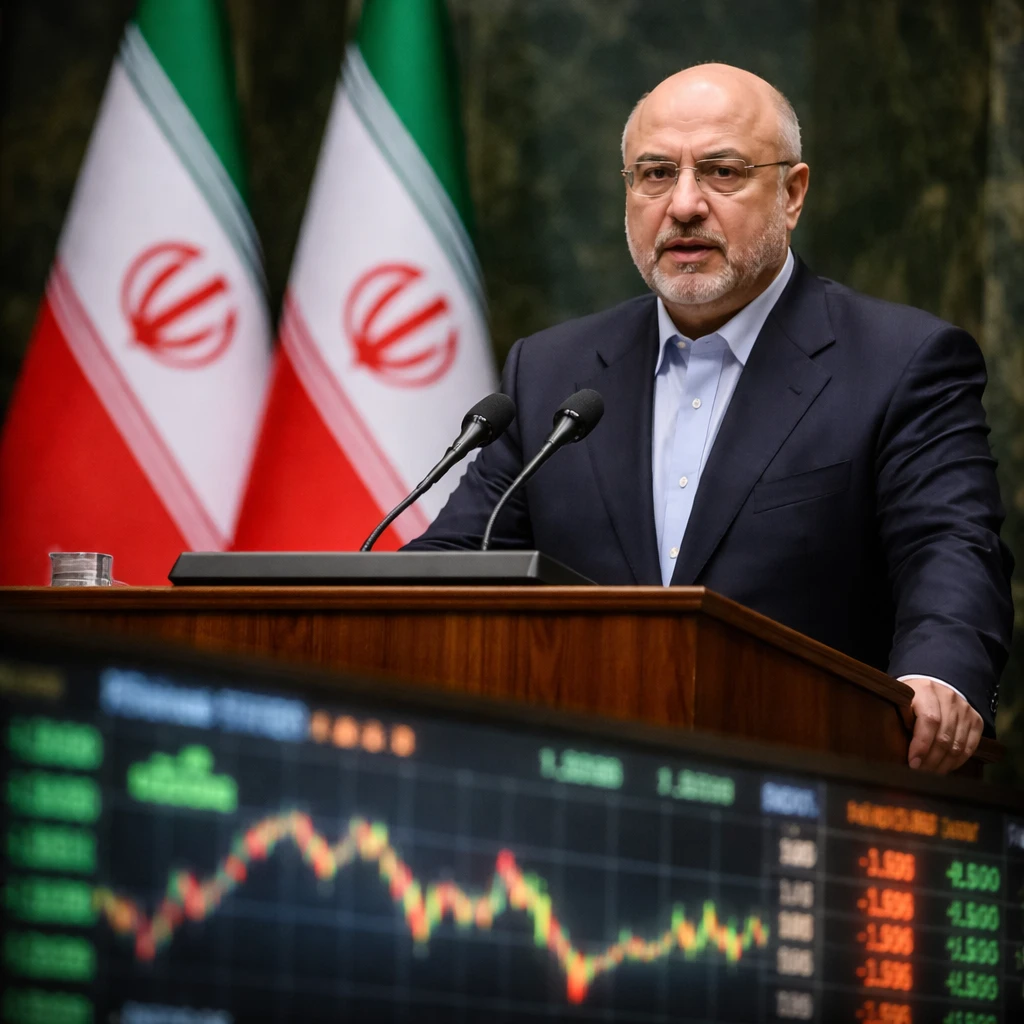
Iran’s Parliament Speaker Mohammad Bagher Ghalibaf on Monday denied that any negotiations have taken place with the United States, calling reports of discussions "fake news" and asserting such claims are being used to manipulate financial and oil markets.
Ghalibaf's statement
In a written statement Ghalibaf said: "No negotiations have been held with the US, and fakenews is used to manipulate the financial and oil markets and escape the quagmire in which the US and Israel are trapped." He also said the Iranian people demand the complete punishment of aggressors and that all officials stand firmly behind their Leader and people until this goal is achieved.
US comments and follow-up
The denial followed remarks by President Trump, who told reporters that his envoys had met with a senior official in the Iranian leadership and that the parties had reached agreement on many points. Trump additionally walked back his threat to strike Iran's power plants on Monday, saying the negotiations had been productive.
Separately, an Israeli official told Axios that US envoys Steve Witkoff and Jared Kushner had been speaking with Ghalibaf. Trump said he did not name the Iranian interlocutor because he did not want to put that person at risk, saying he did not want to get him killed.
Context and implications
Ghalibaf's public rejection frames the reports of talks as disinformation aimed at shifting market sentiment in oil and finance, and reiterates a political posture that calls for decisive action against perceived aggressors. The competing accounts - a US assertion of productive discussions and an Iranian denial - leave an unresolved public narrative about whether or how contact occurred.
Key points
- Mohammad Bagher Ghalibaf denied any negotiations with the US and labeled reports "fake news" used to affect financial and oil markets. (Sectors impacted: oil, financial markets)
- President Trump said his envoys met a senior Iranian official and claimed agreement on many points, and he rescinded a threat to strike Iranian power plants on Monday citing productive talks. (Sectors impacted: defense-related markets, oil)
- An Israeli official told Axios that US envoys Steve Witkoff and Jared Kushner had been speaking with Ghalibaf; Trump declined to name the Iranian contact to avoid endangering him. (Sectors impacted: diplomacy, geopolitical risk pricing)
Risks and uncertainties
- Conflicting public accounts create uncertainty about the existence and content of any talks, which can affect oil and financial market volatility. (Impacted sectors: oil, financial markets)
- Statements framed as "fake news" could intensify political rhetoric and complicate diplomatic channels, adding uncertainty for markets that price geopolitical risk. (Impacted sectors: markets sensitive to geopolitical risk)