
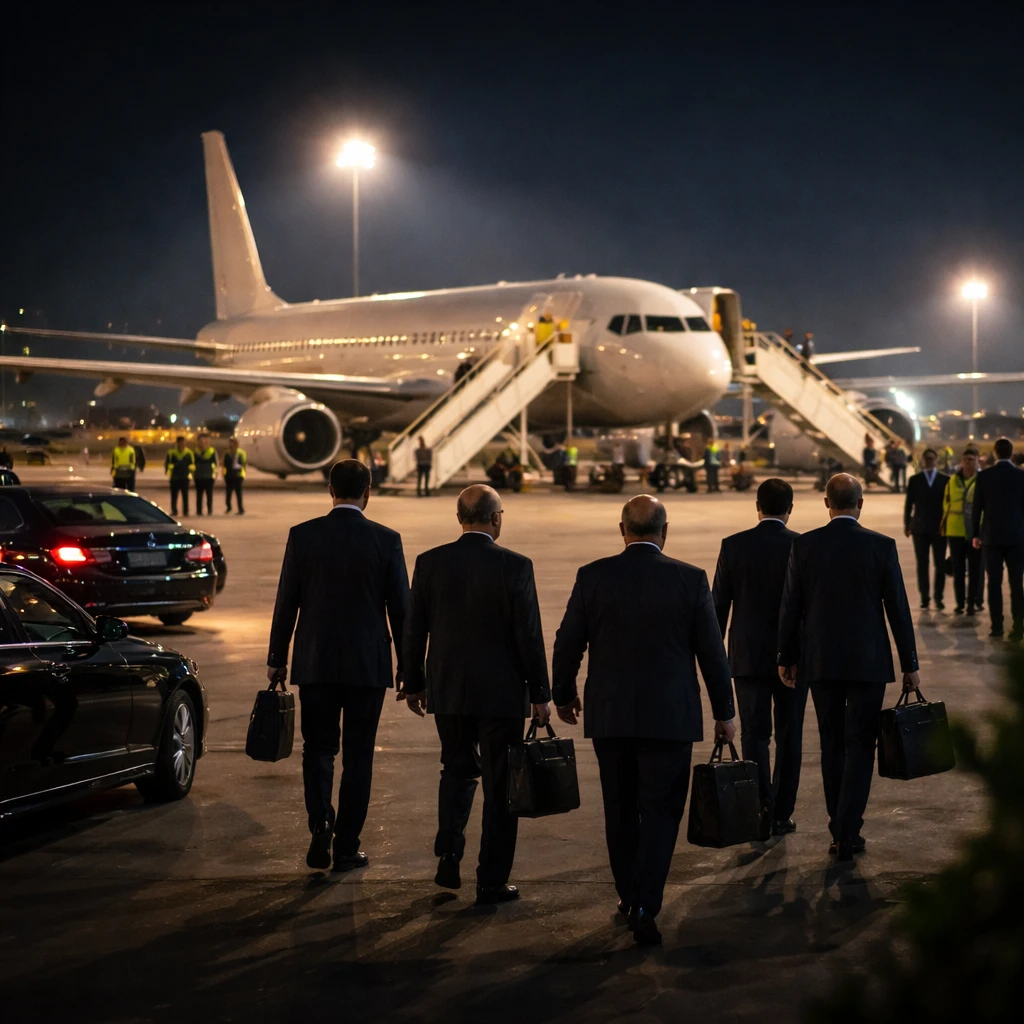
An Iranian delegation is expected to arrive in Islamabad on Friday night for talks with US officials scheduled for Saturday, Pakistani officials said. The delegation is to be headed by Iran's Foreign Minister Abbas Araghchi and Parliament Speaker Mohammad-Bagher Ghalibaf, according to a person familiar with the matter.
Washington will be represented at the meeting by Vice President JD Vance, special envoy Steve Witkoff and Jared Kushner, who is accompanying the US delegation, a US announcement indicated. The stated objective of the negotiations is to convert a ceasefire that was announced on Tuesday into a more durable peace arrangement.
The Iranian embassy in Islamabad did not immediately provide comment when contacted. Iran has not officially confirmed its participation in the talks; however, Iranian state media reported that Ghalibaf would lead negotiations on Tehran's behalf.
Observers and officials cautioned that the outcome of the weekend discussions is uncertain. Israel's continued military operations in Lebanon against targets linked to Iran-backed Hezbollah were cited as a complicating factor for the diplomatic process. In addition, US and Iranian officials remain divided over the terms required for a long-term ceasefire.
One specific point of contention identified by both sides is the virtual closure of the Strait of Hormuz, which remains a central sticking point in defining the parameters of any lasting agreement. That disagreement highlights the broader strategic differences that negotiators will confront during the talks.
With leaders and senior envoys converging in Islamabad, the coming 48 hours are likely to determine whether the current ceasefire can be institutionalized or whether further diplomatic effort will be required. For now, the presence of high-ranking Iranian and US figures underscores the significance both sides attach to attempting to stabilize the situation, even as operational and political hurdles remain.
Context note: Details in this article reflect official statements and reports available at the time and the limits of public confirmation from the parties involved.