
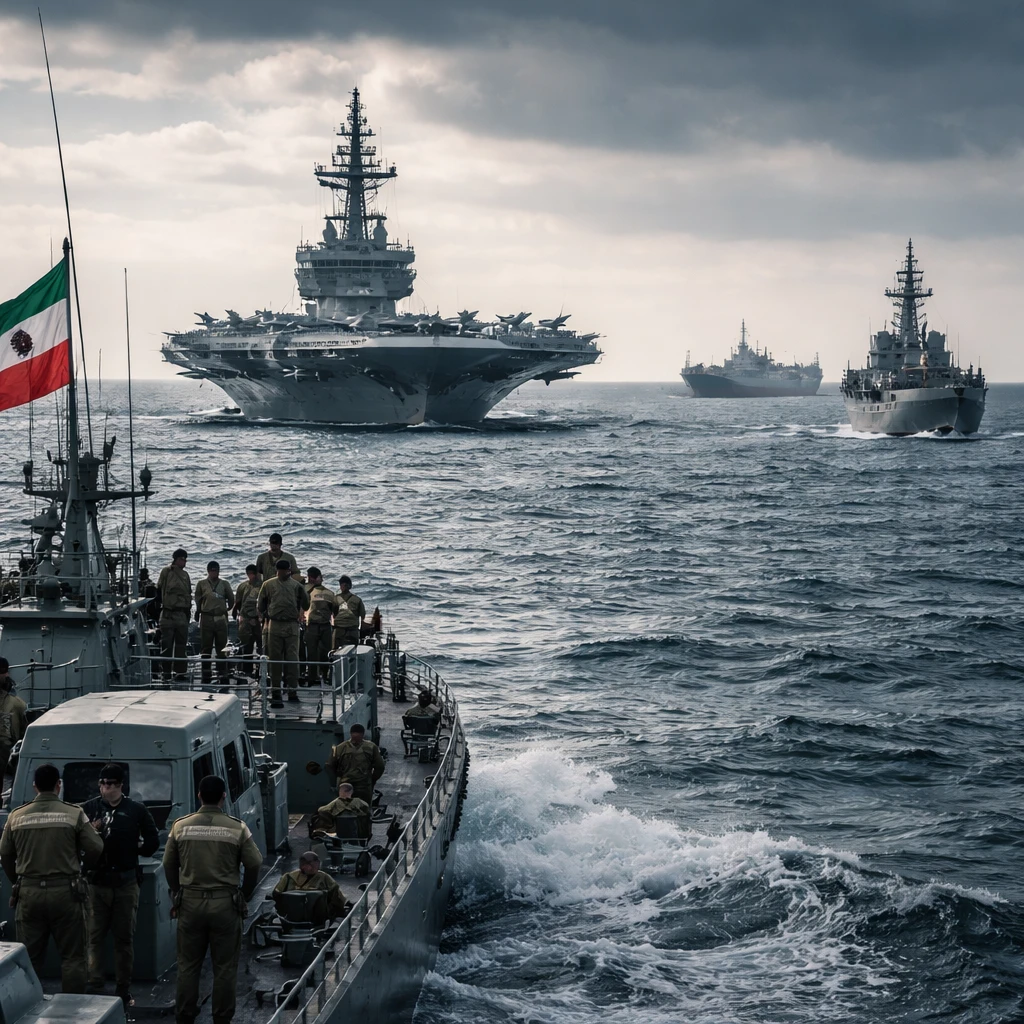
Iran has publicly cautioned France and Britain against deploying warships into the Strait of Hormuz alongside U.S. forces, saying its armed forces would deliver "a decisive and immediate response" if they did so. The warning came from Kazem Gharibabadi, Iran’s deputy foreign minister for legal and international affairs, in a post on the social platform X.
The statement followed France's announcement that it had dispatched the aircraft carrier Charles de Gaulle to the Red Sea and Gulf of Aden as part of preparations for a coordinated mission with Britain. Paris said the deployment was intended to support freedom of navigation in the Strait of Hormuz region. Britain confirmed it would place one of its warships under the operation in coordination with France.
Gharibabadi said in his post: "They are strongly advised not to complicate the situation further." He portrayed the Franco-British move as a cover for U.S. operations that he described as illegal, and warned that any foreign warship accompanying American forces in the strait would prompt a military reaction. He did not provide details on the nature of the response the armed forces might take.
In his remarks, Gharibabadi argued that maritime security cannot be achieved through displays of military power, particularly by parties who, through "support, participation, or silence in the face of aggression and siege, are themselves part of the problems." He framed the deployment as an escalation and reiterated Iran’s position that only Iran could establish security in the strait "whether in times of war or peace."
Addressing the stated mission of the French deployment, Tehran rejected Paris’ characterization. France had said its warship would be assigned to mine clearance and to escort commercial shipping once calm is restored, but Iran dismissed the operation as illegitimate militarization of the waterway.
Gharibabadi also emphasized Iran’s legal claim over arrangements in the Strait of Hormuz, saying: "The Strait of Hormuz is not the common property of extra-regional powers," and asserting Iran’s sovereign right as a coastal state to determine the legal framework that governs the passage.
The exchange marks a sharp escalation in rhetoric over one of the world’s most important maritime chokepoints, through which roughly a fifth of global oil trade passes. Tehran’s warning increases uncertainty around naval operations in the area and signals the potential for a rapid shift from diplomatic contention to military confrontation if foreign vessels operate alongside U.S. forces within the strait.
Context limitations: The deputy minister did not specify the precise form any Iranian response would take, and the public statement did not include additional operational details beyond the warnings and legal assertions quoted above.