
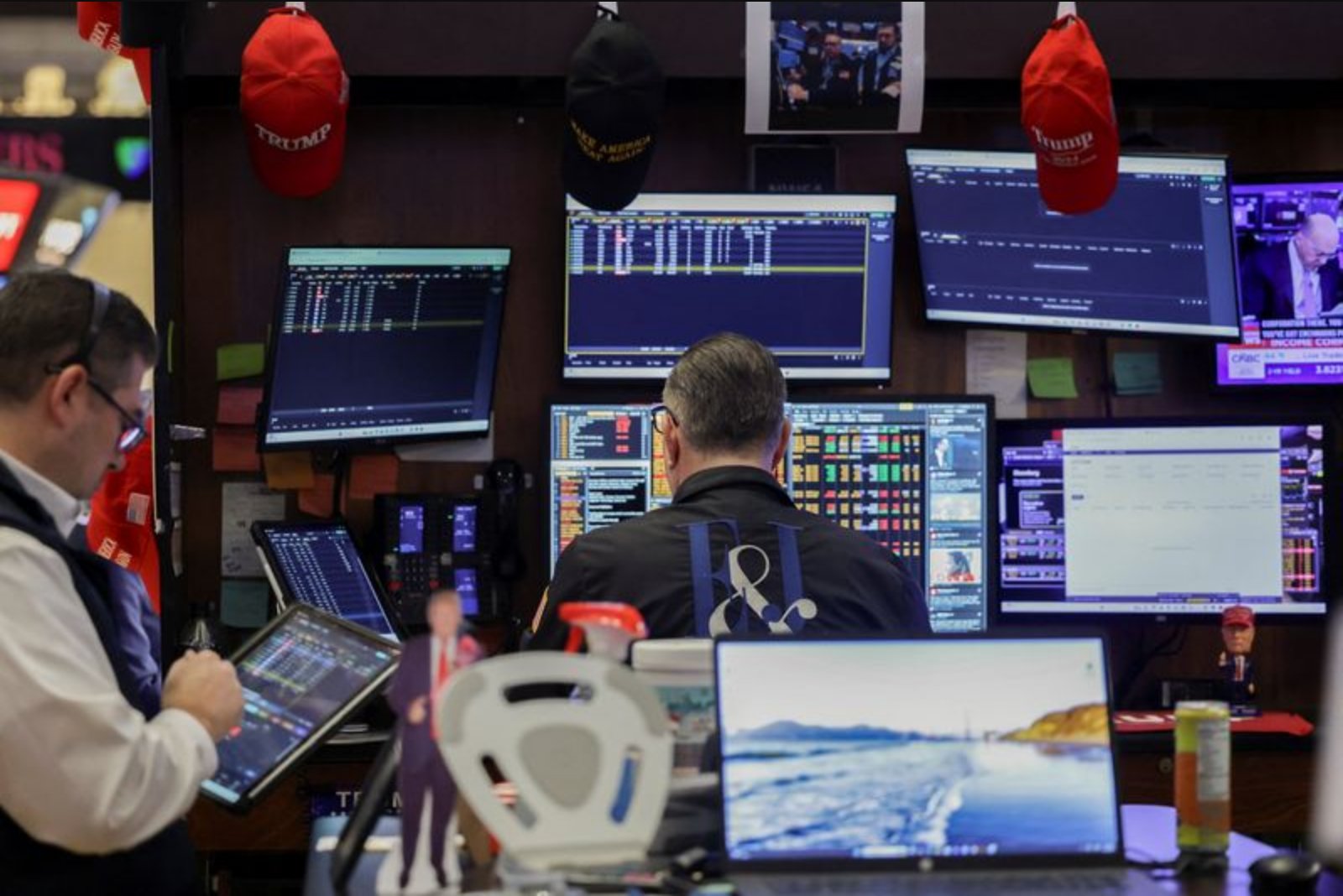
Global markets remain preoccupied with the fallout from the Middle East conflict as traders parse mixed indications about whether the recent bout of U.S.-Israeli military strikes on Iran marks an inflection point. After a holiday-shortened week in which the S&P 500 recorded a gain and ended a five-week losing streak, sentiment is fragile and closely tied to developments in energy markets.
The benchmark index had earlier closed out its worst quarter since 2022, a decline that accelerated from late February as the conflict escalated and pushed energy prices higher. That market weakness has been layered on top of other concerns this year, including worries about disruption from artificial-intelligence investment and strains in private credit markets. As a result, the S&P 500 traded at nearly 6% below its late-January record high.
Energy markets remain central to investor calculations. Shipping through the Strait of Hormuz - a vital artery for Middle East oil exports - has stalled, and market attention is fixed on how constrained flows could translate into higher fuel costs and broader inflationary pressure. U.S. crude oil surged above $100 a barrel earlier in the week and topped $110 a barrel on Thursday. With U.S. crude up roughly 90% since the start of the year, the U.S. average price for gasoline climbed above $4 a gallon this week for the first time in more than three years.
"It’s going to be hard to get the market’s attention off the Middle East, oil prices and the risks that have emerged," said Matthew Miskin, co-chief investment strategist at Manulife John Hancock Investments. "The markets have been so myopically focused on geopolitical risk and ... how all this is going to shake out."
Echoing that view on energy’s influence over market dynamics, Doug Huber, deputy chief investment officer at Wealth Enhancement Group, said: "The market is pricing off oil. Inflation expectations, bond markets -- everything is stuck to this concept of what oil is doing."
Key upcoming data and events
- The March consumer price index (CPI), due on April 10, is the first major inflation read that may reflect the energy shock linked to the conflict. According to a Reuters poll as of Thursday, March CPI is expected to have risen 0.9% month-on-month, with the core CPI - excluding food and energy - projected to have increased 0.3%.
- Next week also brings a release of the personal consumption expenditures (PCE) price index, but that measure will cover February - largely before the recent escalation in the Middle East.
- An updated estimate of fourth-quarter U.S. economic growth is scheduled, and investors will scrutinize the minutes from the Federal Reserve’s March meeting for signals on the likely path of interest rates.
- The start of earnings season is imminent. A handful of companies, including Delta Air Lines and Constellation Brands, will report next week, providing an early look ahead of the broader first-quarter reporting period that follows.
Analysts and money managers say next week’s CPI release could provide an early sign of how much of the oil price shock has been passed through to consumer prices. BNP Paribas noted in a preview of the CPI report that "the first stage of oil price pass-through will have arrived in March via motor fuel." However, some market participants caution that a broader inflationary impact beyond fuel prices may not be visible yet in the data.
Miskin said he would seek evidence of any "ripple effects" across other goods and services stemming from the spike in energy costs, while acknowledging that the March report could be too early to capture those broader influences. "You’re just trying to get as much real-time data as you can to formulate where the inflation and economic growth trends are going," he said.
Market expectations for rate cuts have shifted in response to the renewed inflation risk. With the prospect of higher prices and elevated oil, investors have largely priced out the likelihood of interest rate reductions this year - a change that undercuts one of the bullish pillars for equities earlier in the cycle. "The market already has inflation on the brain," said Patrick Ryan, chief investment strategist at Madison Investments. He added that a CPI reading that surprised materially higher would likely be interpreted negatively by markets.
Corporate profits and the path ahead
Wall Street is also turning its attention to corporate earnings as a potential offset to macroeconomic uncertainty. Early reports next week from companies such as Delta Air Lines and Constellation Brands will provide a preliminary flavor of first-quarter results, with the broader reporting season set to start the following week.
Consensus estimates compiled by LSEG IBES point to a 14.4% year-over-year increase in S&P 500 company earnings for the first quarter. Deutsche Bank equity strategists expressed the expectation that the Q1 earnings season beginning in mid-April "should show that underlying earnings growth is still strengthening and broadening." Investors will be watching whether corporate results and guidance can withstand higher energy costs and the broader uncertainty tied to the conflict.
As markets navigate the next tranche of economic data and company reports, the prevailing question is how much the Middle East war will continue to influence inflation, interest-rate expectations and corporate profitability. For now, traders and strategists say oil remains the central variable, with its immediate impact on gasoline prices already evident and broader second-round effects still uncertain.