
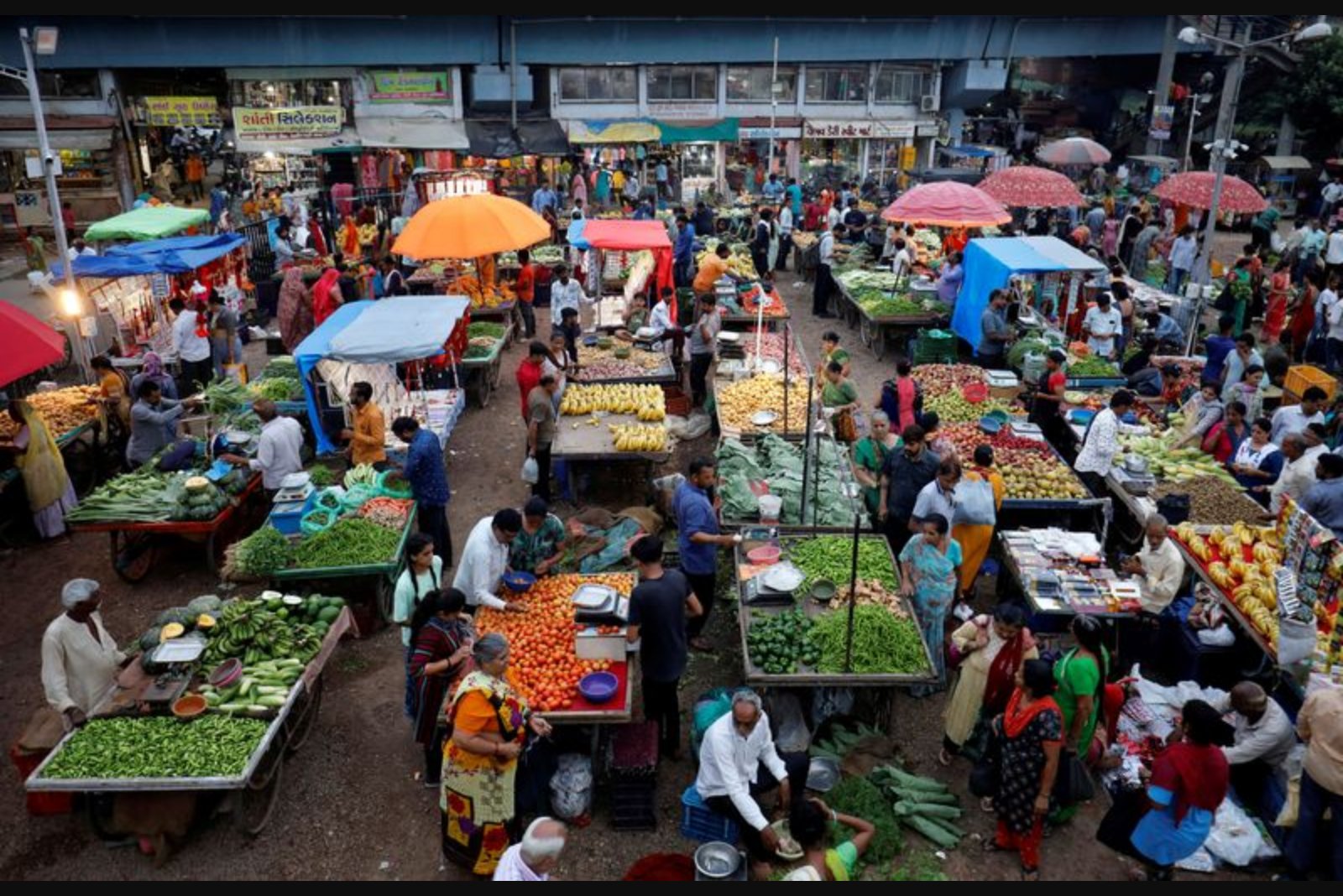
Government figures published on Tuesday showed consumer price inflation in India climbed to 3.48% year-on-year in April, up from March. The increase was driven primarily by stronger food price inflation, even as core inflation remained comparatively subdued.
A recent market poll had pointed to a somewhat higher print, at 3.8%, but the official data came in below that expectation. While headline inflation remains inside the Reserve Bank of India’s medium-term tolerance band, a range of external and domestic risks - notably higher crude prices related to the Middle East conflict and weather uncertainty around the monsoon - cloud the outlook.
What the numbers show
The April consumer price index (CPI) reading of 3.48% reflects an uptick in food costs, with food inflation reported to have risen to 4.2% by some estimates cited by market economists. Core inflation readings vary across different measures, with one estimate placing core at about 3.7% while another measure pointed to a lower core pace of 1.9% for both April and March.
Economists note that the current inflation profile reflects a limited pass-through so far from higher global energy and commodity costs into retail prices. Pump fuel prices and a number of subsidised products have not been raised, containing immediate inflationary pressure at the consumer level.
Economists' perspectives
Dhiraj Nim, an economist and FX strategist at ANZ Research in Mumbai, warned that a sustained period of crude trading above $100 per barrel would be likely to push inflation up more meaningfully. He added that he expects pump fuel prices to be raised in Q2 2026, and that while household inflation expectations are beginning to rebound, the current benign headline and subdued core inflation should allow the Monetary Policy Committee to maintain the policy repo rate in the near term. Looking further ahead to FY27, ANZ projects CPI inflation to average 5%, a materially higher trajectory that would likely require monetary policy tightening.
Apoorva Javdekar, chief economist at Muthoot Fincorp in Mumbai, said April’s consumer inflation at 3.48% rose significantly less than expected because the government had absorbed much of the oil and gas shock, limiting transmission to retail fuel prices. She noted transport prices remained flat and second-round effects from wholesale inflation were still subdued. Javdekar estimated core inflation likely stayed around 3.7%, while food prices climbed sharply to about 4.2%, a development that could push headline CPI higher when combined with fertiliser cost shocks and a potentially below-normal monsoon related to El Nino. She expects second-round effects from wholesale to transmit to CPI during the second half of 2026.
Gaura Sengupta, India economist at IDFC First Bank in Mumbai, characterized the print as in line with expectations. She pointed out that core inflation remained low at 1.9% in both April and March, suggesting consumers have so far been insulated from the energy price shock. Sengupta did flag a gradual rise in food inflation.
Radhika Rao, senior economist at DBS Bank in Singapore, stressed that the broader impact of high global oil prices has not yet fully percolated through retail inflation because pump fuel prices and several subsidised items have not been adjusted. She said markets would be watching developments around El Nino and the monsoon, and that increases in imported costs due to higher commodity prices and a weaker rupee are likely to show up more clearly in wholesale price measures - which had already outpaced retail inflation in March and are expected to continue rising into the second quarter. Rao added that markets are increasingly pricing in rate hikes aimed at defending the currency and addressing inflation, although she did not expect policy tightening to be the immediate response.
Sujit Kumar, chief economist at the National Bank for Financing Infrastructure and Development in Mumbai, observed that the April CPI print reflected sustained month-on-month momentum in both food and core components. He noted the government has largely cushioned consumers from developments in West Asia, as retail prices had not been revised upward even though crude prices traded above $110 per barrel in April. Kumar said fuel repricing and the course of monsoon rains would be critical monitorables for the inflation outlook.
Aditi Nayar, chief economist at ICRA in Gurugram, described the modest rise in CPI - to approximately 3.5% in April from 3.4% in March - as much softer than her expectation of a move to 3.9% following the West Asia crisis. She said the softer outcome provides some cushion despite a protracted conflict and still-elevated crude prices, and the risk of a sub-par monsoon. ICRA forecasts year-on-year CPI to firm to around 4.1% in May from 3.5% in April, roughly the mid-point of the Monetary Policy Committee’s target range of 2-6%. Nayar expects the MPC to remain on hold at its June policy review.
Upasna Bhardwaj, chief economist at Kotak Mahindra Bank in Mumbai, noted that the April reading was softer than expectations but cautioned that the outlook is clouded by upside risks stemming from geopolitics and El Nino-related supply disruptions. She said the central bank is likely to adopt a wait-and-watch approach to assess the pass-through of these risks, though risks for earlier rate hikes - possibly from October onwards - are building up.
Vikram Chhabra, senior economist at 360 One Asset in Mumbai, said the muted rise in April inflation reflects limited pass-through of higher energy and raw material costs to consumers, but warned the trajectory remains concerning if pump prices rise and trigger second-round effects across the economy. He also noted a below-normal monsoon projection by the national meteorological department as another upside risk to food prices. Chhabra expects the central bank to maintain a prolonged pause to look through the near-term spike in inflation driven by the West Asia conflict, but said a persistent conflict that keeps crude supplies disrupted would create a difficult trade-off between supporting growth and containing inflation.
Sakshi Gupta, principal economist at HDFC Bank in Gurugram, said the April print reinforced a favourable starting point for inflation given the current conflict and gave the central bank sufficient headroom before turning hawkish. However, she cautioned that an increase in pump prices - with oil prices remaining above $100 per barrel - could lift inflation in the months ahead both directly and indirectly through higher transport costs. Gupta estimated that a 5 rupee increase in petrol prices could add about 20 basis points to inflation through the direct impact alone. She also pointed to upside risks from higher energy prices, currency weakness, and potential monsoon disruptions, and noted an estimate that inflation could average close to 5% with upside risks to that forecast.
Implications and monitorables
Analysts broadly agree that the current data give the Monetary Policy Committee room to keep the policy repo rate unchanged in the near term, due to relatively low headline and core inflation measures and government cushioning of fuel prices. Key factors to watch include crude oil developments in the Middle East, timing and magnitude of any pump fuel price adjustments, fertiliser and commodity price movements, currency behaviour, and the quality of the upcoming monsoon season.
Bottom line - April’s 3.48% CPI reading signals a modest pick-up in inflation driven by food prices, while several external and domestic risks - notably energy market volatility and monsoon uncertainty - pose upside threats that could prompt a reassessment of monetary policy if they materialise.