
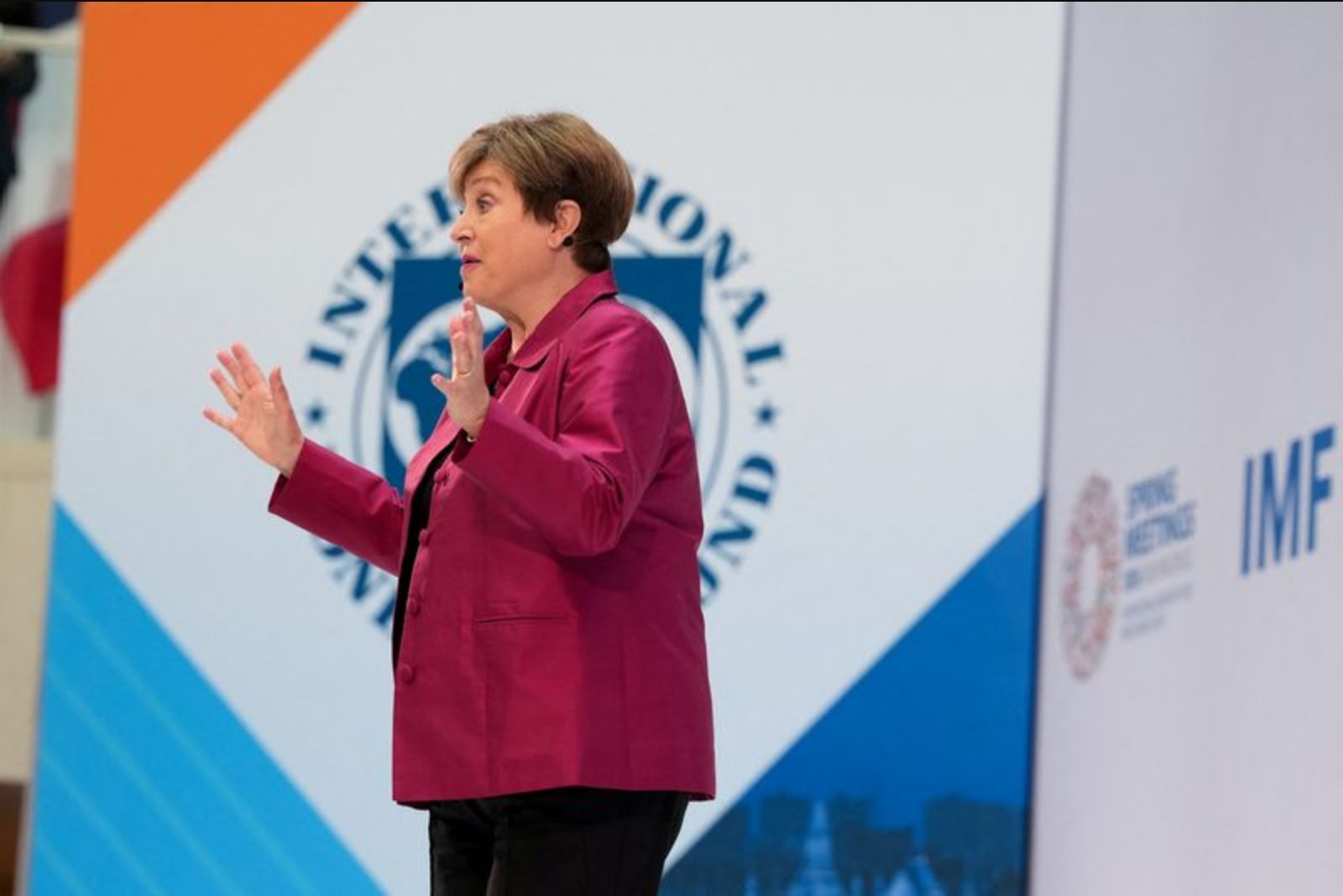
On April 9 in Washington, International Monetary Fund Managing Director Kristalina Georgieva outlined a narrow policy path for central banks navigating the fallout from a war-driven spike in energy costs. She said monetary authorities should be prepared to tighten policy if oil price shocks prove persistent, but cautioned that signs of demand softening would argue against further rate increases.
Georgieva spoke at an event previewing the IMF and World Bank annual meetings. She described two divergent scenarios. If a ceasefire in the Iran war holds and the resulting oil supply disruption is brief, central banks could likely keep policy rates unchanged while tolerating a modest rise in inflation - a development that would amount to a de-facto easing of policy. By contrast, if higher energy prices are sustained, she said, authorities must be ready to act to prevent an inflationary spiral.
She warned against rushing into tightening solely because central bankers were slow to respond to the post-COVID-19 inflation uptick. "Be watchful, concentrate on conditions, because if you tighten prematurely and unnecessarily, youre throwing cold water on growth," Georgieva said. "And then the demand may shrink. And then, from a supply shock you get into a supply-and-demand shock. And it may get ugly."
Georgieva noted the recent conflict in the Middle East began on February 28 and has disrupted global shipping, contributing to a 50% jump in the price of oil. The IMF has warned that the fighting will lead to higher prices and slower economic growth irrespective of when it ends. Georgieva stressed that the ultimate economic impact will depend on the duration of the war and the scale of the damage it leaves behind. She also observed that markets had been pricing in expectations for major central banks to tighten policy further.
The IMF chief highlighted a key concern for policy makers: the risk that inflation expectations could lose their anchor and trigger a costly inflationary cycle. She said short-run inflation expectations had risen, while longer-run expectations had remained unchanged, calling that divergence "very good and very important."
On fiscal policy, Georgieva said IMF officials were assisting countries in designing temporary fiscal support measures that include sunset clauses to ensure they do not become permanent. She emphasized the importance of coordination between fiscal and monetary policy, warning against actions that would force the two to work at cross-purposes. "Adding deficit-financed stimulus to the mix at this moment would increase the burden on monetary policy," she said. "It would be like driving with one foot on the accelerator and one on the brake - not good."
Context and implications
The remarks underscore the tightrope central banks face: the need to guard inflation expectations if energy costs remain elevated, while avoiding policy moves that could unnecessarily cool demand and tip economies into weaker growth. Georgieva's comments point to a continued focus on data-driven decision making by monetary authorities in the near term.