
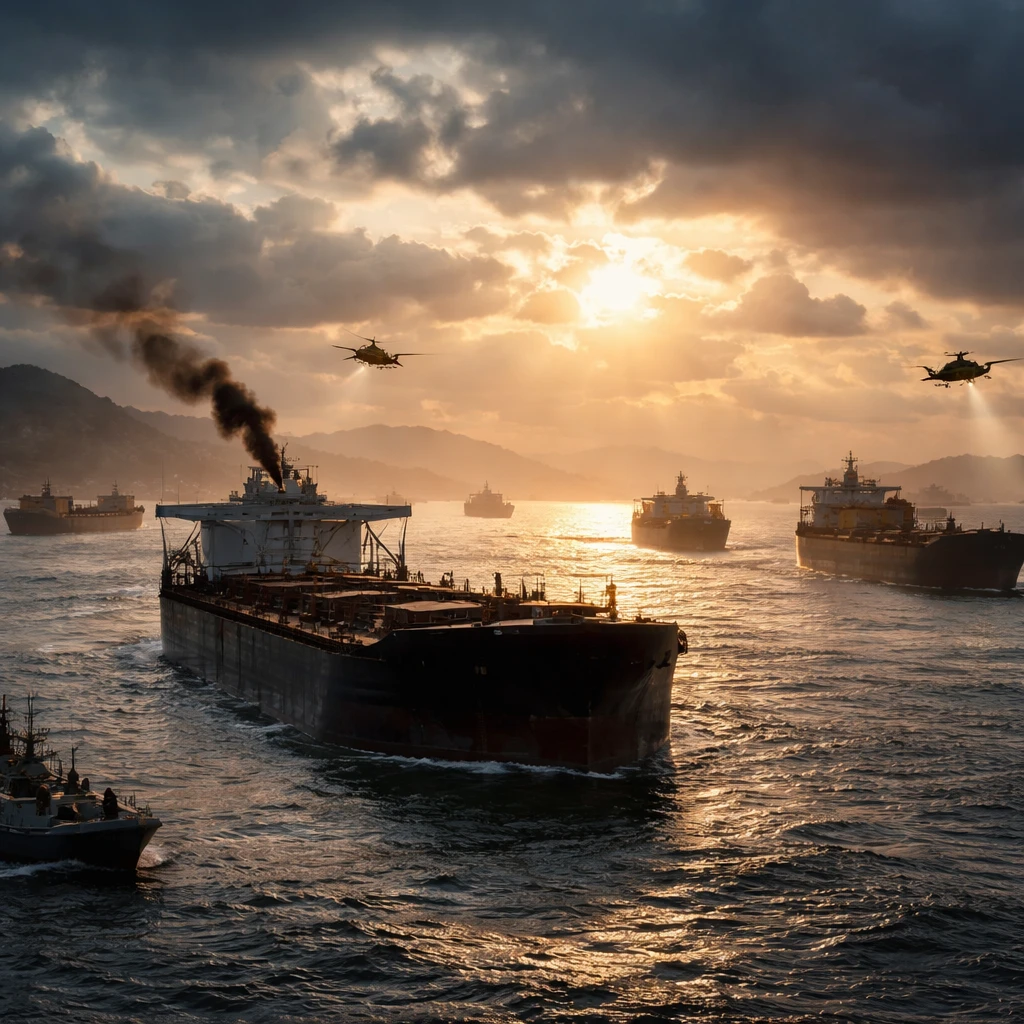
The International Monetary Fund cautioned on Monday that the military confrontation involving the United States, Israel and Iran risks producing a "global, yet asymmetric" shock that will reduce growth prospects while raising prices worldwide.
In a blog post published Monday, the IMF said nations in Africa and Asia that rely heavily on imported oil are already encountering difficulties in securing necessary supplies, "even at inflated prices." The fund warned that the conflict's effects on supply chains and infrastructure will hinge on whether the fighting is short-lived or protracted, adding that "the world may settle somewhere in between - tensions linger, energy stays costly, and inflation proves hard to tame - with ongoing uncertainty and geopolitical risk."
"All roads lead to higher prices and slower growth," the IMF wrote, stressing the breadth of the economic consequences.
Market moves reflected the immediate energy shock. Brent crude approached $115 a barrel during Monday trading and was on pace for a record monthly gain as U.S. troops moved into the region. President Donald Trump reiterated threats to destroy Iranian energy assets if the Strait of Hormuz is not reopened promptly.
The IMF also drew attention to non-energy channels by which the conflict is raising global costs. Higher prices for food and fertilizers have been reported across regions from the Middle East to Latin America, the fund said, noting that disruptions to supplies of crop nutrients originating in the Gulf come at a sensitive time - planting season in the northern hemisphere - posing a risk to harvests later in the year.
Economists who contributed to the post, including Tobias Adrian and Jihad Azour, highlighted the unequal burden of rising food costs. The IMF pointed out that for people in low-income countries, food represents roughly 36% of consumption on average, compared with 20% in emerging market economies and about 9% in advanced economies. That disparity, the fund said, makes spikes in fertilizer and food prices not merely an economic issue but also a socio-political one, particularly where fiscal space to cushion households is limited.
The IMF said it will publish a comprehensive report on the global economic outlook next month, coinciding with the spring meetings in Washington, where finance ministers and central bank governors will convene at the IMF-World Bank gatherings.
The conflict is now in its second month. It began on February 28 when U.S. and Israeli forces jointly struck facilities inside Iran. Following the outbreak of hostilities, Iran has effectively declared the Strait of Hormuz closed.
Summary
The IMF warns that the US-Israel military action against Iran is producing a global but uneven economic shock that will elevate energy, food and fertilizer prices and slow growth. The fund emphasized that low-income, oil-importing countries are particularly vulnerable, and that the duration of the conflict will determine the depth and persistence of supply-chain and infrastructure disruption.
Key points
- Energy markets: Brent crude neared $115 a barrel amid troop movements to the region, signaling tighter oil supplies and rising costs for importing nations.
- Agriculture inputs: Interruptions to fertilizer shipments from the Gulf during northern hemisphere planting season threaten crop prospects and push food prices higher.
- Distribution of impact: Low-income countries face a larger consumption share spent on food, raising the socio-political stakes of any price spikes.
Risks and uncertainties
- Duration of conflict - A prolonged confrontation would keep energy costly and sustain inflationary pressure; the IMF noted outcomes depend on whether the conflict is short or long.
- Supply-chain disruptions - Continued interruptions to fertilizer and food supply routes could jeopardize agricultural output during the planting season, affecting harvests later in the year.
- Fiscal constraints in vulnerable countries - Limited fiscal capacity to mitigate price shocks could convert economic stresses into socio-political instability in low-income economies.