
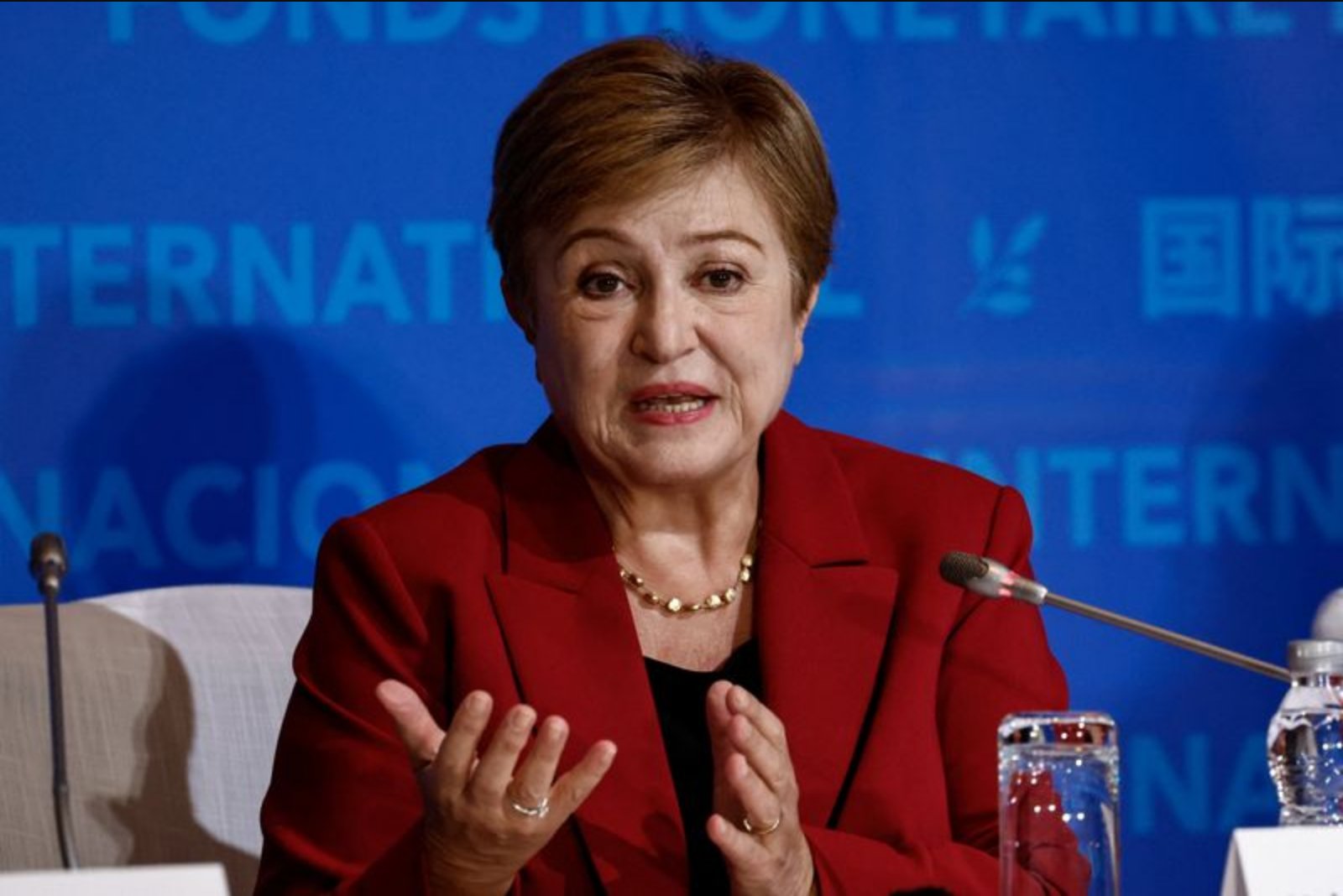
Global inflation is projected to moderate to 3.8% in the current year and to decline further to 3.4% in 2027, the International Monetary Fund's managing director said on Monday. She attributed the anticipated drop to a combination of softer demand and lower energy prices.
Delivering remarks at the Annual Arab Fiscal Forum in Dubai, the IMF chief described global growth as having held up "remarkably well" despite what she called profound shifts in geopolitics, trade policy, technology, and demographics. Those structural changes, she said, are reshaping the global economic landscape even as headline inflation trends move lower.
On trade policy, the managing director warned about the increasing prevalence of unilateral trade agreements and urged countries to pursue deeper trade integration. "In the world of trade fragmentation, more trade integration is absolutely paramount," she said, framing integration as a priority in the face of growing fragmentation.
She also noted that actual trade flows this year did not decline as much as had been feared. "What we have seen this year is that trade did not go down the way we feared it would. In fact trade is growing slightly slower than global growth," she added, underscoring that trade remains broadly aligned with overall economic activity even as it lags growth slightly.
Context and emphasis from the forum:
- The IMF's inflation outlook signals a decline from recent elevated levels, with the reduction linked explicitly to weaker demand conditions and easing energy costs.
- Despite significant changes in geopolitics, trade policy, technology, and demographics, global growth has remained resilient, according to the managing director.
- Policymakers face a trade-policy environment in which unilateral deals are on the rise, prompting the IMF chief to call for renewed emphasis on trade integration.
Her comments at the Annual Arab Fiscal Forum highlighted the interplay between inflation dynamics, energy prices, demand conditions, and international trade patterns. The remarks pointed to a near-term easing of inflation pressures while flagging trade fragmentation as a policy challenge that could influence future economic outcomes.