
Economy March 24, 2026

Hundreds of ABC Employees Stage One-Day Pay Strike, Disrupting Live Coverage

Walkout, the broadcaster's first in two decades, forces use of BBC feeds and replaces flagship shows with reruns amid stalled pay talks

By Marcus Reed
Hundreds of ABC Employees Stage One-Day Pay Strike, Disrupting Live Coverage

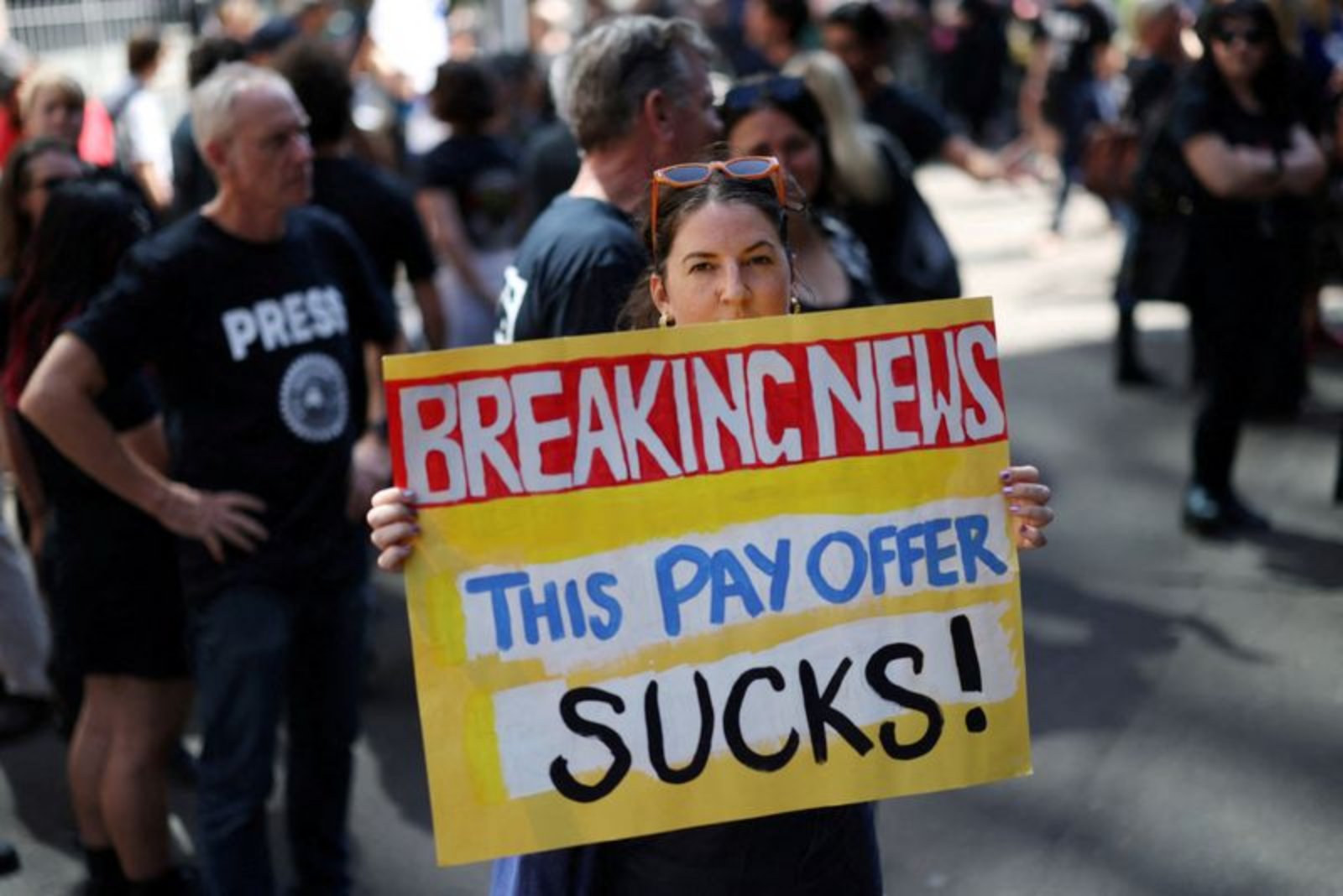
Hundreds of staff at the Australian Broadcasting Corporation walked off the job on Wednesday in a 24-hour strike - the first stoppage of its kind in 20 years - protesting pay and working conditions. Live news output was shifted to programming supplied by the BBC once the walkout began at 11:00 a.m. (0000 GMT). The action follows months of negotiations and a staff vote rejecting a proposed 10% pay increase phased over three years plus a A$1,000 bonus that excludes casual employees.

Key Points

  • One-day strike at the ABC began at 11:00 a.m. (0000 GMT), marking the broadcaster's first walkout in 20 years and disrupting live news output.
  • Majority of staff rejected a 10% pay increase over three years plus a A$1,000 bonus for ongoing and fixed-term employees; the bonus excluded casual staff.
  • Around 1,000 employees voted for industrial action; approximately one-third of the ABC's 4,500 staff are unionised, and the MEAA said the offer falls below inflation and does not guarantee secure work conditions.

SYDNEY, March 25 - Hundreds of employees at the Australian Broadcasting Corporation launched a one-day strike on Wednesday, marking the first such industrial action at the public broadcaster in 20 years. The walkout, called over pay and working conditions, began at 11:00 a.m. (0000 GMT) and immediately affected live news coverage.

At the start of the action, live programming was replaced with content sourced from the UK broadcaster BBC. Broadcaster statements indicated that flagship television and radio programmes were also likely to be substituted with reruns during the 24-hour stoppage.

The strike comes after months of negotiations between staff and management. The latest proposal on the table offered workers a 10% pay rise spread across three years and a A$1,000 bonus for ongoing and fixed-term staff. The majority of ABC staff rejected that offer this week.

Union representation at the ABC covers about one-third of the broadcaster's 4,500 employees. Following failed talks, approximately 1,000 staff members voted in favour of industrial action.

Union response and exclusions

The Media, Entertainment & Arts Alliance (MEAA) argued the employer's offer did not keep pace with inflation and fell short on delivering secure employment conditions. The union also highlighted that the proposed A$1,000 bonus would not be paid to casual staff members.

"ABC staff are taking this step because they want fair pay that keeps up with the cost of living, genuine job security, and working conditions that allow them to continue serving the Australian public with integrity,"

said Chief Executive Erin Madeley.

Management reaction and operational response

ABC Managing Director Hugh Marks described the strike as "very unfortunate" and noted the timing was not ideal given global events. Speaking on ABC Radio, he said the organisation would use BBC content "where that’s appropriate and where that’s available to us" to maintain services during the walkout, while warning the output would not meet the standard he would like to present on air.

Marks defended the package offered to staff, calling it "fair and reasonable" and stating it was above inflation once the A$1,000 bonus was taken into account.

Currency context included in reports places $1 at 1.4298 Australian dollars.


Operational note - The strike is limited to 24 hours; the long-term outcome of negotiations and any further industrial action were not detailed in available statements.

Risks

  • Reduced quality and availability of live news and programming during strikes could affect advertising revenue and audience metrics for the broadcasting and media sector in the short term.
  • The exclusion of casual staff from the A$1,000 bonus and the union's assertion that the offer is below inflation may heighten tensions and raise the risk of further industrial action, creating operational uncertainty for the ABC.
  • Dependence on external feeds to maintain service - such as content from the BBC - highlights short-term continuity risks for the public broadcaster's live production capabilities during labour disputes.

More from Economy

February CPI in Australia Pauses, Core Inflation Eases Slightly as Energy Shock Looms Mar 24, 2026 Currencies Drift as Markets Weigh Conflicting Signals on U.S.-Iran Talks Mar 24, 2026 Markets Rally as Reports of Month-Long Mideast Ceasefire Lift Risk Assets; Oil Drops Mar 24, 2026 BOJ Officials Signal Continued Rate Increases, Minutes from January Meeting Show Mar 24, 2026 Goolsbee Says Inflation Must Ease Before Fed Can Realistically Cut Rates; Energy Shock Clouds Near-Term Outlook Mar 24, 2026