
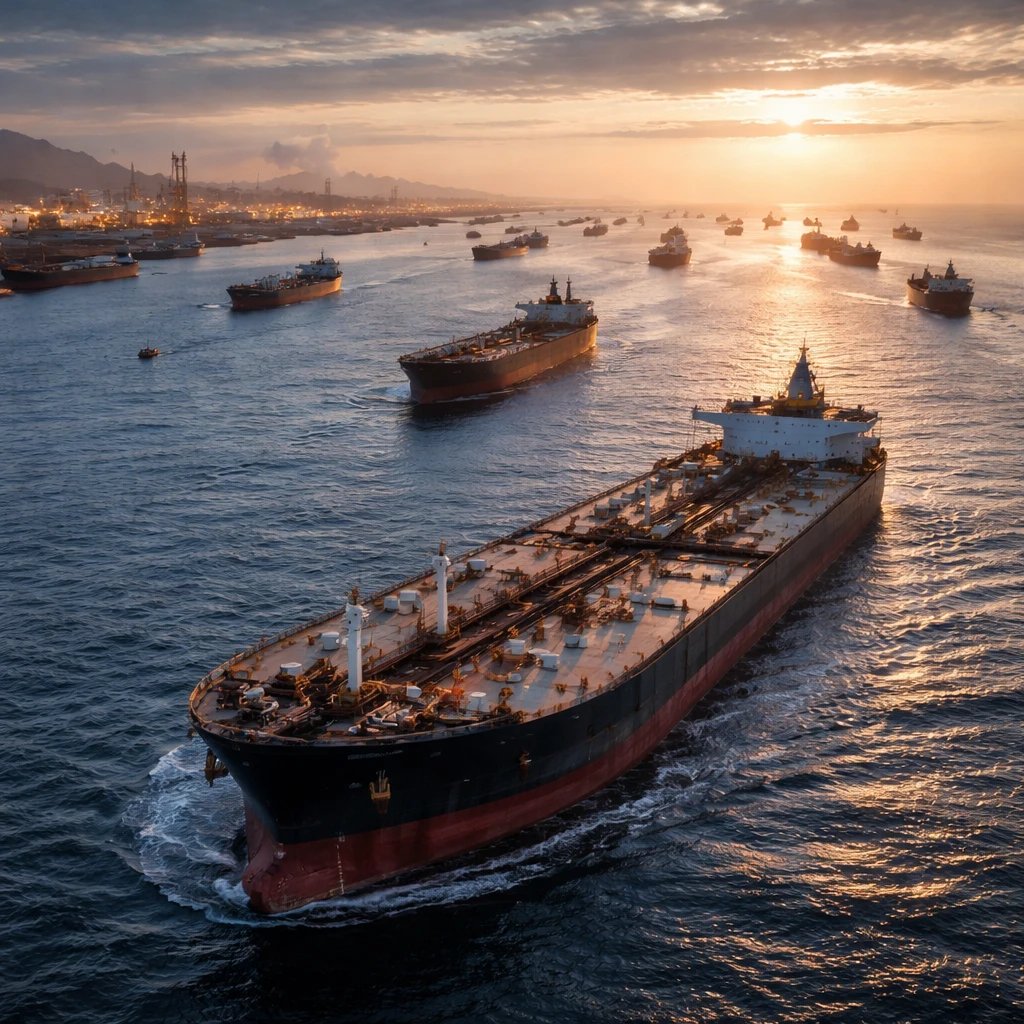
Disruptions to shipping through the Strait of Hormuz have severely curtailed global energy flows, tightening supply and elevating risks to both economic growth and inflation, according to India’s March 2026 Monthly Economic Review.
The government Economic Division reported a dramatic fall in ship movements through the Strait - to roughly one vessel per week from the 200-300 transits seen earlier - a change that has constrained the movement of hydrocarbons and pushed up energy and logistics costs.
Crude oil prices doubled over a short span as freight expenses rose amid higher tanker rates, increased bunker fuel costs and elevated war-risk insurance premiums. The report said the shock is propagating through energy and logistics channels, with risks to growth “skewed to the downside.”
“The fundamental problem is a simultaneous double squeeze - no crude coming in, and no product going out,” the report said, adding that refinery shutdowns and storage constraints could delay any recovery in flows.
The Strait of Hormuz handles around one-fifth of global seaborne oil trade and carries notable volumes of liquefied natural gas and fertilisers. About one-third of global seaborne fertiliser trade transits the route, a dynamic that has added upward pressure to agricultural input costs.
For India, the effects have shown up through higher import prices, interruptions in supplies, rising logistics costs and the potential for a moderation in remittances. Domestic economic data remained broadly robust up to February, but early signs of softening have emerged.
E-way bill generation fell 5.3% month-on-month up to March 22, and flash PMI estimates pointed to softer output growth. At the same time, vehicle registrations rose 19.1% year-on-year, reflecting continued strength in that segment.
Retail inflation climbed to a 10-month high of 3.21% in February from 2.74% in January, with food prices the primary driver. Food inflation stood at 3.35%, led by fruits at 8.63%, edible oils at 7.37% and animal proteins at 4.97%. Vegetable prices increased 2.8%, influenced by a 45% surge in tomato prices.
Industrial output displayed mixed results. Core sector growth was 2.26% in February, with crude oil output down 5.2% and natural gas production down 5.0%. In contrast, steel output rose 7.2% and cement production increased 9.3%.
On trade, merchandise exports declined 0.8% year-on-year in February while imports jumped 24.1%, widening the trade deficit to $27.1 billion from $14.4 billion a year earlier. Services exports increased 24.9% to $39.5 billion, covering 85.4% of the merchandise shortfall.
Through April-February of fiscal 2025-26, total exports rose 5.8% to $790.9 billion while imports grew 7.4% to $900.5 billion, widening the trade deficit to $109.7 billion.
The current account deficit was 1.3% of GDP in the third quarter of FY26. Portfolio outflows amounted to about $12.5 billion in March, and the rupee weakened to 93.88 per U.S. dollar on March 24.
In response to logistics disruptions, the government has approved a 497 crore rupee support package for exporters. The report also noted that foreign exchange reserves remain sufficient to cover more than 11 months of imports.
Overall, the Monthly Economic Review framed the shipping shock as a material near-term risk to inflation and economic activity, transmitted through higher energy and logistics costs and disruption to critical commodity flows.