
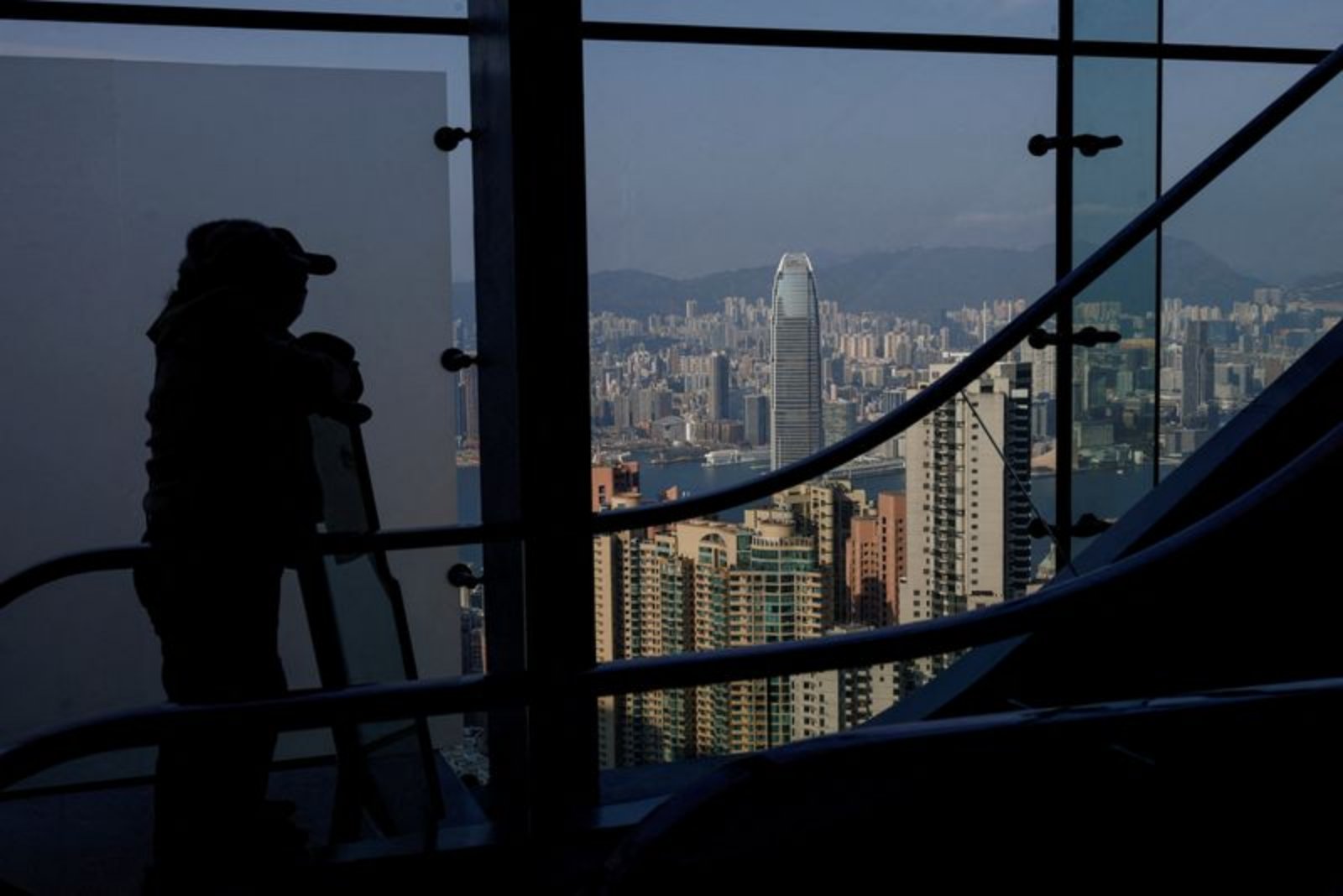
The downturn in Hong Kong’s core Grade-A office market appears to be finding a bottom after close to seven years of falling values and weak leasing activity, driven in large part by an eruption of capital markets activity that helped reignite demand for premium office space, according to real estate brokers and market participants.
Fundraising on Hong Kong’s exchanges surged in 2025, with funds raised in the city jumping 231% to $37 billion. That listing momentum has spilled beyond trading floors and is translating into tangible interest in Central’s office towers from both mainland Chinese firms and multinational corporations, market sources said.
"Companies are coming because of the capital markets, definitely," said Sam Gourlay, JLL Hong Kong head of office leasing advisory, summing up a causal link many brokers now see between equity-market activity and office demand.
Big-name buyers and occupiers
High-profile transactions underscore the renewed appetite for trophy assets. In December, Chinese e-commerce company JD.com acquired a 50% stake in a tower in the Central business district for $450 million. In Causeway Bay, Alibaba, together with its fintech affiliate Ant Group, purchased 13 floors in the Mandarin Oriental’s new flagship office tower for $925 million.
The listing upswing has also supported leasing momentum in Central. Financial firms such as IMC Group and Northern Trust signed new leases this year, while Jane Street agreed to lease six floors in a soon-to-be-completed office tower in June - a deal characterised as one of the largest Central leasing transactions in decades.
Measured gains but an uneven recovery
Despite the encouragement in parts of Central, industry watchers caution the improvement is selective. S&P said in a report that "Hong Kong commercial property is undergoing a highly specific recovery." The ratings agency added: "This recovery is not broad-based; it is concentrated within select Grade-A office towers and for some landlords adept at attracting luxury retail tenants."
Across the city, office valuations and rents have plunged by more than 50% since 2019, leaving stressed cash flows at some developers, prompting restructurings, and producing heavy loan charges for banks with commercial property exposure. Against that backdrop, gains in Central remain modest by historical standards: since the second half of 2025, transacted prices in Central’s Grade-A offices rose around 5%, brokers said.
Leasing metrics have shown early improvements. Rents increased 3.5% in the first two months of 2026, and vacancy in Central improved for the third straight month in February to 9.9%, according to JLL data. For perspective, the citywide vacancy rate stood at 13.4%, with Kowloon East at 19.5% in the same reporting.
Who is driving demand?
Property agents report that more Chinese companies, including technology firms, are actively seeking to acquire office space in the financial district, aligning with government and market efforts to emphasise Hong Kong’s role as a regional tech hub. CBRE Hong Kong head of capital markets Reeves Yan said increasing amounts of local capital are moving into strata-office investments, with investors betting on a sector recovery, while foreign funds and corporate buyers remain largely absent.
"We have passed the peak of oversupply in Central, which was 2024-25," Yan said, and added that new supply over the next five years will probably be half of what was delivered in the previous five-year span. "Most of the new spaces have been filled up, and now it’s become a landlord market where people are fighting for high-quality offices." Those comments reflect a shift toward tighter conditions in the best assets, even as surplus stock and weaker submarkets persist.
On the leasing side, expansion has been driven by international financial institutions, while Chinese securities firms have registered a larger number of deals but with smaller footprints. The hedge fund sector, which occupies under 2% of total office space in Hong Kong, accounted for 18% of all net demand last year, JLL’s Gourlay noted.
In the first quarter of this year, major new leases included signed deals by J.P. Morgan, law firm Ropes & Gray, and Chinese securities firms Futu and E Fund. Gourlay said: "I wouldn’t be surprised if this year certainly matches last year in numerical transactions and the strength of the hedge funds and asset managers." He added: "We have multiple conversations at the moment. Nearly all of them in that sector are expanding - and aggressively."
Implications for markets and stakeholders
The pattern of recovery - concentrated in selective premium towers and driven by capital-market-related demand - has implications for landlords, developers, lenders and investors. Landlords with high-quality office product and an ability to secure luxury retail tenants stand to benefit from improving rents and lower vacancy in Central. Developers and banks that face heavy loan charges or are managing distressed assets remain exposed to broader citywide weakness in valuations and rents that have not recovered to pre-decline levels.
While the momentum in Central signals a stabilising trend for prime office stock, participants emphasise the recovery is neither universal nor complete, and significant segments of the market continue to feel the strain of oversupply and sharply reduced valuations.
Data snapshot
- Funds raised in Hong Kong in 2025 rose 231% to $37 billion.
- JD.com bought a 50% stake in a Central tower for $450 million in December.
- Alibaba and Ant Group acquired 13 floors in Mandarin Oriental’s new office tower for $925 million.
- Since H2 2025 transacted prices in Central’s Grade-A offices rose around 5%.
- Rents rose 3.5% in the first two months of 2026; Central vacancy was 9.9% in February versus 13.4% citywide and 19.5% in Kowloon East.
- Hedge funds occupy less than 2% of office space but represented 18% of net demand last year.
These figures portray a market where the best assets are beginning to recover, while broader pressures remain.