
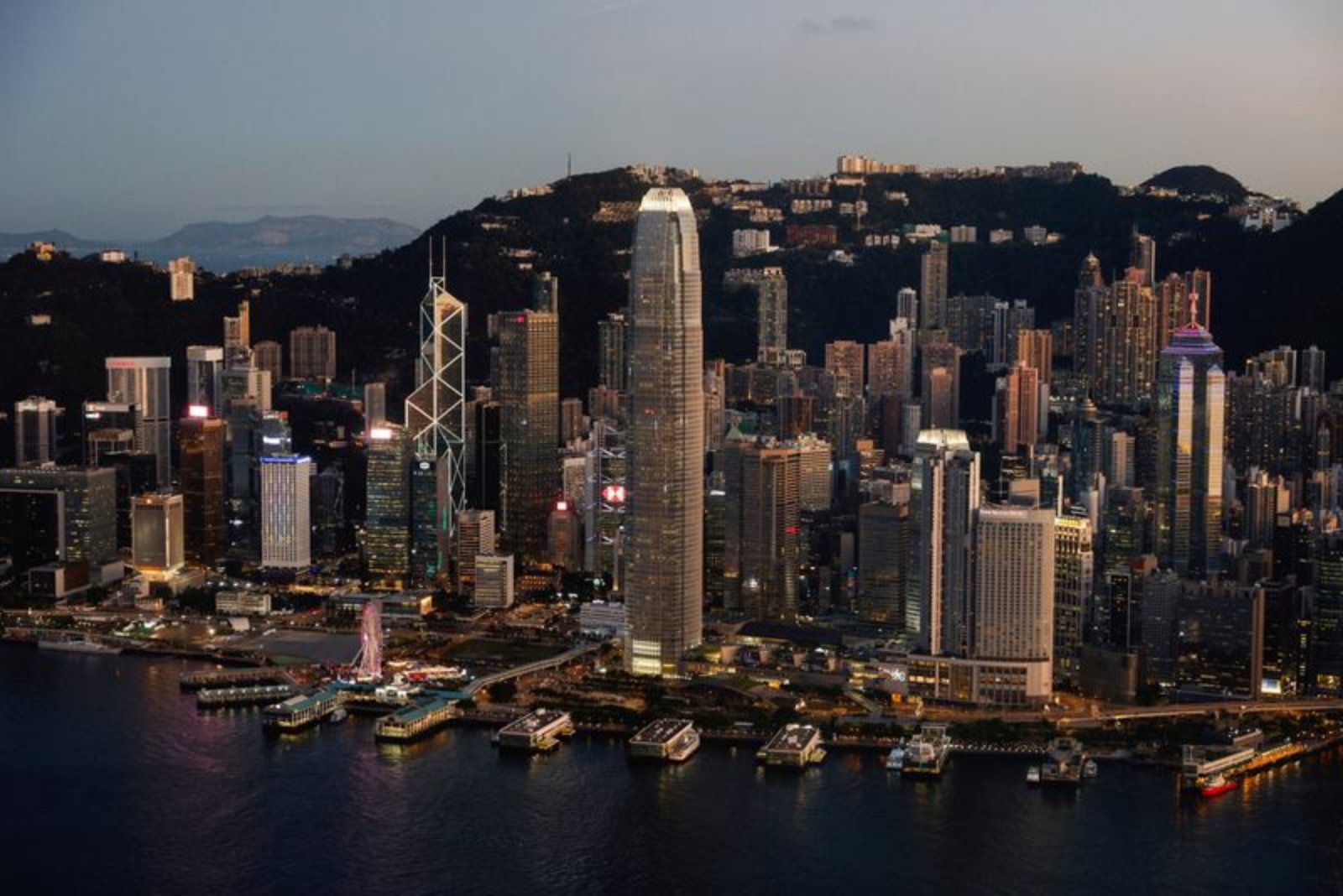
Hong Kong's economy expanded by 3.8% year on year in the fourth quarter, official advance estimates released on Friday showed, extending a run of consecutive growth to 12 quarters. Authorities attributed the continued momentum to robust regional trade flows, a rebound in inbound tourism and stronger financial service activity.
Quarterly figures for earlier in 2025 were revised slightly, with growth of 3.7% in the third quarter, 3.1% in the second quarter and 3.0% in the first quarter. For the full year 2025, real gross domestic product rose 3.5%, up from 2.5% in 2024 and ahead of the government forecast of 3.2% for the year.
"Looking ahead, the Hong Kong economy is expected to maintain good momentum in 2026," a government spokesman said. "Sustained moderate expansion of the global economy, coupled with persistently strong global demand for artificial intelligence-enabled electronic-related products, will lend support to Hong Kong’s export performance."
On a seasonally adjusted quarter-to-quarter basis, the economy expanded by 1.0% in October-December. That pace accelerated from 0.7% in July-September and 0.4% in April-June, although it was below the 1.8% gain recorded in January-March.
The government highlighted improving sentiment among consumers and businesses as well as the potential lift to consumption and investment from expected further interest rate cuts in the United States. The spokesman also cautioned that external uncertainties remain, noting they persist amid escalating geopolitical tensions.
Private consumption expenditure rose by 2.5% in the fourth quarter, up slightly from a 2.4% increase in the third quarter, and was 1.6% higher for 2025 as a whole.
Trade data in the advance estimates showed significant increases. Total exports of goods rose 15.5% in the fourth quarter, compared with a 12.0% increase in the third quarter, and were up 12.0% for 2025. Imports of goods grew 18.4% in the fourth quarter, compared with an 11.7% rise in the third quarter, and were 12.6% higher for 2025.
These preliminary figures portray an economy whose recent strength has been broad-based across consumption, goods trade and services such as finance and tourism, even as policymakers and market participants weigh external risks tied to geopolitical frictions.