
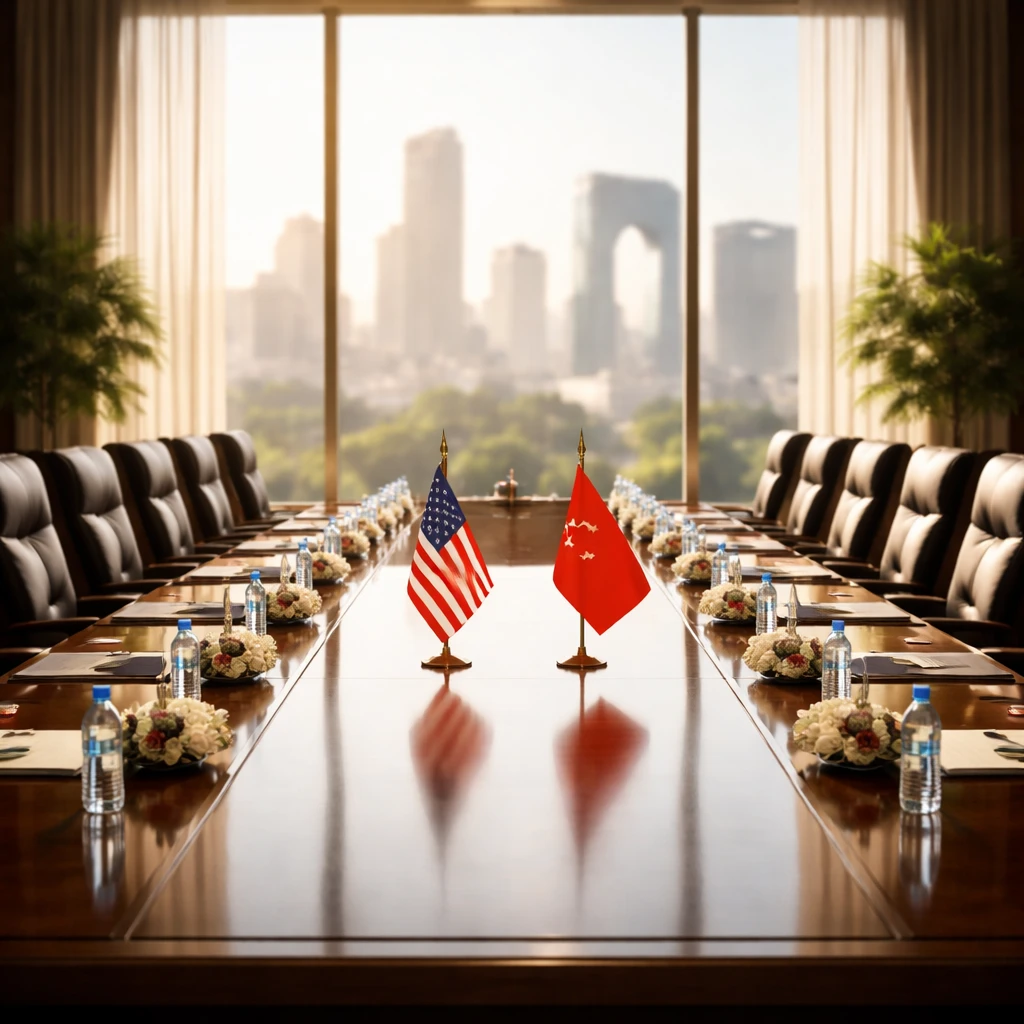
The upcoming diplomatic engagement in Beijing serves as a critical juncture for U.S.-China relations. The discussions are expected to touch upon several heavy-hitting economic and geopolitical sectors, ranging from agriculture to high-tech manufacturing and aerospace.
Key Discussion Pillars and Market Impacts
The summit is expected to address several specific economic levers that could impact various market sectors:
- Agricultural and Energy Commodities: A central component of the U.S. strategy involves securing substantial Chinese purchases of energy products, beef, and poultry. Additionally, Washington is seeking a multi-year commitment from Beijing for the annual purchase of 25 million metric tons of soybeans. These demands could directly influence commodity markets and agricultural trade flows.
- Aerospace and Manufacturing: The discussions are expected to focus on Boeing, which has been engaged in long-term negotiations with Chinese authorities. A potential deal under consideration involves the sale of 500 737 MAX jets. Previous progress on this matter had stalled because of U.S. intentions to limit the supply of critical engine components.
- Technology and Critical Minerals: The summit will likely feature a tug-of-war over technological resources. Beijing is looking for a reduction in U.S. restrictions regarding advanced semiconductors. Conversely, Washington is demanding that China remove its own controls on rare earths and other critical minerals.
Core Risks and Geopolitical Uncertainties
Several volatile factors could complicate the summit's outcomes and create uncertainty across global markets:
- Regional Security and Taiwan: Chinese Foreign Minister Wang Yi has identified Taiwan as the most significant point of risk for bilateral relations. Reports suggest that Beijing is privately communicating a desire for a change in how the U.S. uses diplomatic language regarding Taiwan's independence, which could alter regional security landscapes.
- Conflict in Iran and Maritime Security: The ongoing war in Iran presents a difficult diplomatic challenge. While U.S. Treasury Secretary Scott Bessent has called on China to assist in reopening the Strait of Hormuz, Beijing has responded by stating that resolving the conflict is a responsibility held by Washington.
- Sanctions and Supply Chain Regulation: Tensions have been heightened by recent U.S. sanctions targeting Chinese refineries for their involvement in purchasing Iranian oil. Simultaneously, Beijing has implemented new regulations aimed at investigating foreign companies that choose to relocate their supply chains away from China.