
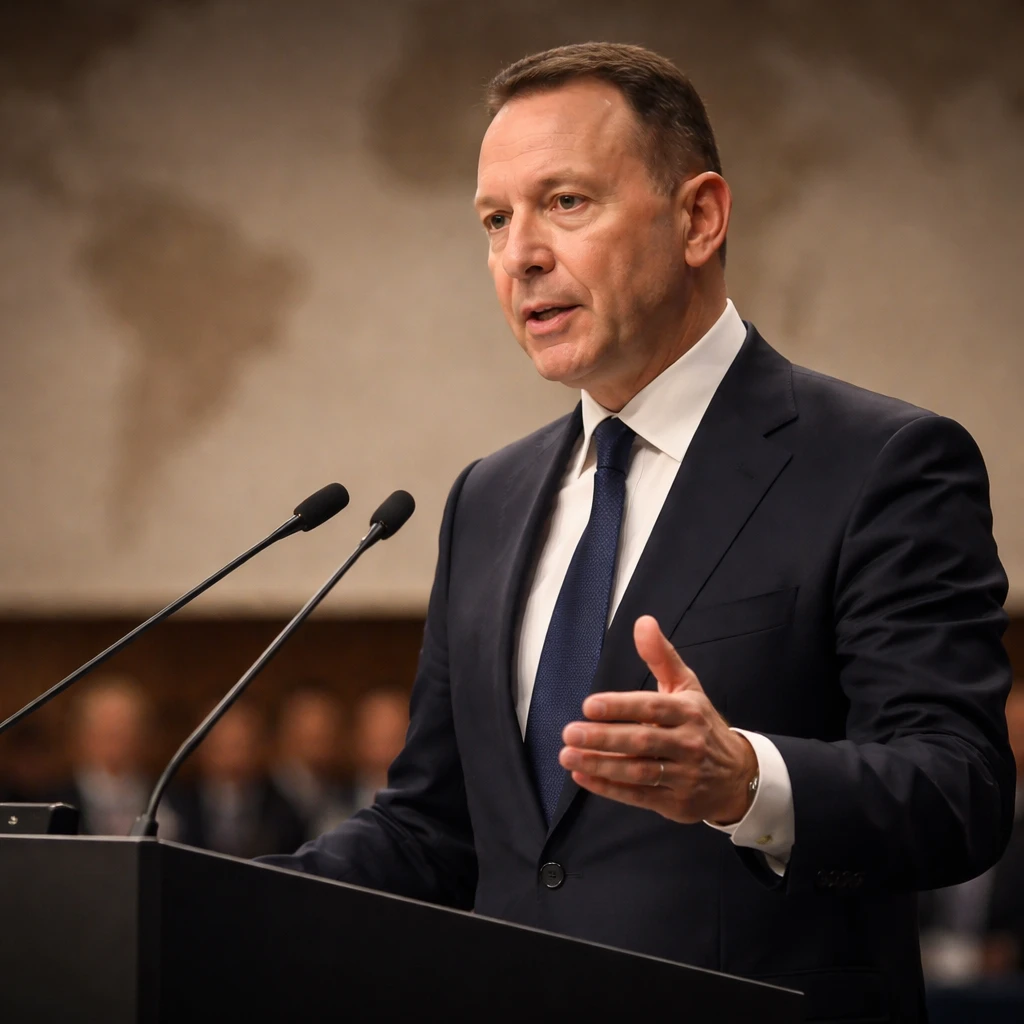
Greece's central bank governor delivered a clear caution to policymakers on Monday, saying the European Central Bank may be forced to act swiftly if inflation expectations start to move upward.
Speaking at a conference hosted by The Economist, the governor warned that the ECB's baseline projections published in March for both price developments and economic growth are exposed to downside risks if the conflict in the Middle East continues.
"If signs were to emerge that second-round effects are gaining traction or that inflation expectations are beginning to drift, the ECB will have to respond quickly to help ensure that inflationary pressures do not become entrenched in expectations,"
The statement underlines a concern that rising uncertainty in the Middle East could feed through to European inflation dynamics and complicate the central bank's outlook. The governor framed a rapid policy response as necessary to prevent temporary shocks from becoming embedded in longer-run expectations.
His comments focused on two related risks: the potential for second-round effects to strengthen and the prospect that inflation expectations could begin to move away from their current levels. Both developments, he said, would justify a prompt reaction from the ECB to maintain credibility and to avoid inflationary pressures becoming persistent.
While the governor did not prescribe a specific policy move, his remarks underscore that the ECB's March projections are conditional and vulnerable to geopolitical developments. He emphasized the need for vigilance and readiness to act should inflation signals shift in a way that threatens to alter expectations.
The remarks highlight uncertainty around the economic outlook and the central bank's calculations, and suggest that policymakers are monitoring both incoming data and geopolitical developments closely.
Summary of key points and context
The governor's comments present a warning about the fragility of the current inflation outlook and the need for prompt policy response if warning signs appear. They also link the risks to continuation of the Middle East conflict and to the mechanics of second-round inflation effects and changing expectations.