
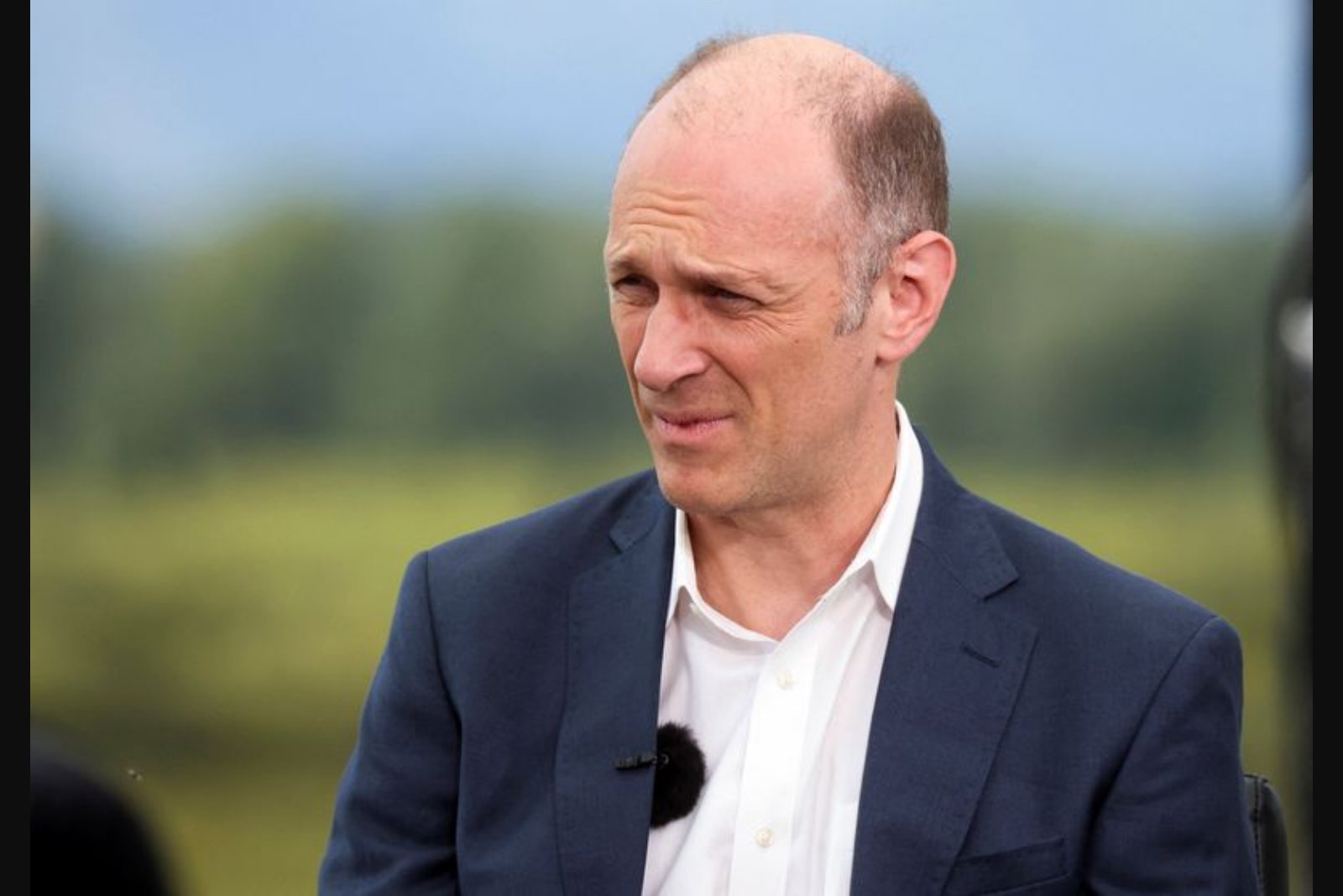
March 24 - The Federal Reserve will need to observe clear progress in bringing inflation down before it can credibly move to lower interest rates this year, Austan Goolsbee, president of the Federal Reserve Bank of Chicago, said in an interview with PBS NewsHour on Tuesday.
Goolsbee emphasized that recent increases in energy costs tied to the war in Iran have worsened near-term prospects for disinflation. "There’s an unfortunate aspect of this shock to energy prices that we’re likely to see an impact driving up inflation at a time when we still haven’t quite cleared the previous shock that was driving up inflation," he said.
He added that rate reductions this year would only be realistic if policymakers could see convincing signs that inflation is moving back toward the Fed’s 2% objective. "For it to be realistic that rates would come down further this year we’ve got to see progress on inflation," Goolsbee said. "We’ve got to have some comfort that we are on a path back to 2% inflation."
Goolsbee warned that with inflation rising, the central bank would have to reassess its options. "With inflation going up more, we’re going to have to really think through what the options are and how we’re going to get through it," he said.
By the Fed’s preferred measure for its 2% target, inflation is expected to be close to 3% for the 12 months ended in February. The United States has recorded inflation above the Fed’s 2% target for five years.
The Fed last week opted to keep its benchmark policy rate unchanged in a 3.50-3.75% range. Of the 19 policymakers on the central bank’s committee, 12 indicated in the meeting that it would be appropriate to lower rates by at least a quarter percentage point this year.
But in the days following the meeting, several Fed officials have pointed to heightened uncertainty tied to the conflict involving Iran. The confrontation, which began with U.S. and Israeli air strikes on February 28, has prompted Iranian actions that have effectively prevented about a fifth of the world’s oil supply from transiting the Strait of Hormuz.
Global benchmark oil prices have risen sharply from roughly $75 a barrel in late February to about $100 as of Tuesday. U.S. retail gasoline prices have climbed about 33% to nearly $4 a gallon, reaching their highest levels since August 2022.
Fed officials including Goolsbee have cautioned that sustained higher oil prices could push inflation upward not only through direct increases at the pump but also via broader spillover effects, since energy is a widespread industrial input. In response to the recent price moves, interest rate futures have moved to remove expectations of a rate cut this year and are now pricing in the possibility of rate hikes before year-end.
Implications for markets and the economy
Higher energy prices are feeding through to headline inflation and heightening uncertainty about the timing of monetary easing. Sectors sensitive to energy and input costs, including transportation and manufacturing, face immediate pressure from the rise in oil and gasoline prices. Financial markets have adjusted to the altered outlook, with futures shifting away from rate cuts and toward the possibility of tighter policy.