
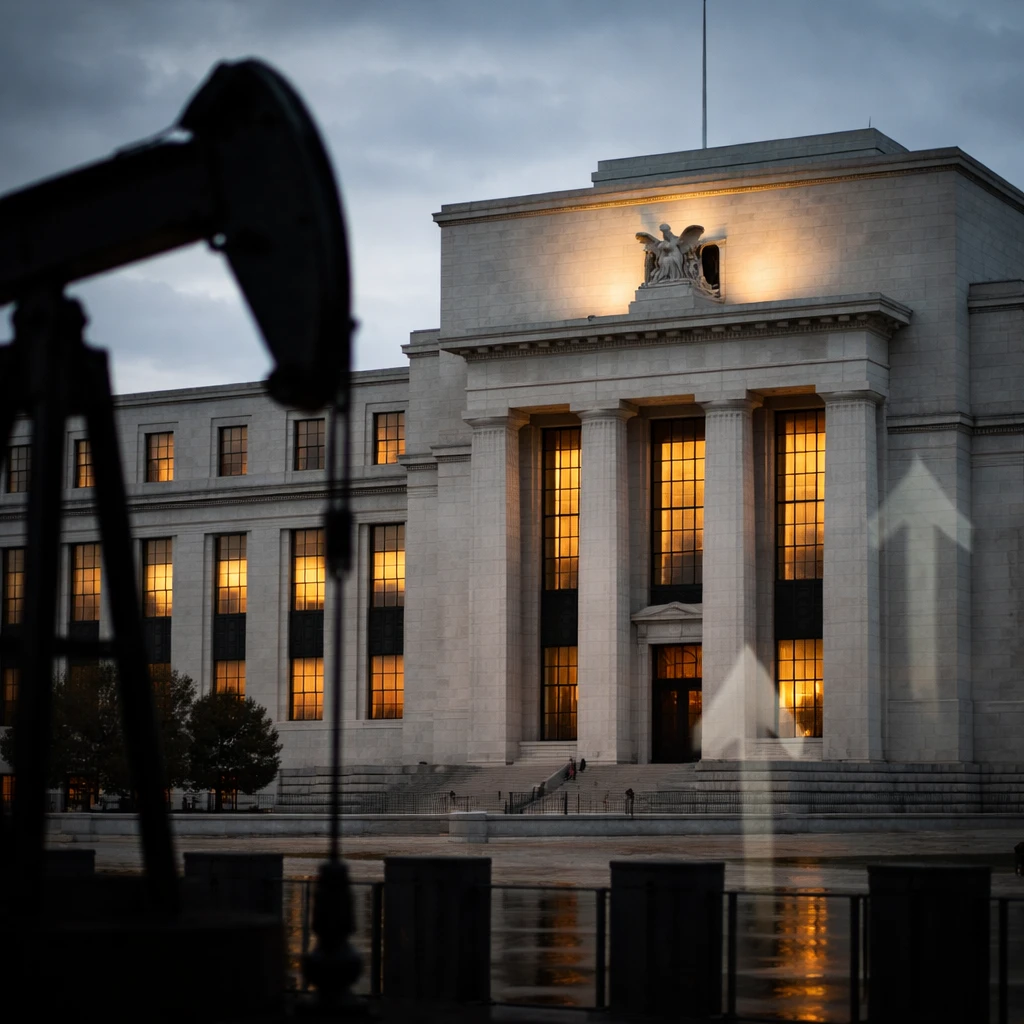
Federal Reserve Bank of Chicago President Austan Goolsbee told Bloomberg Television on Friday that the central bank still has the full suite of monetary policy tools available and that he cannot view the present situation as one where only rate reductions are conceivable.
Goolsbee's remarks came after the Fed left its benchmark interest rate unchanged at the meeting held at the end of April. At that gathering, three officials dissented from statement language that suggested the central bank ould be signaling a rate cut as its next move. Those dissents preferred wording that would leave open the possibility that the next change in policy could be either a cut or a hike.
According to Goolsbee, his comments mirror a broader adjustment among Fed policymakers away from assuming a near-term rate cut. That shift, he said, has been driven significantly by concerns about inflation tied to an energy-price shock the article attributes to the US war in Iran. He added that he is uneasy about inflation and believes price pressures extend beyond that energy-related shock.
Goolsbee does not have a vote on monetary policy this year. Nonetheless, he confirmed on Friday that he considers both rate increases and reductions to be plausible options for colleagues on the Federal Open Market Committee. He emphasized his worry about inflation and the persistence of price pressures beyond the recent energy disturbance.
Context and implications
The statement by a senior Fed official underlines ongoing uncertainty inside the central bank over the near-term path for interest rates. While the Fed paused policy action at the April meeting, disagreement among officials over the forward signal in the statement highlights that the committee is not unified around a singular expectation of an imminent cut.
Goolsbee ccentuated the role that an energy-price shock tied to international conflict has had in shaping the debate. He warned that inflation pressures are not limited to that single source, indicating a broader set of price dynamics that policy makers are weighing.
Bottom line
Policymakers, according to Goolsbee, are keeping all options open. The debate over whether the Federal Reserve will next lower or raise rates remains active, informed by concerns about inflation persistence and recent energy-price developments.