
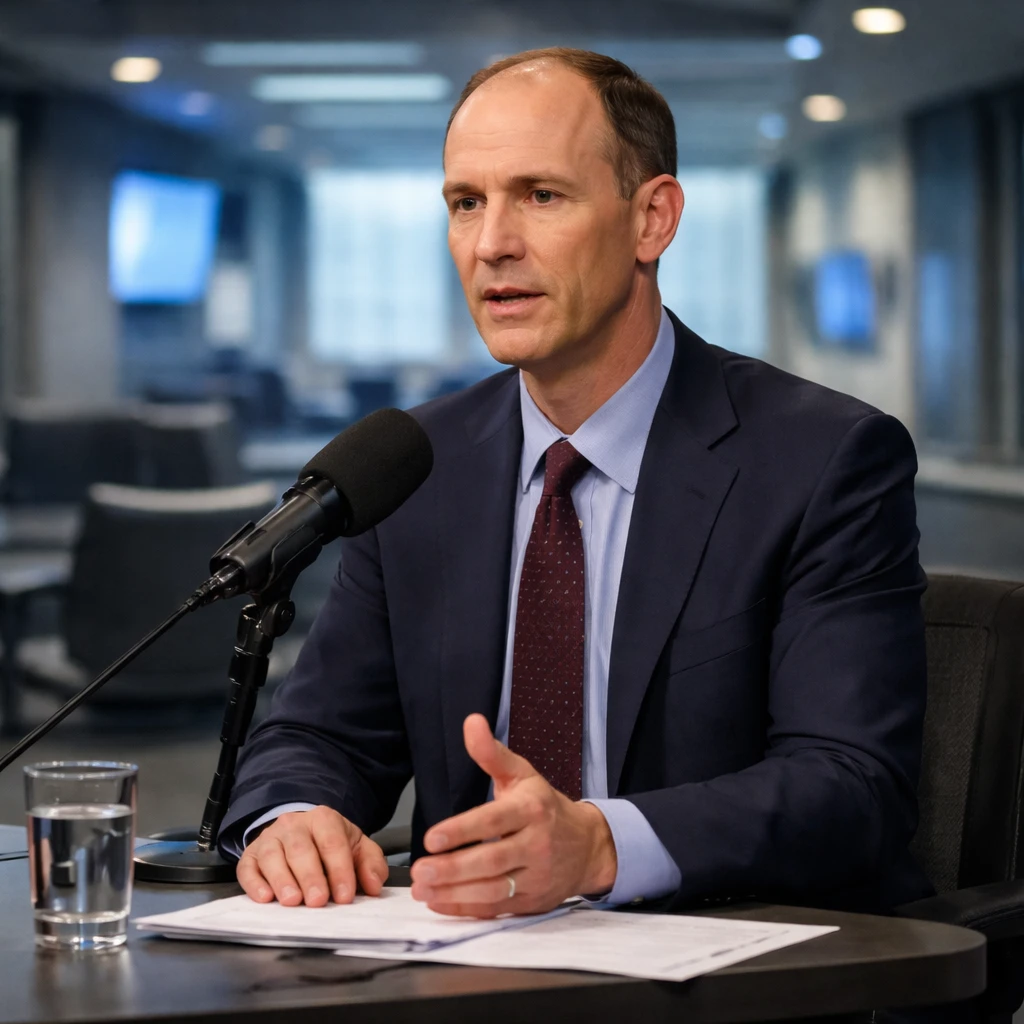
Federal Reserve Bank of Chicago President Austan Goolsbee said Friday that April's employment figures indicate a labor market that has remained steady even as inflation has intensified, presenting a mixed picture for policymakers.
In a televised interview with CNBC, Goolsbee described the job market as "stable without being good," adding that he still saw "not a lot of evidence that the job market is falling apart." He repeated that there was limited evidence of any deterioration in employment conditions.
On the inflation front, Goolsbee was more guarded. "And on the other side of the Fed’s mandate, inflation hasn’t been great, and it’s been going the wrong way lately," he said, noting uncertainty about how much further price pressures might increase. He emphasized that the recent rise in inflation is not confined to energy prices and that elevated inflation was apparent before the conflict in Iran.
The Fed official stressed that the central bank needs to watch developments closely, including whether the current energy shock is transitory or persistent. He said the Fed must keep all options under consideration, indicating that policy choices remain contingent on how inflation and related shocks unfold.
Goolsbee also commented on communication strategy, expressing reluctance to use public language to "jawbone" markets - a reference to attempting to influence market expectations through rhetoric. He voiced concern about market participants pricing in future gains in productivity from artificial intelligence before those gains have materialized.
Context and implications
Goolsbee's remarks underline a central dilemma for policymakers: a labor market that shows resilience but not strong momentum, alongside rising inflationary pressures that appear broader than a single commodity shock. His comments signal vigilance at the Fed regarding both the persistence of inflation and the appropriate stance of monetary policy should price pressures continue to intensify.
Sources referenced in remarks
- April employment data - cited by Goolsbee as showing stability.
- Inflation trends - described as worsening recently and not solely driven by energy.
- Geopolitical event - referenced by Goolsbee when noting inflation was elevated before the war in Iran.
- Market expectations on AI - mentioned as a concern when markets price in unconfirmed productivity gains.