
Global markets are beginning to show tangible signs of stress as the conflict involving the United States and Iran continues. The impact is broad - from sharp moves in foreign exchange markets to stress in energy and transport sectors - and is testing the capacity of policymakers and firms to absorb additional shocks.
Asia's currencies take a hit
Since the U.S. and Israel launched strikes on Iran in February, Asian currencies have recorded some of the steepest declines across foreign-exchange markets. Around 80% of sea-borne oil that transits the Strait of Hormuz typically heads to Asia, which leaves the region particularly exposed to any disruption in flows. The rupiah in Indonesia slid to a record low on Tuesday, and currencies in other Asian fuel-importing economies - including India and the Philippines - have also reached historic lows.
Central banks in the region have been active in currency markets for weeks, acting either directly or via state-owned banks, and officials are contemplating further steps. Currencies in South Korea, Thailand and Malaysia have also come under downward pressure. As Mitul Kotecha, head of Asian FX and rates strategy at Barclays, put it: "Central banks will be reluctant to sell down reserves. As such, we’re probably going to see more creative measures to support their respective currencies."
Renewed strain on the yen
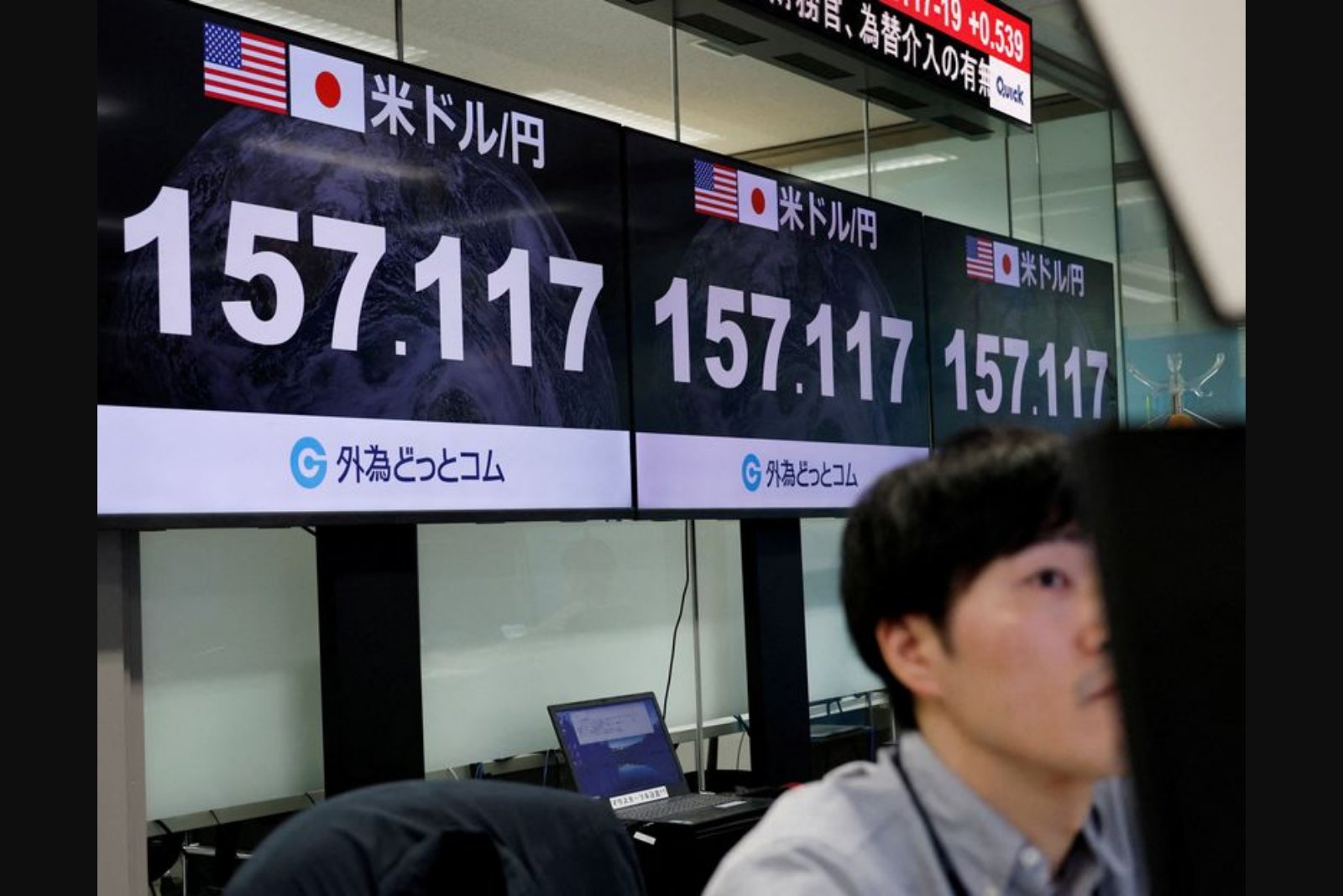
Japan has not been spared. The yen has taken on fresh downward momentum, compounding earlier weakness related to Japan's low interest-rate environment and concerns about Prime Minister Sanae Takaichi's borrowing-led growth proposals. Japan imports about 95% of its oil from the Middle East, a factor that makes the currency acutely sensitive to rises in energy costs. Authorities have intervened as the yen moved toward the 160-per-dollar mark to deter speculative pressure.
Thierry Wizman, global FX and rates strategist at Macquarie Group, described the dynamic: "With oil prices spiking higher, traders naturally attacked the yen, since this is a low-yielding currency, but also one whose fundamentals is most adversely affected by high oil prices." Analysts caution that intervention alone is unlikely to reverse the yen's slide unless the conflict eases and global rates move higher soon.
Food-price volatility resurfaces
Volatility in food prices had only recently started to subside after the shock in 2022 that followed Russia's invasion of Ukraine. The Middle East conflict risks delivering another blow by tightening fertiliser supplies and lifting energy costs, an outcome that would raise production and shipping costs for food. These pressures could be compounded by the return of the El Nino weather pattern.
The Baltic Dry Index sits at its highest point since 2023, underscoring tighter shipping conditions. Emerging economies, where food constitutes a larger portion of the consumer price basket, are expected to feel the effects more intensely. "Elevated food prices are a problem across the world, but particularly in economies where food makes up a large share of the inflation basket or food supplies are reliant on imports," said James Pomeroy, a global economist at HSBC.
Consumers feel fuel-price pain
Higher energy prices are already visible at the pump, a development that has political as well as economic implications. U.S. gasoline prices, closely watched by markets and policymakers, have climbed from roughly $3 to more than $4.50 per gallon, according to motorist advocacy group AAA. Zurich Insurance Group's chief market strategist Guy Miller warned of possible domestic consequences: "If that continues to go up and we head towards $5, there’s going to be a lot of unrest domestically, and that might force Trump to change tack again on the war with Iran."
Beyond direct fuel costs, the energy shock will push up prices for household goods derived from oil and natural gas, from toothpaste to laundry detergent. Rising inflation expectations are being monitored closely by central banks. The European Central Bank's Consumer Expectations Survey showed one-year-ahead inflation expectations jump to 4.0% in March from 2.5% in April, a move that could feed into tighter monetary policy if sustained.
Airlines under pressure
The airline industry faces its most severe test since the 2020 pandemic shock. Jet fuel prices have surged almost 84% since the conflict began, and the risk of supply disruption remains if the situation does not stabilize. The mounting fuel bill has already had concrete consequences: ultra-low-cost carrier Spirit Airlines ceased operations earlier this month, citing rising fuel prices as the reason for its failure.
While some airlines argue the probability of supply disruption is falling, the sector as a whole has lagged broader markets. European airline stocks have fallen roughly 14% year-to-date, while the broader equity market has risen about 3% over the same period.
Bonds recalibrate; risks remain
Major bond markets steadied after an initial war-triggered selloff forced traders to reprice rate expectations, but analysts note fresh strains are appearing that could re-emerge. In Britain, political uncertainty has intensified pressure on the gilt market. The U.S. Treasury market - a systemically important market - has 10-year yields hovering around 4.40%, roughly 40 basis points above pre-war levels. Higher U.S. yields risk tightening financing conditions for emerging markets that price borrowing relative to Treasuries.
Miller highlighted a key threshold for markets: "There is a danger zone for equity markets and credit markets if we get yields above the 4.5% level on 10-year Treasuries. That has tended to be disruptive."
Investor tools and market navigation
What are the best investment opportunities in 2026? The original text highlighted a data-driven approach. It argued that the best investment decisions begin with improved data and analytics rather than intuition alone. One product referenced positions institutional-grade data alongside AI-powered insights as a way to help investors identify opportunities more frequently, while noting no guarantees of success. The text concluded with a suggestion to combine such tools with human judgement when deciding on investments.
The persistence of the conflict and the resulting economic strains underscore the importance of monitoring energy markets, currency stability, food-price developments and interest-rate paths. For real assets and infrastructure investors, higher energy costs and currency volatility will be central considerations for underwriting and balance-sheet resilience over the coming months.
Conclusion
The ongoing US-Iran confrontation is amplifying existing vulnerabilities across regions and asset classes. Policymakers and market participants are adjusting in real time - through interventions, fiscal and corporate responses, and market repricing - but several key metrics remain at levels that could produce broader financial stress if the conflict endures or intensifies.