
Foreign capital is increasingly targeting Malaysia as global investors look to diversify amid a softer U.S. dollar and heightened geopolitical tension. The shift has highlighted Malaysia’s improving investment case after a period of underperformance relative to regional peers, with analysts pointing to a combination of steady economic expansion, political stability and a resurgent currency.
Net foreign purchases of local-currency debt reached $6.5 billion in 2025, the largest annual inflow in four years and the highest total in the region, with demand remaining firm into January. Investors say Malaysia occupies a "sweet spot between low-yielders, such as Singapore, Thailand, and South Korea, and high-yielders such as Indonesia and India, which come with their own set of risks," according to Rong Ren Goh, a fixed income portfolio manager at Eastspring Investments.
That repositioning has been reinforced by political developments and macroeconomic indicators. A unity government formed after Prime Minister Anwar Ibrahim took office in late 2022 is credited with restoring a degree of stability after a decade marked by political volatility. Fiscal consolidation efforts have narrowed the budget shortfall to 3.8% of GDP, down from an average of about 6% during the COVID-19 pandemic, and the central bank has avoided large, disruptive rate swings compared with some neighbours.
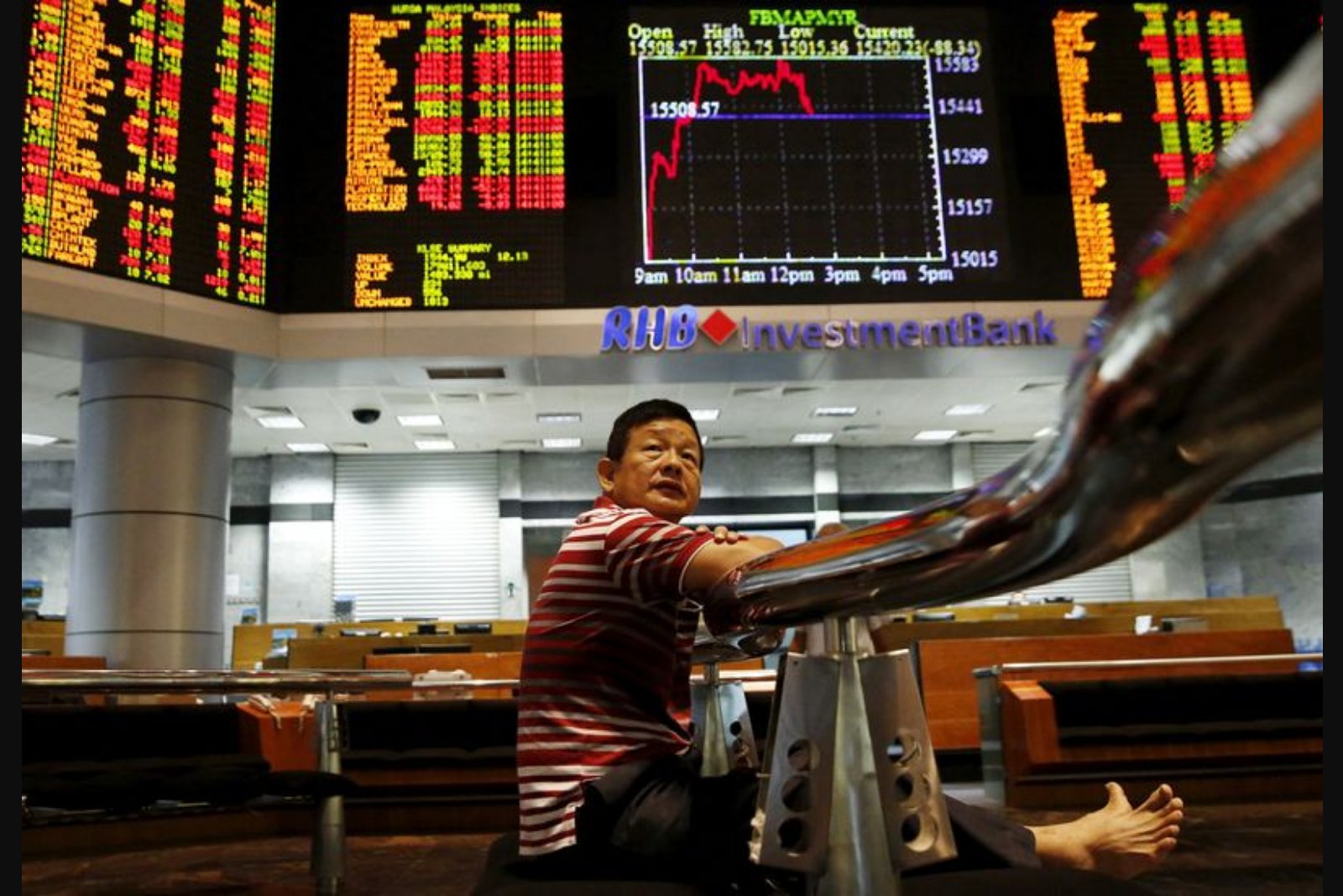
Markets have responded. Malaysia’s benchmark stock index is up 12% over the past 12 months and recently climbed to its highest level since October 2018 as investors anticipate growth tied to an AI-driven data centre expansion. By comparison, over the same 12-month span Thai equities rose roughly 3% and Indonesian equities climbed about 15%.
Major U.S. technology companies, including Amazon Inc and Microsoft, have committed billions to Malaysian data centre projects, and an analysis from Wood Mackenzie finds Malaysia has the largest data centre project pipeline in Southeast Asia. "Malaysia is a rising star, driven by the AI cycle and substantial gain in market share of certain semiconductors and chips," said Samsara Wong, Asian sovereign analyst with PineBridge Investments. "As long as the AI story is there, Malaysia will remain a beneficiary."
Currency dynamics have been another focal point for investors. The Malaysian ringgit has strengthened about 17% since the start of 2024, making it the best-performing Asian currency over that period. It recently reached 3.915 to the U.S. dollar, its strongest level since May 2018. Eastspring says it has grown more constructive on the ringgit over the past 18 months, boosting expected returns on Malaysian bonds and supporting an overweight stance in both bonds and the currency.
The improved capital inflows and market performance come alongside solid economic results. Official advance estimates released last month show the economy likely expanded 4.9% in 2025, a pace that exceeded both government and central bank projections. That growth, together with narrowing fiscal deficits and a relatively stable interest rate stance, has reinforced investor interest.
Goldman Sachs recently raised its rating on Malaysian equities while trimming its view on Indonesia, with bank strategist Timothy Moe noting, "We find the macro, thematic, and positioning backdrop of Malaysia appears more favourable and warrants a more constructive stance." The combination of macro strength, thematic catalysts such as AI-related infrastructure, and improved investor positioning has helped lift sentiment toward Malaysian assets.
Market participants point to additional support coming from divergent central bank paths. The U.S. is widely expected to cut interest rates at least twice this year, while the Malaysian central bank is projected to hold rates steady amid robust domestic growth. That outlook is likely to sustain the ringgit’s strength and keep Malaysian bonds appealing to foreign investors.
UBS projects the ringgit could reach 3.80 per dollar by the end of 2026, citing strong foreign direct investment, a robust trade balance and a narrowing interest rate differential as supporting factors.
Still, the rapid appreciation of the currency carries potential downsides. A stronger ringgit can make Malaysian exports less competitive and could dampen the nascent rebound in tourism. Investors also note that some of Malaysia’s gains are tied to the AI-driven expansion in data centres and increased market share in certain semiconductor segments - gains that are contingent on the continued momentum of those themes.
Overall, an influx of foreign cash, rising equity prices, a buoyant currency and sizeable technology-sector investment have converged to recast Malaysia as a favored destination for global investors seeking a balance of yield and stability in Southeast Asia.