
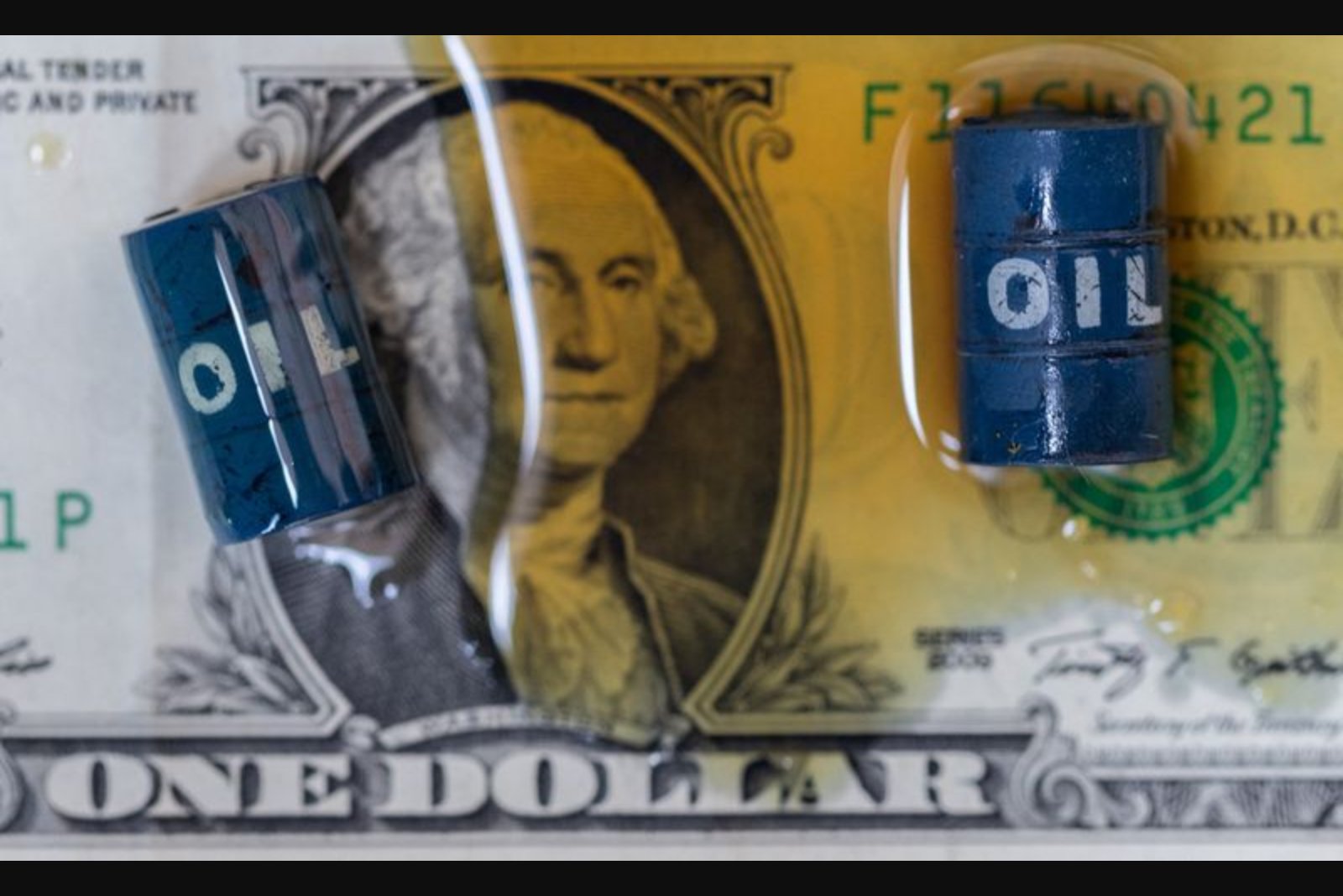
Global government bond markets sold off sharply on Monday as oil prices climbed above $115 per barrel, triggering concern among investors that the conflict in the Middle East could stoke inflation and alter central bank policy paths.
Oil surged more than 20% to its highest level since July 2022 after a week-long escalation in what the market described as a rapidly worsening U.S.-Israeli war with Iran. The jump followed reports that some major oil producers in the region had reduced output and renewed fears about possible prolonged disruption to shipping through the Strait of Hormuz.
"The spike in oil price is a clear function of uncertainty as to the duration of the conflict," said George Boubouras, head of research at K2 Asset Management, noting that higher oil prices are a drag to future global growth and can be inflationary.
That inflationary threat, and the chance it could force central banks to keep policy rates elevated for longer or even raise them further, has diminished the appeal of bonds as safe havens. Instead, investors have been rapidly repricing expectations for interest rates in the near term.
In U.S. policy markets, traders moved the likely timing of the Federal Reserve's next rate cut out to September, from prior expectations in June or July.
Governments in Asia moved to blunt the immediate impact on consumers and domestic economies. South Korea, for example, is preparing to cap fuel prices for the first time in nearly 30 years.
Market moves were sizeable and broad-based. Three-year Australian government bond yields jumped 16 basis points to 4.592%, marking the highest level for that maturity since mid-2011. Ten-year Australian government bond yields rose 13 basis points to 4.977%. (Bond yields rise when prices fall.)
In Tokyo, Japanese government bond yields climbed across the curve and the yen came under pressure as the oil price shock rippled through markets.
Risk assets broadly weakened as investors sold stocks and precious metals, while the U.S. dollar strengthened as a favored safe-haven currency.
"This chaos in the financial markets is all about the Strait of Hormuz... This oil shock won’t end until ships can sail freely through the Strait," said Ed Yardeni of New York-based Yardeni Research. "Until then, the financial markets are likely to become increasingly concerned about a 1970s-style stagflation scenario," he added, referring to a situation in which growth stalls even as prices rise.
The two-year U.S. Treasury yield, a security closely tied to expectations for Federal Reserve policy, rose 5.9 basis points to 3.6146% after climbing more than 17 basis points the previous week.
European sovereign debt futures also signaled a widening selloff. German Bund futures declined 0.46%, while French OAT futures fell 0.67% on Monday, suggesting pressure could carry over to European bond markets.
Political developments in Iran added to market unease. Iran on Monday named Mojtaba Khamenei to succeed his father Ali Khamenei as supreme leader, a move market participants interpreted as indicating hardliners remain firmly in charge.
Charu Chanana, chief investment strategist at Saxo, said markets were viewing the new Iranian leader as a hardliner with close ties to the Revolutionary Guards, which may imply ongoing policy continuity and elevated confrontation risk. "For investors, crude starts becoming a real macro worry when it stops being a one-day spike and starts feeding into inflation, margins and policy expectations," Chanana said.
The combination of a sharp rise in energy costs, supply disruptions and political signals from the region has prompted investors to re-evaluate prospects for growth, inflation and central bank action across multiple markets.
As market participants continue to digest developments in the Middle East and their implications for commodity flows, interest-rate trajectories and inflation, volatility is likely to remain elevated until clearer information on supply and shipping emerges.