
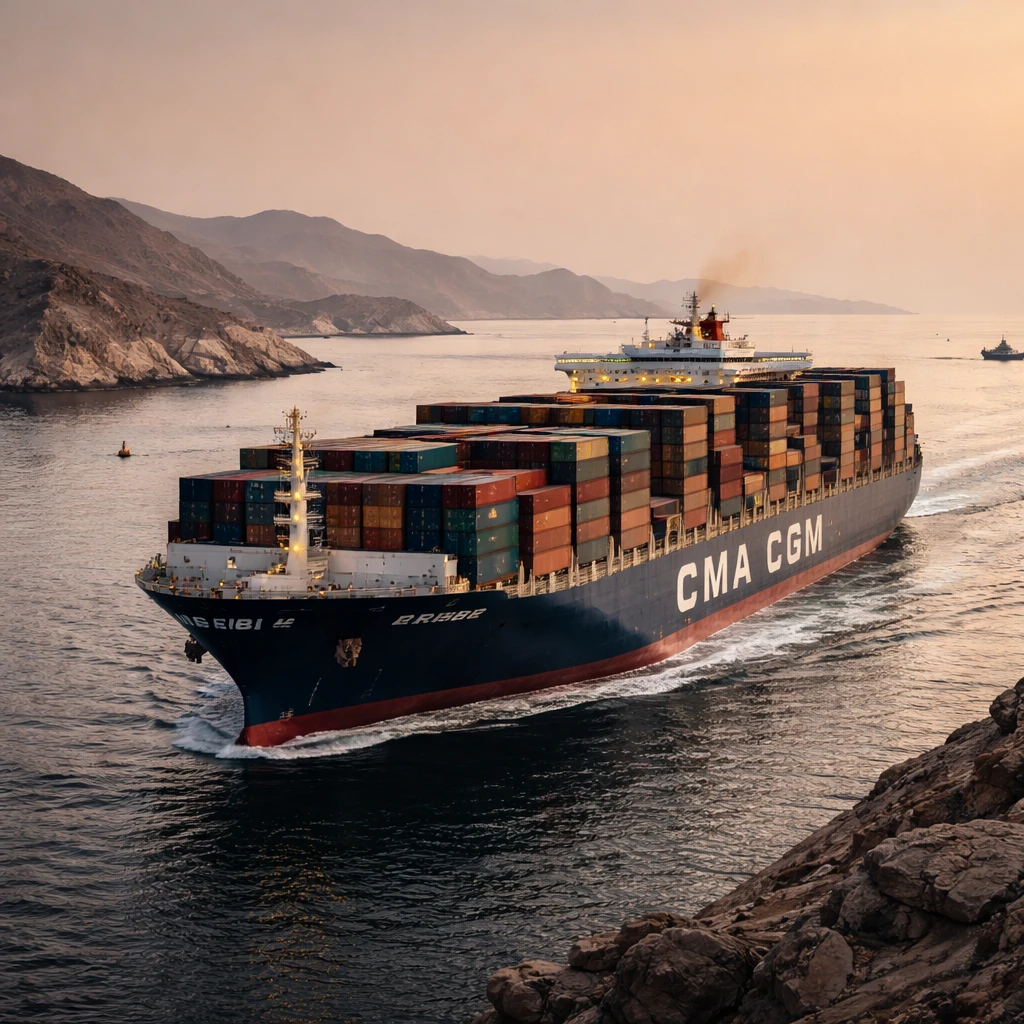
A container ship tied to France's CMA CGM became the first Western-linked vessel to pass through the Strait of Hormuz since the outbreak of the Iran war in late February, completing an eastbound transit that underlines a tentative effort to restore commercial navigation along the region's key shipping lane.
The Maltese-flagged CMA CGM Kribi left waters off Dubai on Thursday afternoon and proceeded along the Iranian coastline, moving through the designated corridor between Qeshm and Larak islands. During the passage, the vessel broadcast its French ownership, a notable departure from the weeks in which Western-linked shipping largely avoided the route.
The Kribi had been stationary in the Gulf since early March, a reflection of the sharp fall in non-Iranian traffic after hostilities escalated. That extended pause in operations mirrored broader commercial caution as insurers, carriers and operators reassessed the risks of transiting the Strait, which remains a critical artery for global energy and trade flows.
CMA CGM, the world's third-largest container shipping company and majority-owned by the Saade family, is understood to have coordinated with Iranian maritime authorities to enable the vessel's transit. The ship is believed to be bound for Pointe-Noire in the Republic of Congo and is operating as part of a service that links India, the Middle East Gulf and Africa.
The timing of the transit coincides with mounting diplomatic friction between France and the United States over how to manage the conflict. U.S. President Donald Trump, speaking in a televised address on Wednesday night, characterized the most difficult phase of the conflict as completed and urged NATO allies to assume responsibility for securing oil flows through the Strait of Hormuz.
"The hard part is done," he said, and called on partners to "take the lead" in reopening the key shipping route. He added that "the countries of the world that do receive oil through the Hormuz Strait must take care of that passage. They must cherish it. They must grab it and cherish it, they can do it easily."
These public remarks come as NATO partners have shown reluctance to intervene directly in operations to reopen the Strait, even while Iran continues to target commercial vessels with drones and missiles. That pattern of attacks has been linked to a halt in traffic through the waterway for weeks, exerting upward pressure on oil and gas prices and prompting concerns about potential broader economic consequences.
President Trump has also leveled criticism at France and President Emmanuel Macron for what he described as inadequate support for military measures against Iran. Macron, in response, pushed back on a more transactional approach to military engagement, emphasizing the gravity of decisions that affect war, peace and human lives.
"This is not a show. We are talking about war and peace and the lives of men and women," Macron said during a visit to South Korea. "When you want to be serious you don't say every day the opposite of what you said the day before," he added, in an apparent reference to shifting rhetoric.
The Kribi's passage marks a limited but meaningful movement toward restoring commercial activity through the Strait of Hormuz. The vessel's broadcast of French ownership and the reported coordination with Iranian maritime authorities suggest operational steps are being taken to manage the complex logistics and political sensitivities involved in reestablishing regular shipping patterns.
For carriers, shippers and energy market participants, the transit will be observed closely for signs that Western-linked shipping may gradually resume normal operations in the Gulf. At the same time, the evolution of military and diplomatic responses among NATO members and regional actors will remain a central determinant of whether this transit represents an isolated instance or the start of a more sustained reopening of the waterway.
Summary: The CMA CGM Kribi, Maltese-flagged and linked to French ownership, completed the first Western-associated transit of the Strait of Hormuz since the Iran war began in late February, moving eastbound through the channel between Qeshm and Larak islands. The ship had been idle in the Gulf since early March and reportedly coordinated with Iranian maritime authorities for the passage. The transit occurs amid rising tensions between France and the U.S. over responsibility for reopening the Strait, with President Trump urging allies to secure oil flows and President Macron urging measured, consistent decision-making.
Key developments to watch:
- The Kribi's transit signals a possible resumption of Western-linked commercial traffic through the Strait of Hormuz, after weeks of disruption that left many vessels sidelined.
- CMA CGM's reported engagement with Iranian maritime authorities to facilitate the passage underscores the complex interplay of commercial logistics and diplomacy required to reopen the route.
- Political disagreement between France and the United States over military and security responsibilities could shape the durability of any renewed shipping activity through the Strait.