
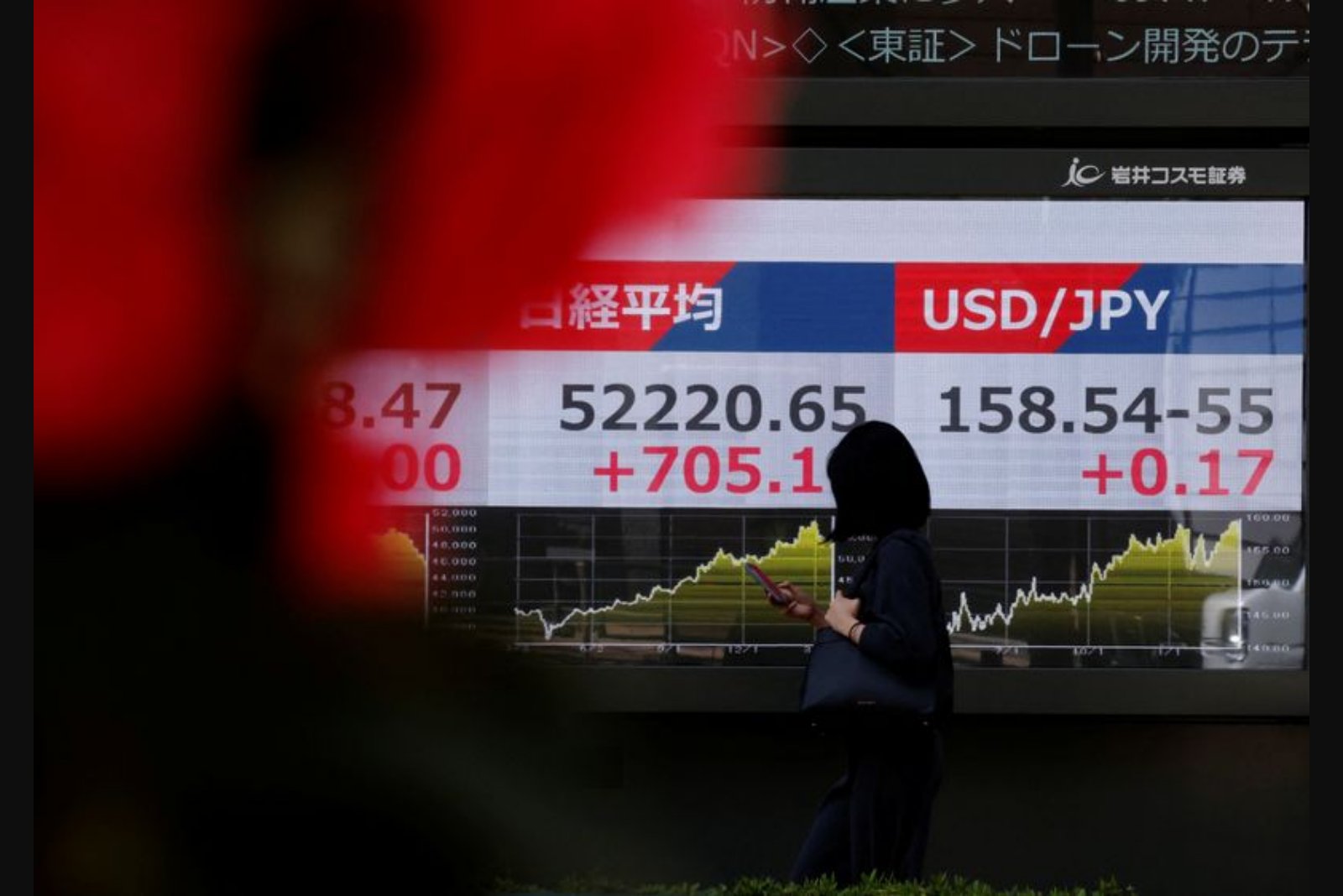
Foreign capital has fled a swath of Asian equity markets in March amid concerns that the U.S.-Israeli war with Iran could disrupt energy supplies and spark an oil-driven economic shock. Data from LSEG covering exchanges in South Korea, Taiwan, Thailand, India, Indonesia, Vietnam and the Philippines show net foreign sales of $50.45 billion so far this month - on track to be the largest monthly exodus recorded since at least 2008.
Brent crude surged as much as 65% this month, reaching $119.5 a barrel, intensifying worries that higher energy costs could feed directly into inflation and weigh on growth in economies that are net importers of energy.
Jason Lui, head of APAC equity and derivative strategy at BNP Paribas, attributed the outflows to a widespread risk-off mood driven by conflicts in the Middle East, noting that most emerging Asian economies import more energy than they export. "Outflows from EM Asia markets were driven by the broad-based risk-off sentiment due to the Middle East conflicts, as most of EM Asia economies are net importers of energy products," he said.
Abdelaziz Albogdady, market research and fintech strategy manager at brokerage FXEM, said the selling was intensified by a concurrent rise in global yields and a reassessment of central bank rate paths, in addition to the potential economic impact on net oil importers. He added that recent policy signals from major central banks suggest interest rates are likely to remain on hold or move higher if the conflict keeps pressure on prices.
The regional distribution of flows is heavily skewed. Taiwan has seen approximately $25.28 billion in net foreign outflows month-to-date, the highest such figure in at least 18 years. South Korea and India recorded net foreign sales of about $13.5 billion and $10.17 billion respectively. Smaller but notable net outflows were logged in Thailand ($1.35 billion), the Philippines ($182 million) and Vietnam ($21 million). Indonesia was an outlier, attracting net foreign inflows of $59 million over the same interval.
BNP Paribas’ Lui said that selling pressure in Taiwan and South Korea was concentrated in AI and technology names that had already amassed sizable gains during the AI-driven rally. At the same time, a note from Nomura analysts said tech hardware stocks in Korea and China still represent among the more attractive segments and have seen limited immediate direct impact from the Middle East conflict or from higher energy prices.
Market participants warned that the outlook for EM Asia equities may remain unsettled in the near term as conflicting headlines and elevated geopolitical risk persist. Lui cautioned that this energy shock could be slower to resolve than other policy shocks, saying: "Unlike the Liberation Day scenario during which the U.S. can unilaterally decide on the tariff threshold, the current energy shock may take longer to normalize given the disruption to the production facilities in the Middle East."
Given the scale of reported outflows and the jump in oil prices, the episode has stoked debate over the balance between inflationary pressures and growth, particularly in economies that rely on energy imports. Analysts pointed to higher yields and shifting rate expectations as additional channels through which the conflict has weighed on sentiment and capital flows.
Clear summary
Net foreign selling of $50.45 billion across select Asian exchanges in March has been driven by fears that the U.S.-Israeli war with Iran could disrupt Middle East energy supplies, sending Brent crude up to $119.5 a barrel and prompting a re-evaluation of interest rate paths amid rising yields. Taiwan, South Korea and India have borne the brunt of the outflows, with technology-related stocks particularly affected.