
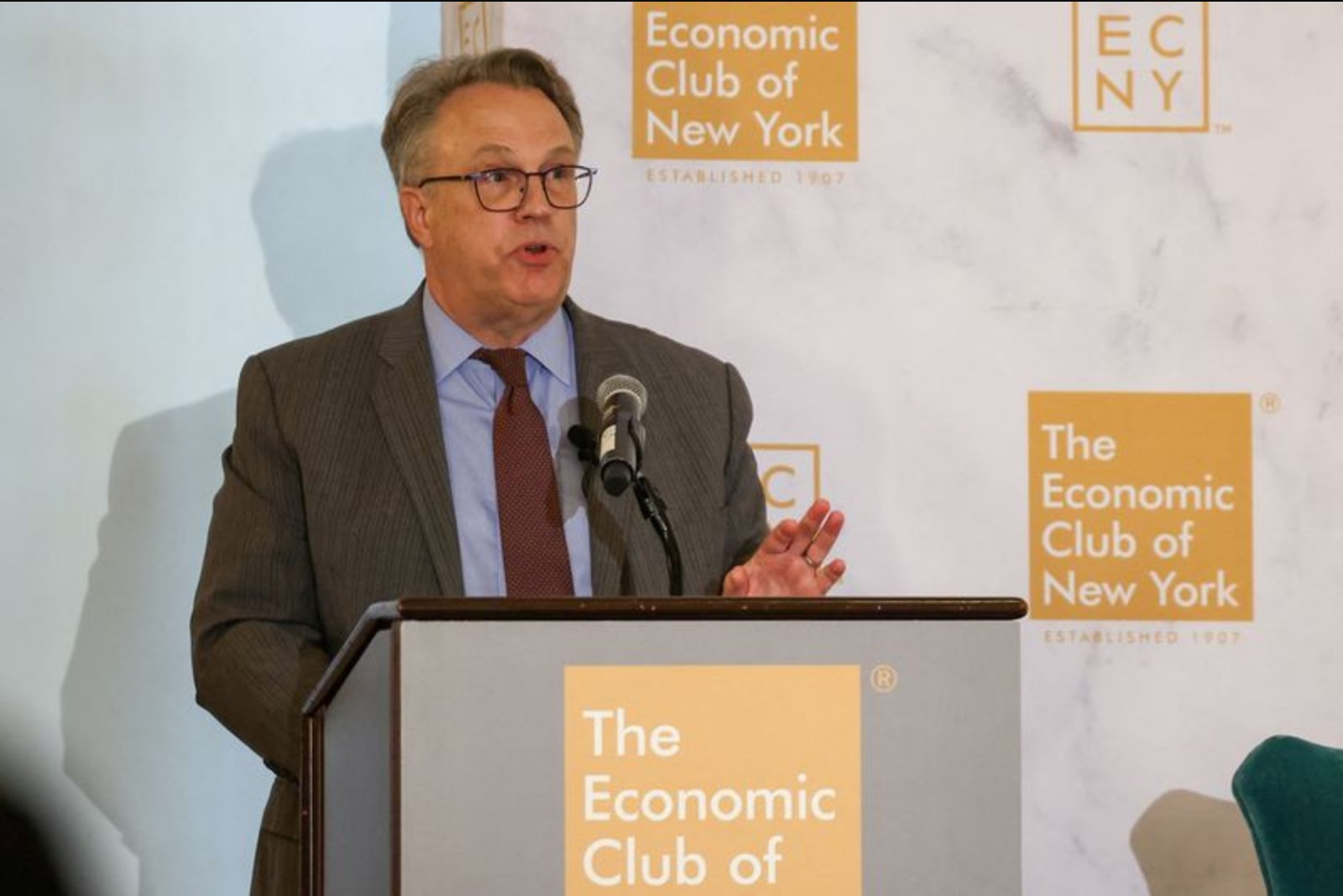
Federal Reserve Bank of New York President John Williams said in an interview on Fox Business that U.S. monetary policy is "well positioned" to handle the heightened uncertainty generated by rising energy prices related to the war in the Middle East. Williams emphasized that the conflict has increased risks in both directions - greater potential for higher inflation and increased risk of an economic slowdown - and said the Fed seeks to balance those opposing pressures.
Williams pointed to surging energy costs as the most immediate channel through which the conflict could affect the U.S. economy. He noted that higher energy prices can push up inflation while simultaneously weighing on consumer spending, but stressed that the pass-through from energy to other prices is not instantaneous. "The pass-through of energy prices typically takes months or maybe a year" before it shows up more broadly in the inflation data, he said.
On the labor market, Williams described conditions as a "low-hire, low-fire" environment with unemployment that is low and stable. He suggested that this pattern appears likely to continue for the time being, implying labor market resilience despite the external shock from energy markets.
Turning to developments in private credit, Williams acknowledged that those events are being monitored by policymakers. However, he pushed back on the notion that trouble in private credit markets would by itself create deep, systemic problems for the broader financial system. "I don’t see it as a systemic risk to our system right now," he said.
Williams’ remarks were consistent with comments he made earlier in the week during an appearance in Staten Island, New York. He pointed to last year’s policy actions and the current stance as positioning monetary policy to keep the increased risks in balance.
Key points
- Williams says monetary policy is "well positioned" to balance higher inflation risks and the threat of slower growth due to surging energy prices.
- Energy price increases are the most direct economic effect of the Middle East war and typically take months to a year to transmit to other prices.
- The labor market remains characterized by low hiring and low firing with stable unemployment; private credit disturbances are being watched but are not assessed as systemic.
Risks and uncertainties
- Rising energy prices could elevate inflation and reduce consumer spending if pass-through to broader prices accelerates - impacting consumer-facing sectors and inflation-sensitive assets.
- Escalation in the Middle East could amplify uncertainty, increasing downside risks to economic growth as well as upside risks to inflation.
- Emerging problems in private credit markets are a monitored risk; while not deemed systemic now, they represent an uncertainty for the financial sector and credit-dependent borrowers.