
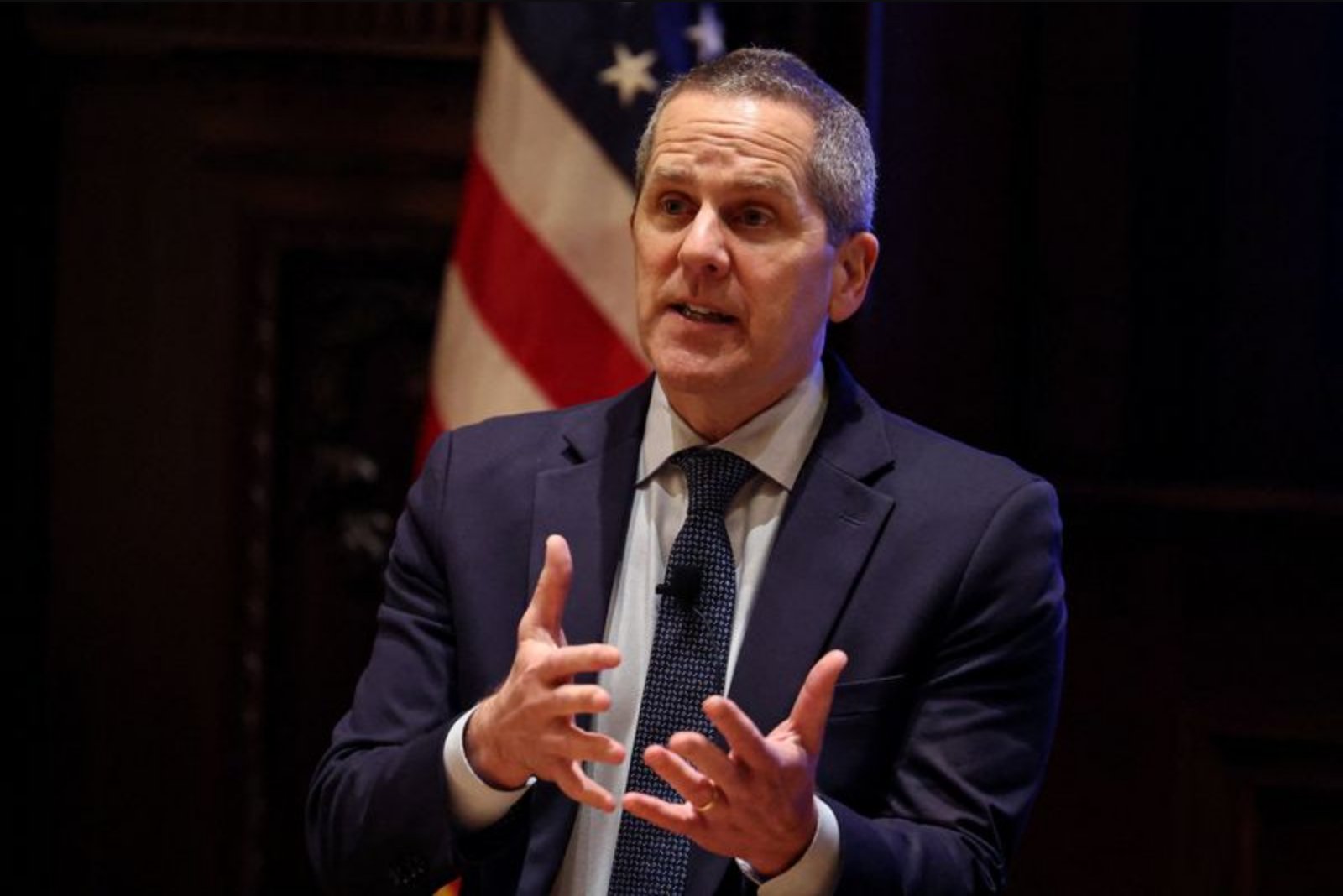
WASHINGTON, March 24 - Federal Reserve Governor Michael Barr said on Tuesday that interest rates may have to remain unchanged "for some time" before policymakers can comfortably move to cut the policy rate. In prepared remarks delivered to a community development conference, Barr pointed to inflation remaining above the Fed's 2% target and highlighted the risks stemming from the ongoing conflict in the Middle East.
On the labor market, Barr said conditions "appear to be stabilizing." He contrasted that with inflation, noting the central bank's preferred gauge, the Personal Consumption Expenditures price index, stands roughly a percentage point above the 2% goal. While he said he was "hopeful" that inflation would decline this year, Barr warned that higher oil prices are already moving through to gasoline and other consumer expenses, creating potential upside pressure on inflation.
Barr set out a clear condition for further policy easing: "I would like to see evidence that goods and services price inflation is sustainably retreating before considering reducing the policy rate further, provided labor market conditions remain stable," he said. That cautious stance underscores the Fed's emphasis on confirming a durable downtrend in underlying inflation measures before loosening monetary policy.
At its meeting last week, the Federal Open Market Committee kept the policy rate in the 3.5% to 3.75% range. Policymakers still signaled that they expect to lower rates at least once this year. However, Barr's remarks reflect the uncertainty surrounding that path, as higher oil prices and their effect on consumer costs have made the timing of any cut less certain.
Market expectations have shifted in response to the recent rise in oil prices. Investors are increasingly pricing in a scenario where the Fed holds its policy rate steady for a longer period, and some market participants now view the possibility of the central bank raising rates again before the end of the year as greater than it was before the oil price move.
Barr's comments underscore the balancing act facing the Fed: weigh stable labor market signals against persistently above-target inflation and external risks that could sustain price pressures. He set forth a conditional approach - continued patience until clear evidence of sustainably lower goods and services inflation emerges, provided labor conditions do not deteriorate.
Note: This article is based solely on remarks and information presented by Fed Governor Michael Barr and the Federal Reserve's recent policy decision.