
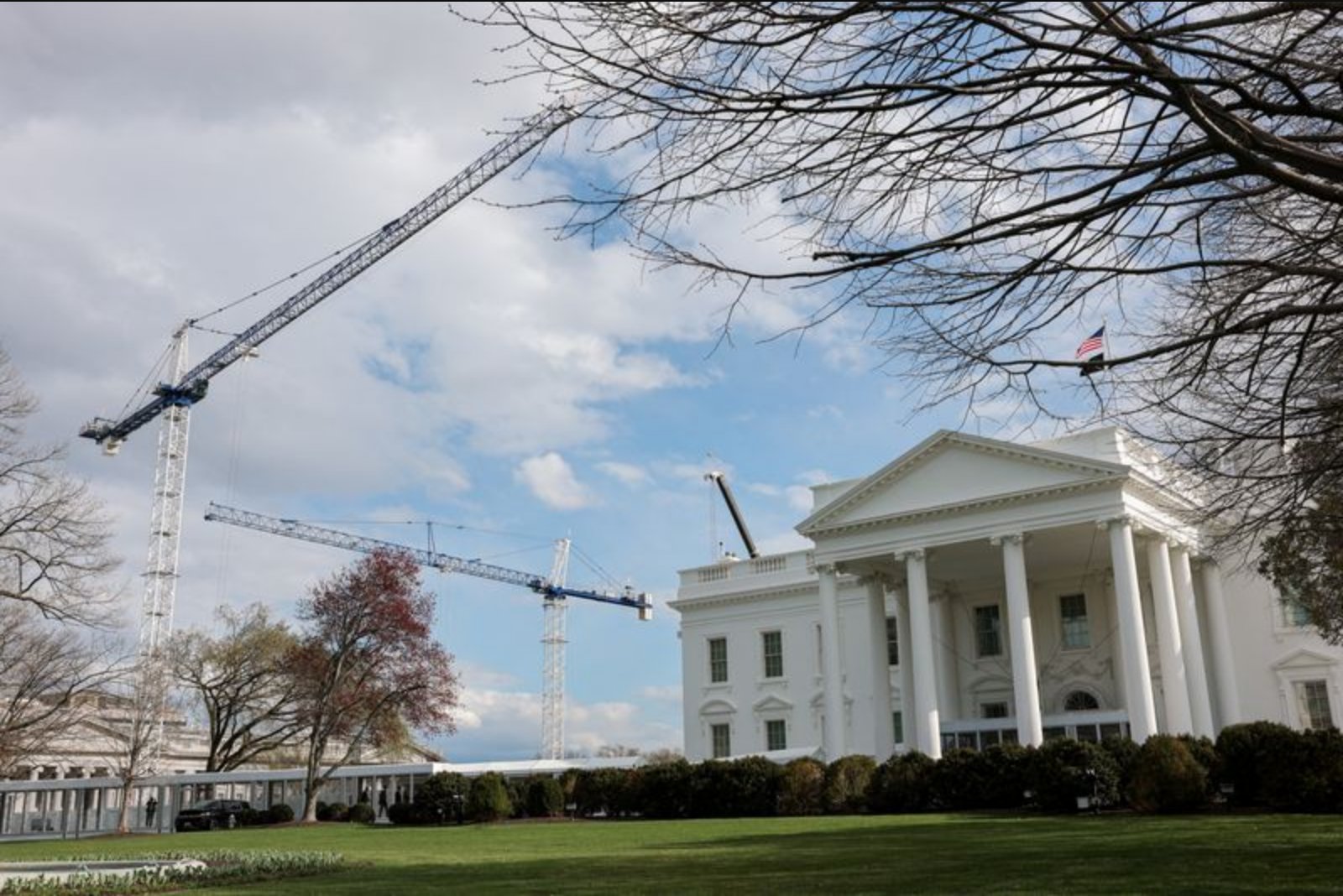
A federal judge in Washington has temporarily halted construction of a planned $400 million ballroom on the site where the White House's East Wing once stood, issuing a preliminary injunction that pauses work while a legal challenge proceeds.
U.S. District Judge Richard Leon, an appointee of Republican President George W. Bush, granted the injunction after the National Trust for Historic Preservation asked the court to stop construction. The nonprofit filed suit in December, contending that the administration exceeded its authority by demolishing the historic East Wing and beginning a major new build without explicit approval from Congress.
The project at the center of the dispute is a 90,000-square-foot ballroom that the president has described as a signature addition to the White House and a lasting emblem of his time in office. The injunction prevents the administration from moving forward with the ballroom while the court evaluates the National Trust's claims.
The Justice Department had opposed the request for an injunction, arguing the planned construction amounted to a permissible alteration to modernize the White House grounds. Government lawyers defended the administration's actions, saying the changes would modernize infrastructure, improve security and relieve pressure on the Executive Mansion, which at times uses temporary outdoor facilities to host large events. Officials and the president have repeatedly noted that the project is being paid for entirely by private donors.
In hearings before Judge Leon on March 17, he questioned government attorneys about shifting explanations for the president's authority to demolish and rebuild on the grounds, describing the White House site as a "special place" and an "iconic symbol" of the nation. Those exchanges figured in the court's decision to grant the preliminary relief sought by the National Trust.
The National Trust's complaint notes that the East Wing was originally constructed in 1902 and later expanded during the presidency of Franklin Roosevelt. The group argues neither the president nor the National Park Service, which manages the White House grounds, had the legal authority to remove the historic structure or to erect a large new facility without explicit congressional authorization.
Before the injunction, a panel of the U.S. Commission of Fine Arts - composed entirely of appointees from the current administration - voted unanimously, 6-0, in February to approve the ballroom's design. The ballroom forms part of a broader set of proposals put forward by the president to reshape parts of Washington's monumental core, plans that also include a proposed 250-foot arch and alterations at the Kennedy Center.
This ruling represents a significant legal setback for the administration's effort to proceed quickly with an ambitious redesign of a prominent portion of the White House grounds. The injunction leaves the project in limbo until the court resolves the underlying dispute about the extent of executive and agency authority and the need for congressional approval.
As the lawsuit continues, the status of the demolished East Wing site and the proposed ballroom will remain uncertain, and federal officials will need to await the court's further rulings before resuming construction.