
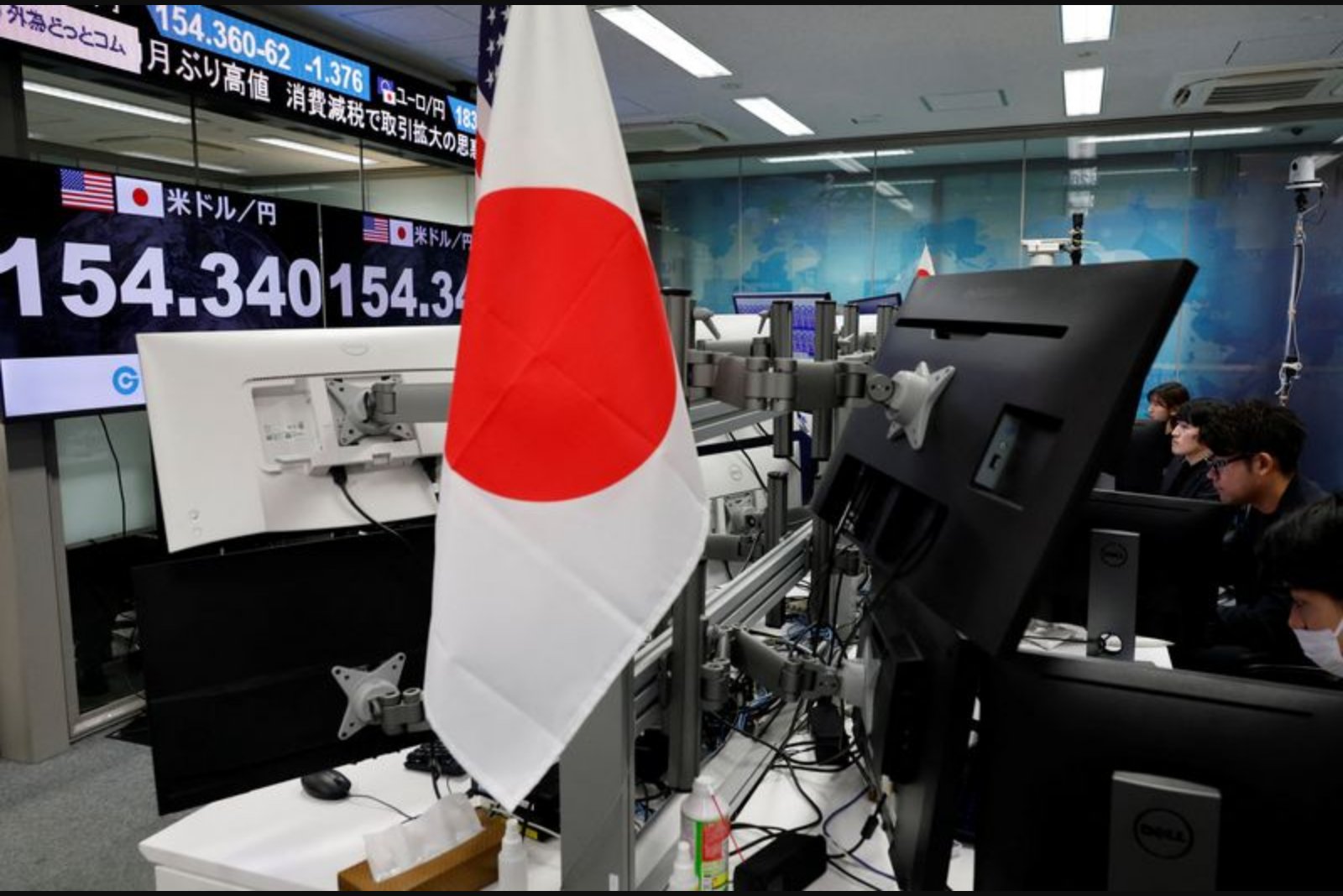
The New York Federal Reserve's unusual late-Friday rate check, which helped prompt a sharp move in the yen, has lowered the bar for potential intervention. Yet market participants and analysts say a formal, coordinated operation by Japan and the United States to sell dollars remains improbable at this juncture.
The Fed's action was the clearest signal to date that Japanese and U.S. authorities are engaging closely to address the yen's sustained weakness, leaving investors alert to the possibility of official steps. Still, several observers caution that moving from enhanced coordination and rate checks to full, joint intervention is a large step that may not be taken quickly - in part because of policy trade-offs and domestic constraints within the United States.
"Past coordinated intervention came in very rare circumstances such as during a financial crisis or a big natural disaster," said Junya Tanase, chief Japan FX strategist at JP Morgan. "We think the distance between joint rate checks to coordinated intervention is quite big."
For the moment, fears about intervention have been enough to lift the yen away from 18-month lows, easing some pressure on Japanese policymakers who have been concerned about the inflationary fallout from a weaker currency. The Fed's rate check did not occur in isolation; officials involved in negotiations describe it as the culmination of a multi-year effort by Japan to secure a bilateral statement from the United States last year authorising the option of currency intervention to address excessive volatility.
Japanese Finance Minister Satsuki Katayama has publicly stressed alignment with U.S. Treasury Secretary Scott Bessent on currency matters and warned against speculative moves betting on more yen weakness. Her rhetoric intensified on January 16 when she said Japan would take decisive action against speculative yen moves, and when asked about the possibility of joint Japan-U.S. action she stated that "no options are excluded."
Washington also had a reason to be sensitive to the market rout that pushed down the yen while contributing to pressure on Japanese government bonds and spilling over into U.S. Treasury markets. In Davos on January 20, Bessent signalled U.S. concern about the cross-border effects of rising Japanese yields, saying it was "very hard to disaggregate the market reaction from what's going on endogenously in Japan." Days after that, Bank of Japan Governor Kazuo Ueda emphasised the BOJ's willingness to work closely with the government to rein in sharp rises in yields, including by undertaking emergency bond-buying operations if needed.
Short-term market reaction
The market response to the heightened official rhetoric and the Fed's rate check has been tangible. The yen climbed to a two-month high of 153.89 per dollar on Monday, moving well off the 160 level that authorities have designated as a potential line for intervention. At the same time, the 10-year Japanese government bond yield eased by 1 basis point to 2.225 percent.
Even with that rebound, the key question facing traders is whether a joint intervention by Tokyo and Washington is imminent and whether the U.S. finds a compelling case to engage in coordinated action. Some strategists expect only modest cooperation from Washington, if any.
"In reality, the U.S. probably doesn't want to buy a currency like the yen that has seen its value depreciate for five straight years," said Shota Ryu, FX strategist at Mitsubishi UFJ Morgan Stanley Securities. "Washington could possibly cooperate with one small intervention. But it won't help in a way that could have a lasting effect in turning around the yen's downtrend."
Costs and constraints of intervention
Actual currency intervention carries a cost. If Japan were to conduct sustained yen-buying operations it would likely need to reduce some of its holdings of U.S. Treasuries to provide the dollars sold into the market. That selling could lift U.S. yields - an outcome that Washington would be reluctant to welcome while markets are already volatile.
The bar for a joint U.S.-Japan intervention is higher still. Although the United States under President Donald Trump has at times favoured a weak dollar to support exports, further dollar declines might feed a revival of a "Sell America" dynamic that has recently gained traction, complicating U.S. policymakers' willingness to embark on direct dollar-selling interventions. "It's unlikely the U.S., worried about global de-dollarization, will conduct direct dollar-selling intervention," said Takuya Kanda, an analyst at Gaitame.com Research Institute.
Procedural and political hurdles
Even with U.S. support, Tokyo would, by protocol, need consent from other G7 nations to mount a coordinated market operation. The last time G7 members jointly intervened on the yen was in 2011, following the earthquake and tsunami that produced an abrupt shock to the currency. Former finance minister Yoshihiko Noda, who served during that episode, said the present situation is materially different - the yen is weakening amid market concerns over Japan's fiscal policy stance rather than the sudden exogenous shock that prompted the 2011 response.
Within Japan, the Bank of Japan faces a delicate balancing act. Officials want to prevent sharp yen depreciation but must avoid actions or commentary that could spark a surge in bond yields. Governor Ueda acknowledged on Friday that long-term rates were rising at "quite a fast pace," but he stopped short of saying whether the BOJ would carry out emergency bond-buying operations or alter its taper timetable in response to extreme market stress. That reticence appears intentional; signaling ready access to emergency bond buying could push long-term yields down and, counterintuitively, weaken the yen further.
Hiroyuki Machida, director of Japan FX and commodities sales at ANZ, described the tension succinctly: "By signalling readiness to ramp up bond buying in times of emergency, the BOJ would push down long-term rates which then weakens the yen. On top of that, you have almost all ruling and opposition parties calling for tax cuts. This all keeps the yen weak."
Outlook and implications
Officials in Tokyo have secured stronger language from Washington and an operational signal in the form of the Fed's rate check. That combination has provided temporary relief by nudging the yen higher and calming a portion of the spillover into bond markets. But analysts and officials alike note significant obstacles ahead if the situation were to require full-scale, coordinated intervention.
Those obstacles include the political and market cost of selling U.S. assets, the higher bar for multilateral consent among G7 partners, and the BOJ's need to manage yield moves without unintentionally weakening the currency. Taken together, these constraints make formal, joint dollar-selling by the United States and Japan an unlikely immediate prospect despite closer ties and clearer signals of willingness to act.
For now, Washington's support for Tokyo's concerns appears likely to remain at the level of rate checks and strong diplomatic alignment rather than moving rapidly into coordinated dollar-selling operations.