
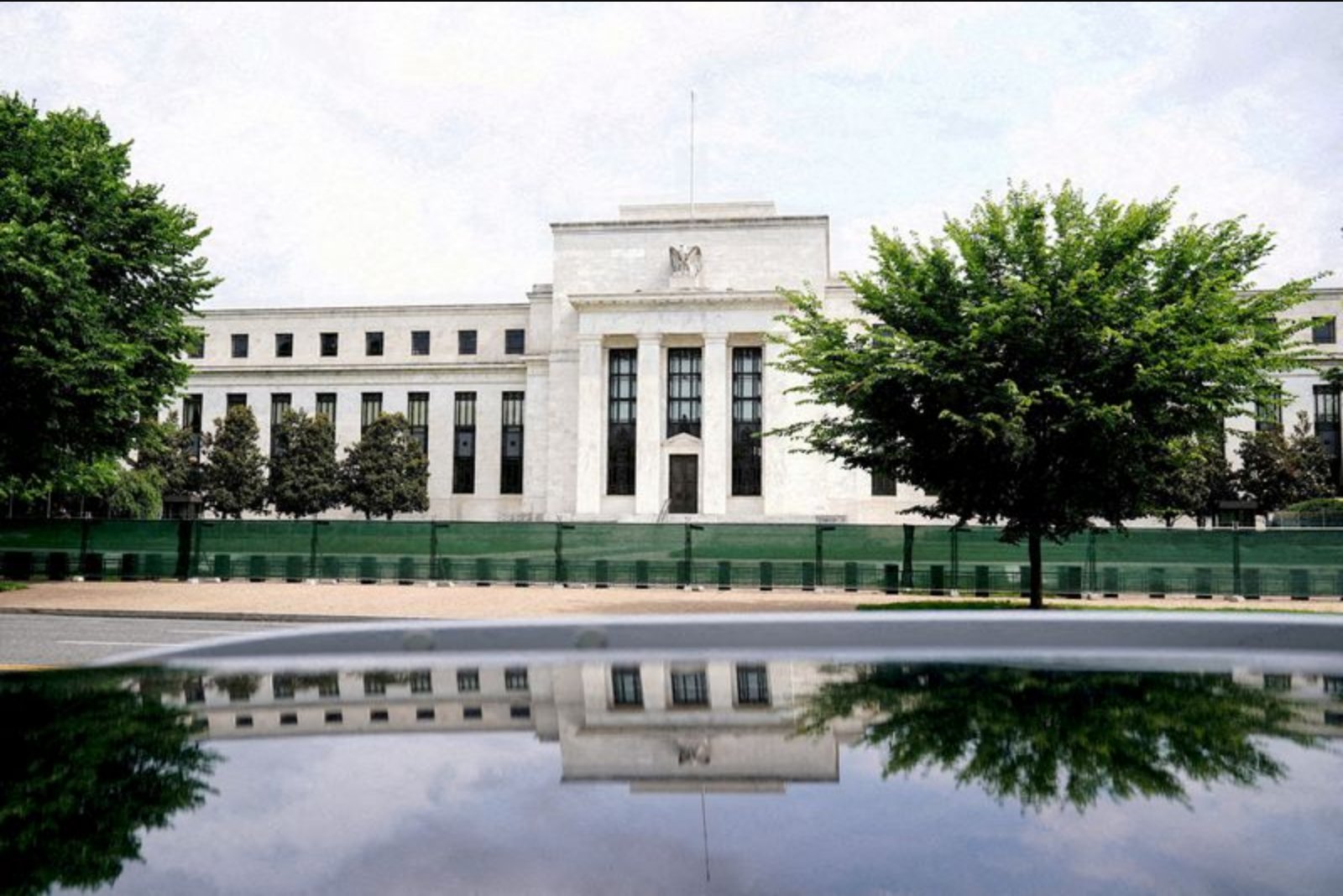
The Federal Reserve is widely anticipated to hold interest rates steady at its Wednesday decision, beginning a pause that investors believe will extend beyond the final meetings chaired by Jerome Powell in March and April. Market expectations point to a sustained pause well into the period when a successor is expected to take office, with a nomination and Senate confirmation to follow.
Key economic readings ahead of the announcement complicate any near-term case for aggressive easing. The U.S. unemployment rate fell to 4.4% in December even as payroll gains were muted, and forecasters expect the Personal Consumption Expenditures Price Index excluding food and energy - the Fed’s preferred inflation gauge - to show year-over-year growth near 3% for the month. That pace sits materially above the central bank’s 2% objective.
Consumer spending has remained robust, and fiscal policy is projected to add to growth during the opening months of the year. Seema Shah, chief global strategist at Principal Asset Management, summarized the position in analysis ahead of the meeting: "what is clear is that, given the strength of the U.S. economy ... there is no urgency to lower rates aggressively." That framing helps explain why investors and many Fed officials see a prolonged period without cuts.
The Fed will publish its policy decision at 2 p.m. EST (1900 GMT), and Powell will hold a press conference 30 minutes later to expound on the decision and to offer his current read on the economic outlook. This particular meeting does not include updated quarterly projections on growth, inflation and the path of interest rates; the next set of projections will come at a later gathering.
Policymakers’ December projections already signaled very modest easing expectations, with a median outlook indicating only one quarter-percentage-point reduction for 2026 and a broad division among officials on the overall path. At that meeting, when the committee approved a third consecutive quarter-point cut, votes and preferences were dispersed: seven of 19 officials said no further cuts would be appropriate for at least a year, four expected just one additional cut, and eight saw the need for at least a half-percentage-point reduction in 2026.
The dispersion in views underscores the constrained mandate facing Powell’s eventual successor. President Donald Trump has publicly urged immediate and steep reductions in the Fed’s policy rate and is expected to nominate a candidate soon to succeed Powell when his term ends in May. The nomination will then move to the Senate for confirmation hearings.
The personnel process has been made more complex by recent tensions between the Fed chair and the administration. Disclosure that the Department of Justice had threatened the Fed chair with a criminal indictment prompted criticism from several Republican senators, who have said the episode could justify holding up confirmation of the next nominee given the potential implications for central bank independence.
Market strategists expect the policy statement and Powell’s remarks to avoid firm commitments on the timing or scale of future rate cuts. Michael Feroli, chief economist at J.P. Morgan, wrote that both the statement and the press remarks are unlikely to pin down specifics on additional easing. Feroli added that stronger-than-expected incoming data since December may prompt only minor changes to the post-meeting statement while the chair "will easily whip up a solid majority for rates on hold."
In short, the Fed’s immediate posture is one of guarded patience. With labor market indicators remaining resilient and core inflation comfortably above target, officials face trade-offs between supporting growth and ensuring price pressures abate toward their 2% goal. The coming months - including the leadership transition - will be watched closely by markets, businesses and policymakers for any shift in that balance.
Timing and logistics
- The policy decision will be released at 2 p.m. EST (1900 GMT).
- Chair Powell will hold a press conference 30 minutes later to discuss the decision and outlook.
- This meeting does not include an update to the Fed’s quarterly economic projections.