
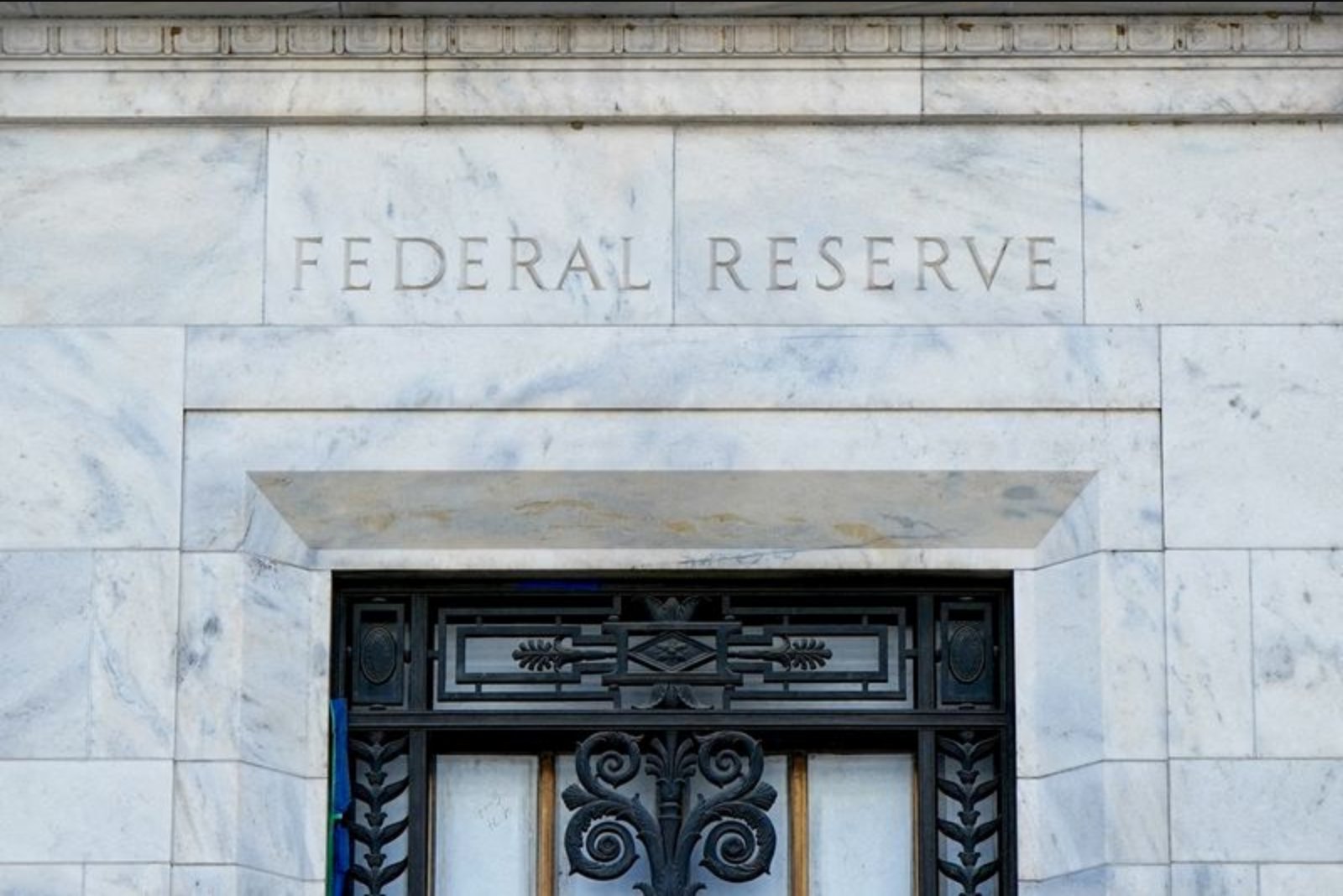
Federal Reserve officials kept the federal funds target unchanged at the March 17-18 meeting, matching the hold from January. The gathering left intact the median projection from the March policy forecasts for one quarter-percentage-point easing by the end of 2026. Yet Fed Chair Jerome Powell cautioned that the outlook for rates is unusually uncertain in the near term, citing the Iran conflict and a related surge in oil prices as complicating factors for the committee’s path forward.
This account reviews recent public comments by a range of Fed policymakers, organized by the conventional shorthand of "dove" and "hawk." In this framework, a dove places greater weight on potential weakness in the labor market and the case for earlier rate cuts, while a hawk emphasizes inflationary pressures and is more reluctant to ease policy. The designations below reflect officials' own remarks and published statements.
Context and the committee’s posture
The committee's policy stance remains a balancing act. The current target range for the policy rate is 3.50 percent to 3.75 percent, and the central estimate of Fed officials in March was for a single 25-basis-point reduction by year-end 2026. Chair Powell has highlighted that recent geopolitical developments and a jump in oil prices have increased uncertainty about how that path will unfold.
Fed governance and voting structure were reiterated in commentary accompanying officials’ remarks. The Board of Governors comprises seven members who are nominated by the president and confirmed by the Senate; those governors each vote at every Federal Open Market Committee meeting, which are scheduled eight times per year. Additionally, all 12 regional Federal Reserve presidents participate in the policy discussions, though only five regional presidents vote at a given meeting. The New York Fed president is a permanent voting member, while four others serve one-year rotating votes. Regional presidents are chosen by the boards of their own regional Federal Reserve Banks, subject to approval by the central board.
Highlights from officials' public remarks
Across the public record, officials conveyed a range of views about the likely path for policy.
- Chair Jerome Powell stressed that the committee had penciled in one interest-rate cut in its private projections but emphasized the unusual degree of uncertainty introduced by the Iran conflict and a surge in oil prices. He described the rate path as unusually uncertain as a result.
- Alberto Musalem, president of the St. Louis Federal Reserve, said on April 1, 2026: "I expect the current setting of the policy rate will remain appropriate for some time."
- Other regional presidents and governors voiced a mix of views that ranged from urging patience to signaling openness to future easing, depending on incoming data. Several officials framed their positions around how persistent commodity price shocks might be and how those shocks could transmit through inflation and the labor market.
Some officials highlighted the need to wait for clearer evidence on labor-market trends and the duration of inflationary impulses before moving on policy. Others focused on the potential for upside risks to inflation from higher fuel costs and the need to be ready to respond if those risks materialize. Where specific quotes and attributions were clearly available in the public record, those are cited above. Some parts of the publicly distributed material containing further attributions and direct quotes were presented with formatting or clarity issues, limiting the ability to attribute every comment precisely without risk of mischaracterization. Where that occurred, this report reflects that limitation rather than assigning potentially inaccurate attributions.
Policy and personnel notes that shape context
Several procedural and personnel facts were emphasized alongside policy commentary. The median projection for one quarter-percentage-point cut by the end of 2026 was part of the March projections that accompanied officials' statements. The social composition of the Board and the nomination histories of several governors were also noted in the material: some governors on the Board were originally nominated by one president and later renominated or elevated by subsequent presidents. Specific nomination histories cited include the chair's initial nomination to the Board by a prior administration, his elevation to the top job in a later administration, and a later renomination. Other governors and regional presidents were described as having been nominated by different presidents. It was noted that one former Fed governor has been identified as a potential nominee to succeed the chair when that term ends in mid-May.
Those background points underscore that the Federal Reserve's policy debate is conducted by a mix of longtime governors and rotating regional presidents, bringing varied institutional perspectives into the committee's deliberations.
How officials' views were categorized
For readers tracking the balance of opinion across the policymaking body, the material included a categorical count of officials labeled as dove, dovish, centrist, hawkish or hawk heading into successive Fed meetings. That sequence of categorical counts ran across several dates and showed shifts over time in the balance of policymakers in each camp. The formatting of some of these tabulated counts in the available material was uneven; where specific date-by-date tallies were clearly legible, they were preserved. Where formatting made some lines indistinct, the underlying limitation in clarity is acknowledged here rather than presenting potentially incorrect numeric assignments.
Implications for markets and economic sectors
Officials' split in emphasis matters for interest-rate expectations and market pricing. A median projection that still points to only one small cut in 2026, coupled with the chair's warning about geopolitical and commodity-driven uncertainty, gives traders and corporate finance teams reason to maintain cautious assumptions about the pace of policy easing this year. The labor market and consumer-facing sectors remain central to many officials' thinking, while energy markets are directly implicated because of the role of fuel prices in shaping near-term inflation.
For businesses focused on production, supply chains and working capital, extended policy rates at current levels would affect borrowing costs, inventory financing and the conversion of backlog into cash flow. Energy-intensive businesses and transportation sectors may face margin pressure if higher oil prices persist. Financial markets that price forward rate expectations will be sensitive to any new data or developments that change officials' assessment of inflation persistence or labor-market resilience.
What remains uncertain
Two core uncertainties loom over the committee's decision path: how persistent and broad-based the inflationary impulse from higher fuel prices will be, and how the labor market performs in coming months. Officials repeatedly framed future adjustments as conditional on incoming data. Given that conditioning, markets and firms will closely monitor inflation readings, labor reports and geopolitical developments that drive energy prices.
Note on source material
This story synthesizes a set of public remarks, policy projections and procedural notes from Fed governors and regional presidents. Some provided comments and tabulations were formatted in ways that made parts of the record difficult to attribute unambiguously. In those instances the account emphasizes clearly attributable facts and acknowledges where the primary material was unclear.