
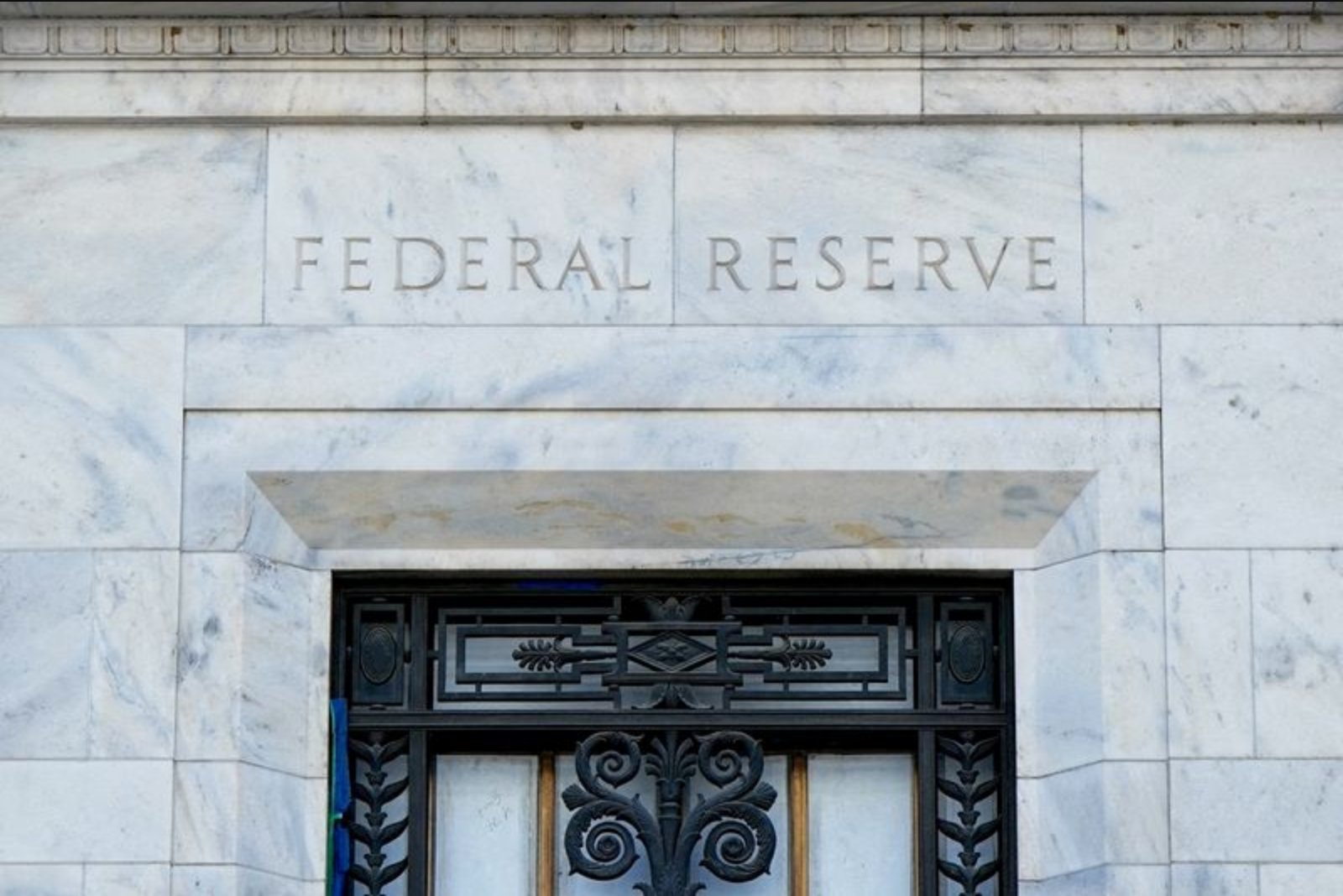
Minutes from the Federal Reserve's March 17-18 policy meeting show an increasing number of officials judged that higher interest rates might be required to bring inflation back toward the central bank's 2% goal. The March record highlights a recalibration among some policymakers toward the possibility of tightening policy in response to inflationary pressures that were amplified by the U.S.-Israeli war with Iran.
The minutes state that "Some participants judged that there was a strong case for a two-sided description of the (Federal Open Market) Committee’s future interest rate decisions in the post-meeting statement, reflecting the possibility that upwards adjustments to the target range for the federal funds rate could be appropriate if inflation were to remain at above-target levels." That language marked an evolution from the January meeting, when a smaller group described merely as "several" officials had indicated they were willing to open the door to possible rate hikes.
By mid-March, and following the outbreak of the war, "many participants pointed to the risk of inflation remaining elevated for longer than expected amid a persistent increase in oil prices." Despite these inflation concerns, the Fed left its benchmark overnight interest rate unchanged in March at a target range of 3.50%-3.75%, while acknowledging the additional uncertainty the conflict introduced to the economic outlook.
The minutes underline an internal tension among policymakers. On one hand, the jump in oil prices and disruptions to global shipping associated with the conflict were judged to increase upside risks to inflation. On the other hand, participants also flagged the potential for the same disruption to weaken growth and the labor market.
Reflecting that split, the record notes that "many participants" nevertheless continued to view rate cuts as part of their baseline outlook, while "most participants" believed that if the conflict became protracted it would inflict enough economic damage to justify even deeper cuts than currently anticipated.
"Most participants raised the concern that a protracted conflict in the Middle East could lead to a further softening in labor market conditions, which could warrant additional rate cuts, as substantially higher oil prices could reduce households’ purchasing power, tighten financial conditions, and reduce growth abroad," the minutes said.
The publication of the minutes came one day after the U.S. and Iran agreed to a two-week ceasefire, a development that coincided with a sharp drop in oil prices. The minutes note that the ceasefire news led oil to fall more than 15% to around $92 a barrel. The prior surge in oil that the meeting addressed had exceeded 50%, a move that the minutes say pulled the Fed in conflicting directions between its inflation goal and its full employment mandate.
At the March meeting the Fed signaled that policymakers were unlikely to change the policy rate until there was greater clarity about whether inflationary pressures or downside risks to the labor market posed the greater threat to the outlook. New economic projections released with the policy statement projected higher inflation for the year but showed little change in the unemployment rate compared with earlier estimates.
Internal staff presentations at the meeting underscored the range of risks that had broadened since the Fed's January outlook. Fed staff identified that economic activity and job growth could be weaker and inflation higher than previously expected given "the potential economic effects of developments in the Middle East, government policy changes, and the adoption of AI." The minutes also emphasize that, with inflation having run above target since 2021, "a salient risk was that inflation could prove to be more persistent than the staff anticipated."
Overall, the minutes portray a committee balancing two sets of risks: the immediate upward pressure on inflation associated with higher oil prices and supply disruptions, and the possibility that a drawn-out conflict could undermine growth and employment enough to justify future easing. Until those forces are resolved, the Fed indicated it would defer material policy shifts while assessing which risk dominates.