
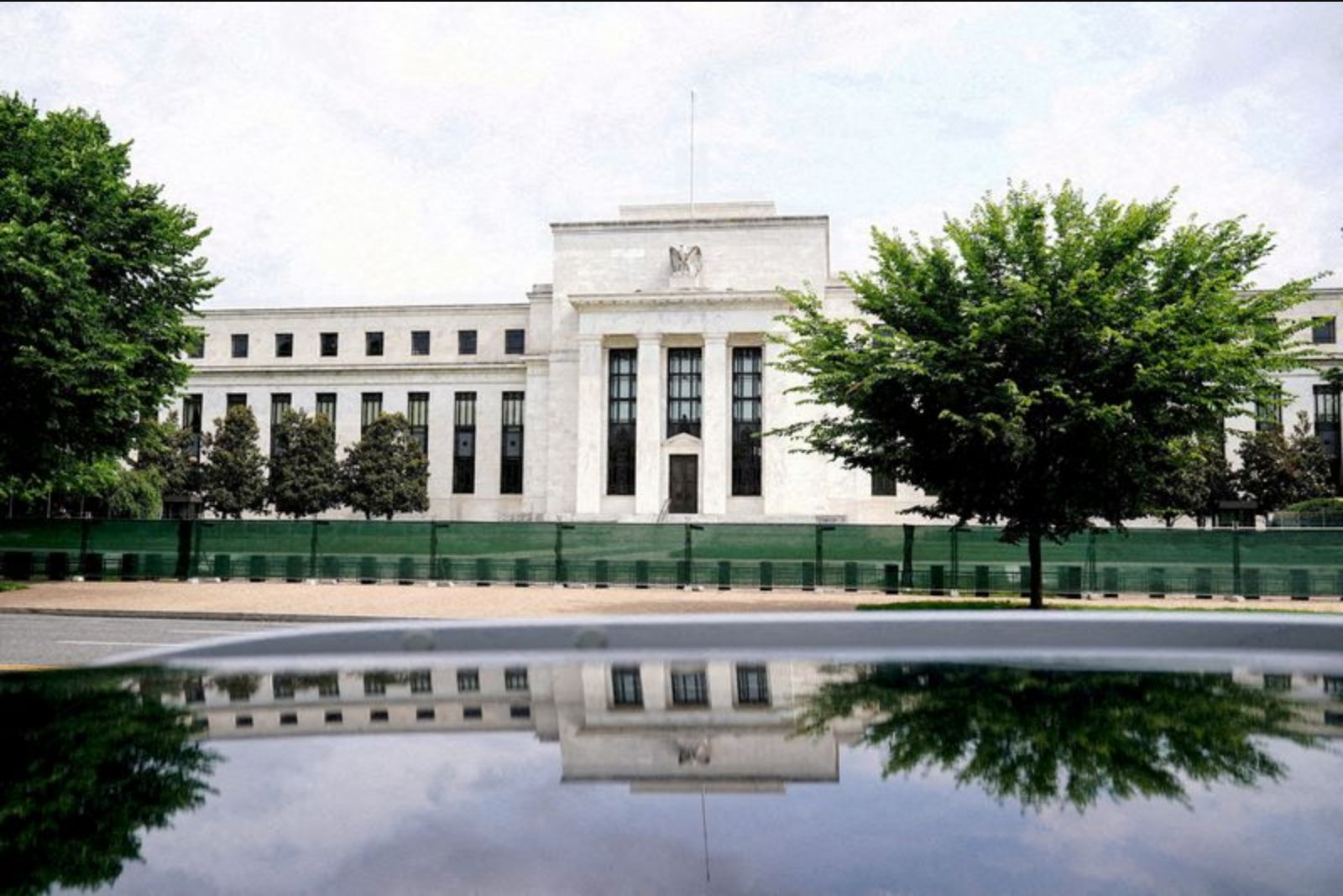
The U.S. Federal Reserve voted to leave its benchmark interest rate unchanged at 3.50%-3.75% after a two-day policy meeting, saying economic activity continues to expand at a solid pace while inflation remains "somewhat elevated." The decision was reached in a 10-2 vote by the Federal Open Market Committee.
Two governors dissented. Governor Christopher Waller - identified as a potential successor to the Fed chair when the current chair's term ends in May - and Governor Stephen Miran, who is on leave from his role as an economic adviser at the White House, registered votes in favor of a quarter-percentage-point reduction in the policy rate.
The policy statement produced following the meeting offered no specific guidance on when further reductions in borrowing costs might be implemented. It said that "the extent and timing of additional adjustments" to the policy rate will depend on incoming data and the economic outlook, leaving the path forward contingent on future economic information.
On inflation and employment, the Fed noted that inflation "remains somewhat elevated" and that the job market has "shown some signs of stabilization." The statement retained language that job gains have remained low, but it removed a prior reference indicating that downside risks to employment had increased. That change signals a reduced collective concern among policymakers about an imminent sharp deterioration in the labor market.
Policymakers had, ahead of the meeting, broadly described the job market as roughly in balance. They observed that smaller payroll gains were matching weaker growth in the pool of people seeking work - a dynamic the statement attributed to the stricter immigration policies enacted under the Trump administration.
The unemployment rate in December was cited as 4.4%, and the Fed chair is scheduled to hold a press conference at 2:30 p.m. EST (1930 GMT) to discuss the committee's decision and the economic outlook.
The choice to pause further easing leaves the central bank's recent monetary easing efforts on hold. According to the statement, this pause follows three quarter-percentage-point reductions implemented at the Fed's final three meetings of 2025. The prior December 9-10 meeting produced a notably split Federal Open Market Committee: three of the 12 voting members dissented, with one favoring a larger cut and two opposing any reduction.
Those intracommittee divisions have persisted into 2026. Recent economic data have not settled the debate between officials who remain concerned that inflation is not yet returning to the Fed's 2% objective and those who worry that tighter credit conditions could push unemployment higher unless policy eases to stimulate more spending and investment.
Whoever is selected to replace the current chair - a decision the statement noted is expected to be announced soon - will inherit these policy debates. The new chair is anticipated to be in place in time to oversee the Fed's June 16-17 meeting. Market participants currently expect the central bank to keep policy rates on hold until that meeting.
Contextual note: The statement and the voting pattern underscore ongoing uncertainty about the timing and magnitude of future rate cuts, while signaling that the Fed is monitoring both inflation trends and signs of labor market stabilization closely.