
Economy March 26, 2026

Fed Governor Cook Says Conflict in Iran Raises Inflation Risks

At Yale event, Cook warns the Iran war has tilted the Fed's risk assessment toward price pressures while labor remains delicately balanced

By Marcus Reed
Fed Governor Cook Says Conflict in Iran Raises Inflation Risks

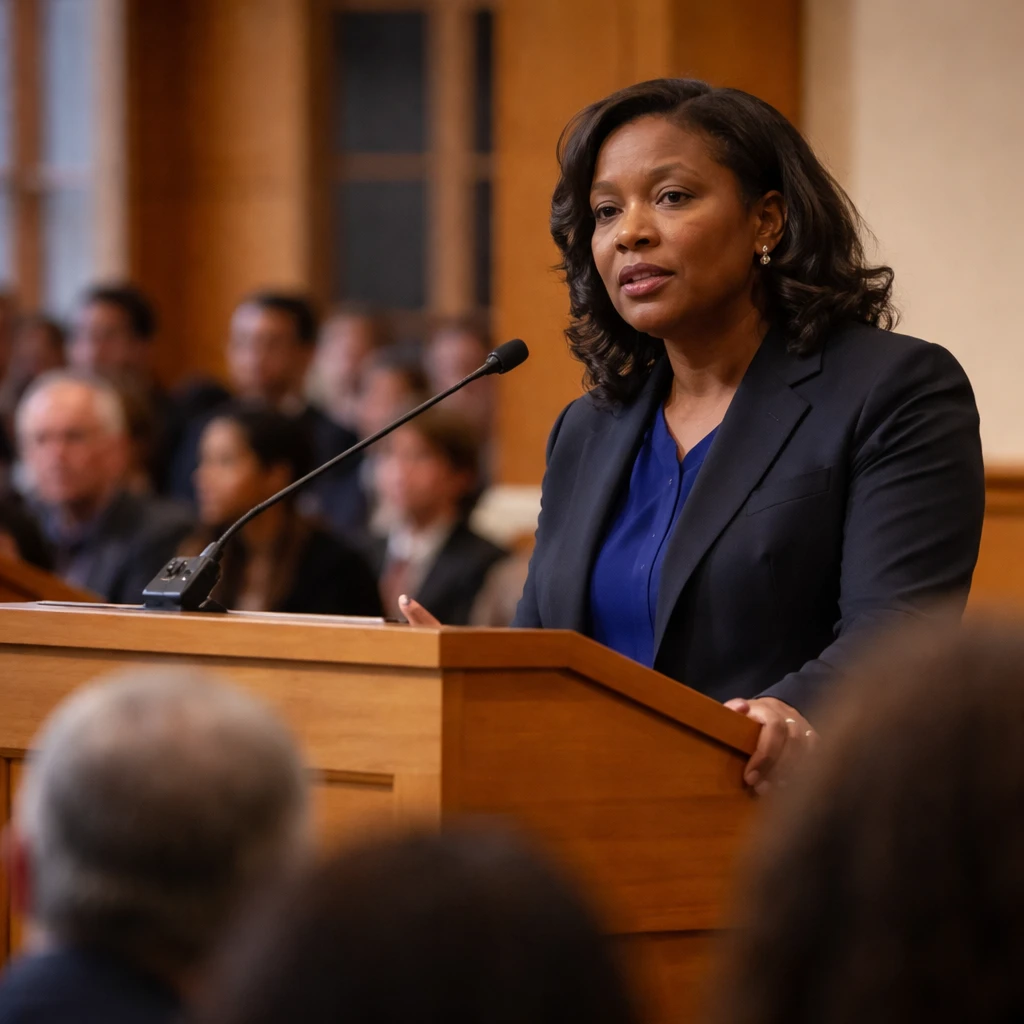
Federal Reserve Governor Lisa Cook told an audience at the Yale School of Management that the war in Iran has shifted the balance of risks for the Fed’s dual mandate toward inflation. She described the labor market as balanced but fragile, highlighted concerns for young workers in a low hire, low fire environment, and said the Fed is monitoring artificial intelligence developments for their potential labor market effects.

Key Points

  • Governor Cook says the Iran war has increased inflation risk, moving the Fed's risk balance away from its 2% target - impacts inflation-sensitive sectors such as energy and commodity markets.
  • The labor market is described as balanced but fragile, operating in a low hire, low fire mode that is particularly difficult for the youngest workers - relevant to employment-sensitive sectors including transportation and services.
  • The Fed is monitoring data on artificial intelligence and the job market, acknowledging AI as potentially transformative for labor dynamics and wage pressures - implications for technology and labor-intensive industries.

Federal Reserve Governor Lisa Cook said Thursday that the conflict in Iran has altered the central bank's assessment of risks surrounding its mandate to achieve price stability and maximum employment, shifting the tilt toward inflation.

Speaking at an event hosted by the Yale School of Management, Cook said, "I see the balance of risks as being largely, on net, in balance, but I would argue that the inflation risk is greater right now as a result of the Iran war."

She warned that the ongoing hostilities could meaningfully affect inflation dynamics. Cook observed that the Fed had been approaching its 2% inflation objective, but that earlier tariff developments had already pushed inflation away from the target, and the Iran war has increased that divergence.

"The Iran war has put my concern on balance of risks more toward inflation," Cook said.

Turning to the labor market, the Fed governor characterized current conditions as in balance but "precariously so." She described employment dynamics as a low hire, low fire regime and noted that this pattern is particularly challenging for the youngest workers in the labor force.

Cook also said the Fed is closely following data on the impact of artificial intelligence on jobs, calling AI potentially transformative for labor markets. She emphasized that the central bank is monitoring these developments carefully as they could influence employment trends and wage dynamics.

Finally, Cook commented that uncertainty remains elevated, underscoring the difficulty of forecasting how geopolitical events and technological shifts will interact with inflation and employment outcomes.


Summary

Federal Reserve Governor Lisa Cook said at the Yale School of Management that the war in Iran has pushed her assessment of risks toward higher inflation, even as she views the labor market as balanced but fragile. She highlighted the low hire, low fire pattern that hinders younger workers and said the Fed is watching AI developments closely for their labor market implications. She also noted that uncertainty is elevated.

Risks

  • Elevated inflation risk tied to the Iran war, which could affect energy and commodity prices and broader price stability.
  • A precarious labor market characterized by low hiring and low separation, creating difficulties for younger workers and potentially weighing on labor supply in sectors like transportation and retail.
  • Heightened uncertainty around how artificial intelligence will reshape the job market, with unclear effects on employment levels and wage growth across technology and services sectors.

More from Economy

Markets Retreat Across the Board as Oil Surges on Middle East Tensions Mar 26, 2026 Brazil's Central Bank Rejects Credit-Card Rate Caps, Seeks Alternative Consumer Credit Options Mar 26, 2026 New Mexico Seeks Court-Ordered Product Changes at Meta After Jury Finds Liability Mar 26, 2026 Global Stocks Slide as Brent Hits $108 on Escalating Iran Conflict Mar 26, 2026 Banxico lowers policy rate to 6.75%, leaves door open for another cut Mar 26, 2026