
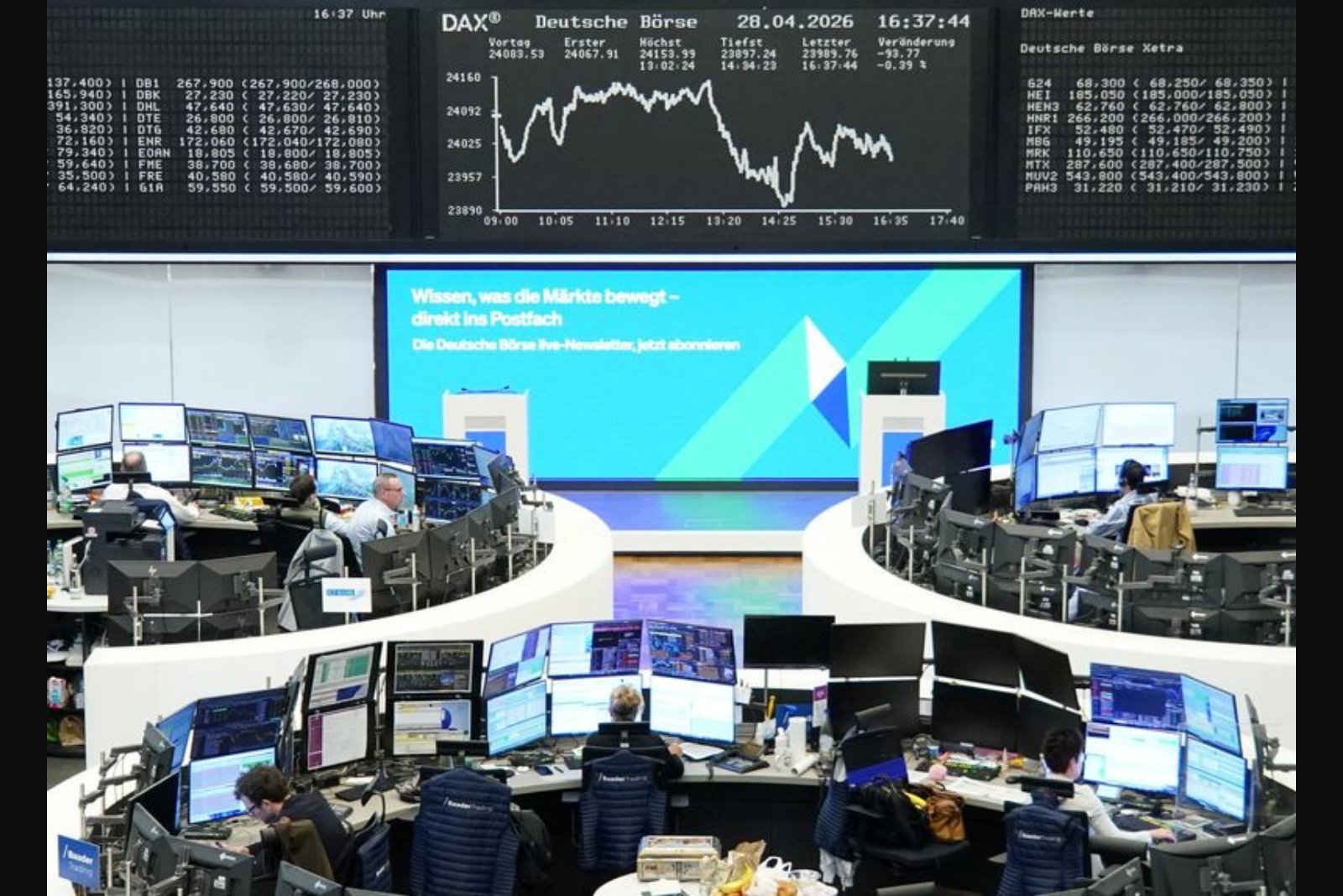
European stock markets showed limited directional movement on Monday as stalled peace talks between the United States and Iran supported higher oil prices and tempered investors' risk appetite.
The pan-European STOXX 600 was unchanged at 611.68 points as of 0805 GMT. Regional exchanges diverged - London's FTSE 100 inched up about 0.2%, while France's CAC 40 fell roughly 0.7%.
Geopolitical backdrop
Tensions escalated after U.S. President Donald Trump rejected Iran's response to a Washington peace proposal, calling it "totally unacceptable." According to Iranian state television, Tehran's reply proposed ending the war on all fronts, including Lebanon, demanded compensation for war damage and asserted sovereignty over the Strait of Hormuz.
The ongoing conflict has closed the Strait of Hormuz, a critical shipping lane that handles about one-fifth of global oil and liquefied natural gas flows. That disruption has contributed to rising crude prices and increased concern about the conflict's effect on inflation and economic growth.
Market and sector effects
Energy-sensitive Europe faces particular vulnerability to the supply disruption. Overall markets remain about 4% below pre-war levels and lag peers that have benefited from other market drivers.
Defence stocks recorded the steepest losses in the session, down about 2.1% on the STOXX 600. German defence contractors Rheinmetall and Hensoldt dropped 9.2% and 5.6% respectively. In the United Kingdom, shares of Rolls-Royce, BAE Systems and Babcock fell between roughly 3% and 4.3%.
Luxury goods names declined 1.6% as a group, with Burberry and LVMH slipping just over 1% each and Hermès down 2.4%.
By contrast, the telecommunications sector rose, led by a 6.5% jump in BT and a 2.3% gain for Vodafone.
Commentary and monetary policy watch
Mark Haefele, chief investment officer at UBS Global Wealth Management, said the renewed hostilities interrupted hopes for an agreement that might reopen the Strait of Hormuz, but added his firm still expects a diplomatic resolution eventually. "A resilient economic backdrop and robust earnings growth mean that investors should stay positioned for long-term equity gains through diversified exposure," he said.
On monetary policy, Martin Kocher, a member of the European Central Bank's governing council, warned that the ECB would need to adjust interest rates soon if the inflation outlook did not materially improve. Money markets are pricing in two or more rate increases from the ECB this year, with the first potentially as early as June.
Notable company moves
Delivery Hero rose 8.2% after Dutch technology investor Prosus sold a 5% stake in the German food-delivery group to activist investor Aspex Management for about 335 million euros ($393 million).
UK-based Compass Group gained 1.7% following the world's largest caterer lifting its full-year profit outlook.
Market outlook
Investors are navigating the interplay between geopolitics, commodity prices and monetary policy signals. Elevated oil prices stemming from the Strait of Hormuz closure are feeding into concerns over inflation and growth, while ECB rate expectations add another layer of uncertainty for market positioning.