
Market snapshot
Futures tied to Europe’s principal stock gauges fell by more than 1% on Thursday as hopes for a swift resolution to the Middle East conflict dwindled following fresh remarks from U.S. President Donald Trump threatening additional strikes on Iran.
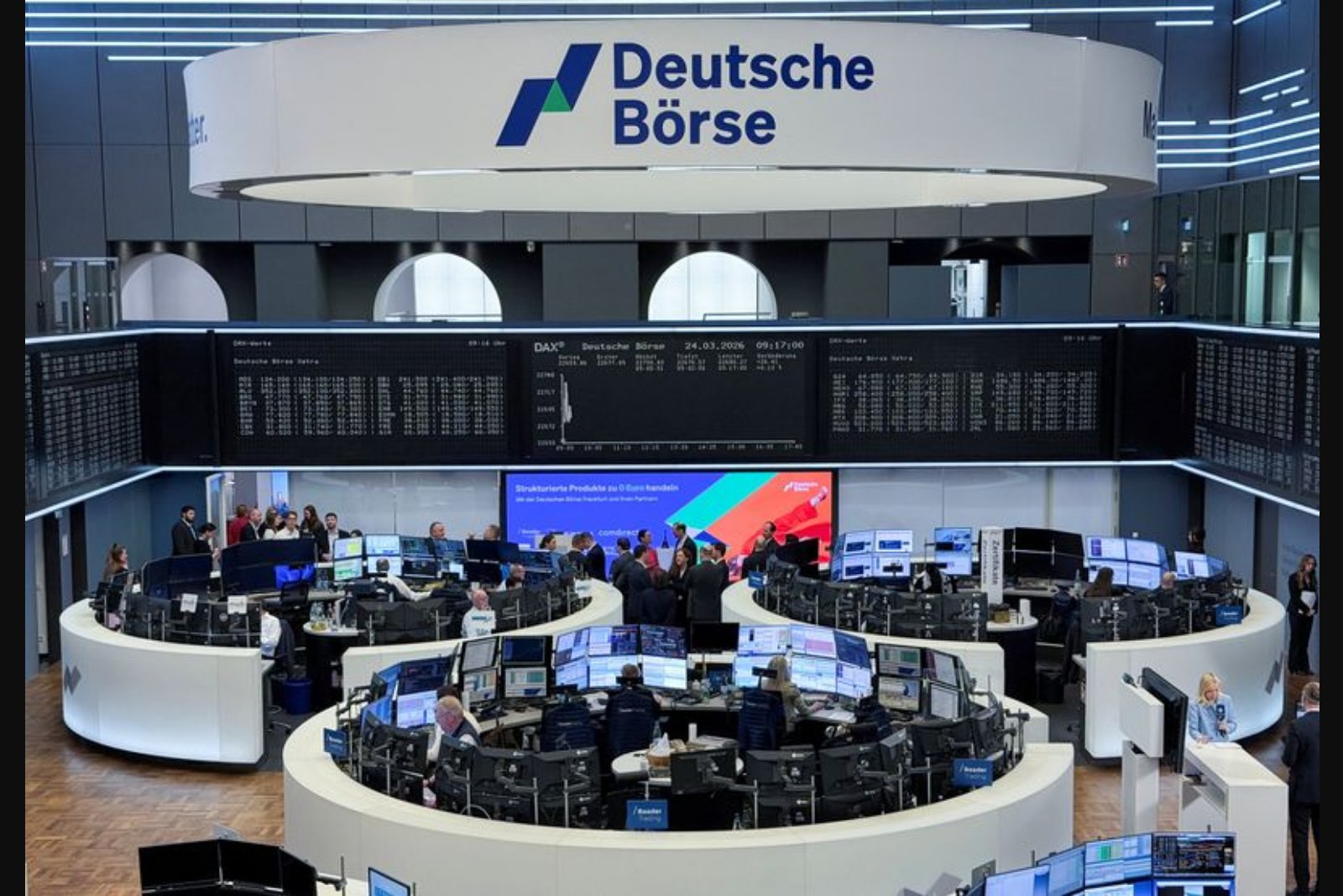
By 0636 GMT, contracts tracking the pan-European STOXX 600 index had slid nearly 2%. Contracts for Germany’s DAX and France’s CAC 40 were down 1.7% and 1.6%, respectively.
What shook sentiment
Market sentiment cooled after President Trump said, "we’re going to hit them extremely hard over the next two to three weeks. We’re going to bring them back to the Stone Ages where they belong." The remarks undercut expectations that hostilities might be winding down and prompted a risk-off reaction across European equity futures.
Brent crude pushed well past the $100-a-barrel mark, rising by nearly 7%, amplifying concerns over higher input costs and inflationary pressures for economies and companies that rely on energy imports.
Sectors to watch at the open
Oil-linked stocks are likely to attract attention, together with cyclicals such as industrials and banks, which tend to be sensitive to both growth prospects and commodity price swings. The recent oil move could weigh on profit margins and feed inflation, complicating the outlook for earnings and policy.
Recent volatility and trade routes
The STOXX 600 had rallied more than 2% on Wednesday after President Trump had said Washington would end its hostilities with Iran imminently, underscoring the sharp swings investors have faced in recent weeks. A prolonged delay in reopening the Strait of Hormuz - a key transit route for major European imports - would add continued pressure on equity markets and reinforce already heightened inflation and growth concerns.
Monetary policy implications
Interest rate futures, using LSEG-compiled data, are pricing in at least two 25-basis-point interest rate increases by the end of this year. That marks a shift from the pre-war pricing backdrop, when markets had expected no change to monetary policy from the European Central Bank.
Individual movers
Among single-stock stories, Novo Nordisk’s shares are expected to draw investor attention after U.S.-based rival Eli Lilly’s weight-loss pill received approval from the U.S. Food and Drug Administration.
As European markets prepare to open, traders will weigh the implications of renewed geopolitical risk and higher oil prices on inflation, growth and central bank policy.