
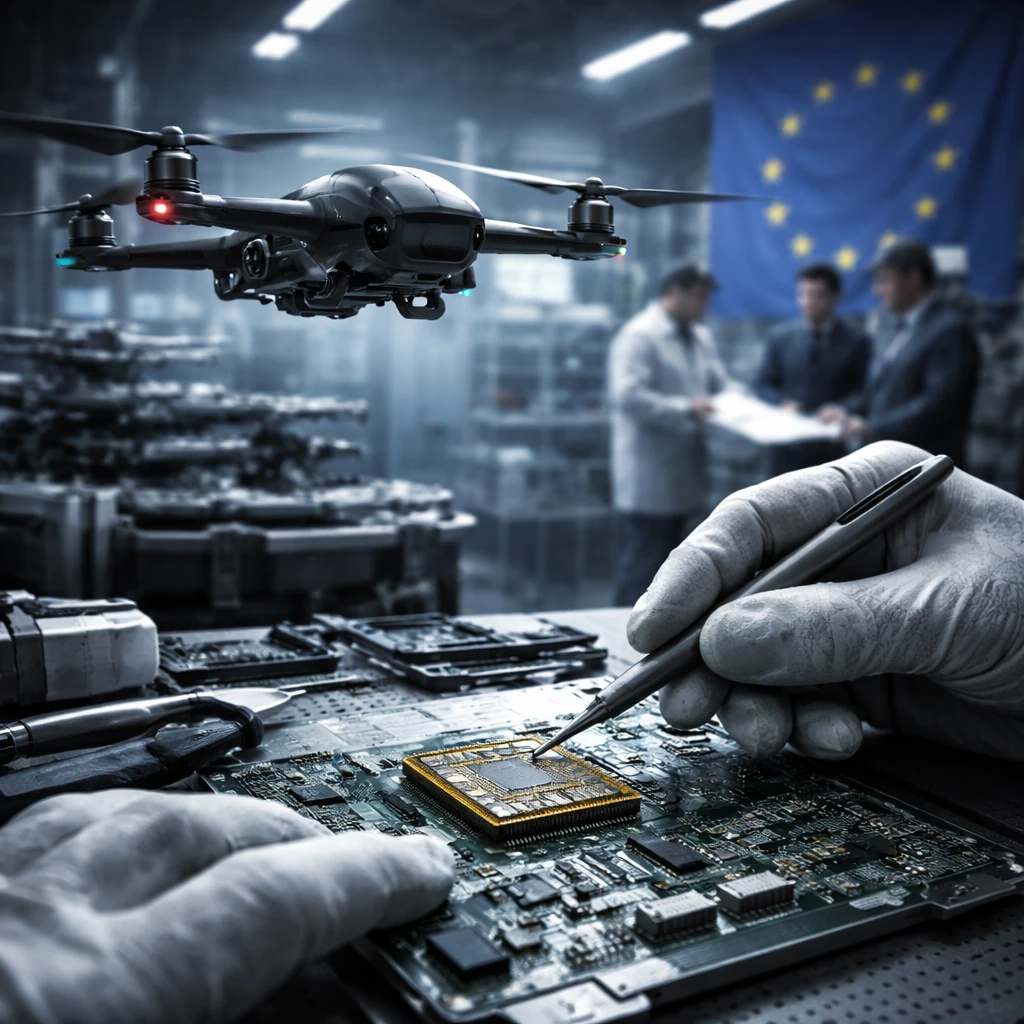
The European Union intends to press for the use of "trusted semiconductors" inside drone platforms under a forthcoming policy package aimed at expanding drone production and strengthening defenses for both civilian and military applications.
Officials expect to present the proposal next week. It will call for chips that are secure and resilient to tampering or cyber intrusions, according to reporting from Bloomberg and sources familiar with the plan - though those details may still be adjusted before formal adoption.
The move is part of a rapid push by the EU to refine a drone strategy after a rise in airspace incursions. In September, NATO fighter jets shot down 19 Russian drones that had entered Polish airspace, marking the first instance of a NATO member shooting down military aircraft in its territory since Russia’s full-scale invasion of Ukraine began in 2022.
Brussels has previously floated several ideas to counter drone threats. Last year, the European Commission proposed a so-called "drone wall" and sought to front-load C6 billion ($7.1 billion) from a G7 loan to seed a drone alliance with Ukraine - a proposal that met skepticism from some member states.
The upcoming strategy will focus on adapting rules and testing regimes to better address drone threats, including examining how critical infrastructure stands up to potential intrusions. Key aims are to shore up resilience across the bloc, expand production capacity and promote innovation targeted at countering unmanned aerial systems.
Operational steps in the plan include accelerating the previously announced but not yet activated drone alliance with Ukraine and convening an industrial forum before summer to support scaled-up manufacturing. The EU also plans to establish a dedicated center for counter-drone research and development by early 2027.
Additional measures outlined in the plan involve launching annual EU-wide drone security exercises and creating rapid counter-drone emergency teams by fall to improve coordination when threats arise. Member states will be asked to name drone security coordinators to track implementation of the action plan. The initiative will be open to partner countries, specifically including the UK and Norway.
Bottom line: The EU's strategy centers on combining hardware security standards - notably trusted semiconductors - with production, regulatory and cooperative measures intended to better defend airspace and critical infrastructure while scaling industrial capacity.