
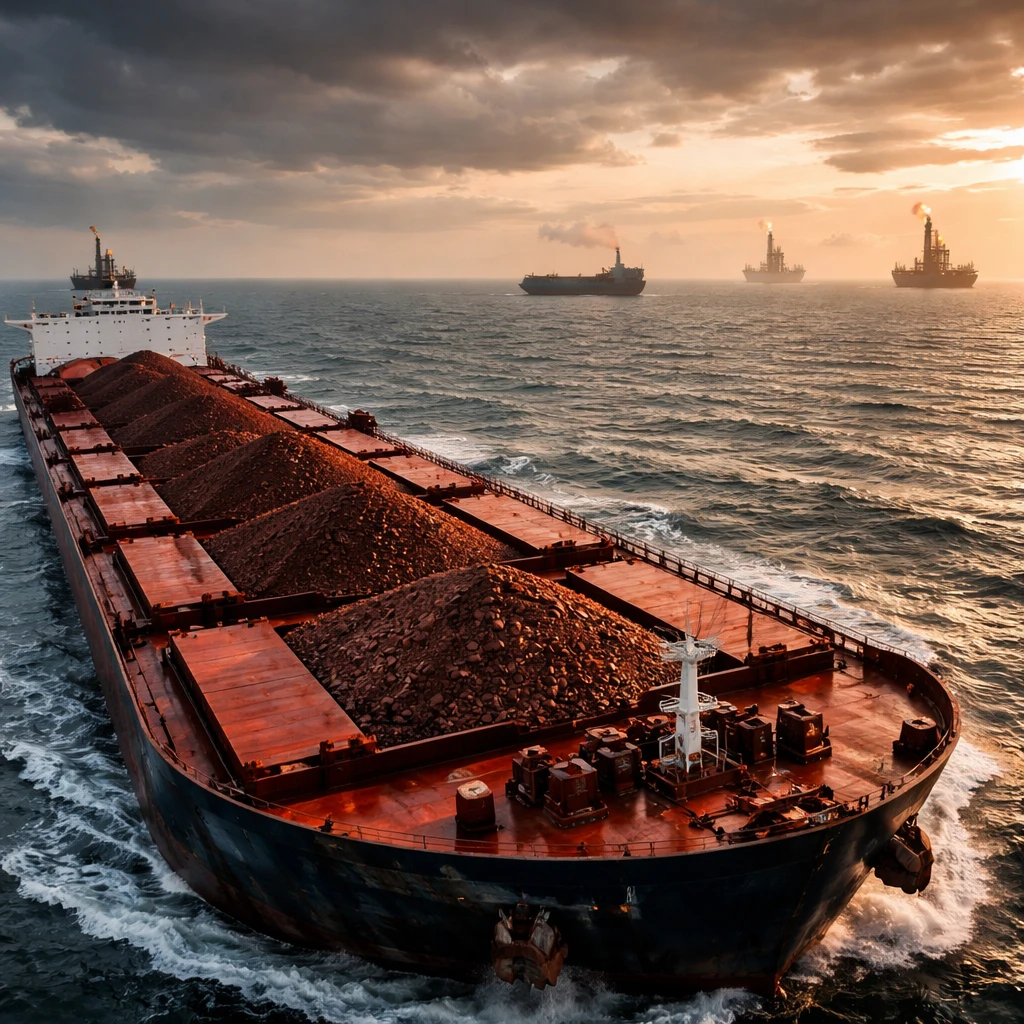
Iron ore prices are growing more exposed to movements in the oil market as higher crude pushes up shipping and on-site fuel costs across the mining sector, UBS said. The bank highlighted that the recent rise in energy prices - driven by geopolitical tensions in the Middle East - is lifting the cost base for producers and beginning to change the shape of the industry cost curve.
UBS noted two primary channels through which oil influences iron ore economics. First, bunker fuel cost increases raise the expense of shipping bulk cargoes, an important component of delivered ore costs. Second, higher fuel prices at mine sites elevate marginal production costs. While oil does not set iron ore prices directly, its effect on marginal costs can be material.
Quantifying that sensitivity, UBS estimates that each $10 per barrel increase in crude oil pushes industry costs up by roughly $0.40 to $0.80 per tonne. That range underscores how energy market moves can translate into higher marginal costs for the sector.
As these cost pressures accumulate, UBS said the global cost curve becomes steeper - meaning a larger share of available supply becomes uneconomical at lower price points. In practice, a steeper cost curve tightens effective supply and can give stronger support to iron ore prices, even when demand is soft or inventories are high.
The bank also observed that current iron ore trading levels already sit within cost support zones, implying that higher energy costs are helping to sustain prices despite bearish indicators such as elevated Chinese port inventories and weaker seasonal demand.
Not all producers feel the impact equally. UBS pointed out that Australian miners are relatively advantaged because of their shorter shipping distances to China, reducing the magnitude of bunker fuel exposure on delivered costs. By contrast, more distant or inherently higher-cost producers face larger margin pressure as energy expenses climb.
Looking forward, UBS said the path of oil prices will be an important determinant of how iron ore costs and prices evolve. Protracted disruptions to energy markets - for example, those associated with tensions around the Strait of Hormuz - could push the cost curve higher and provide additional support to iron ore prices. Conversely, any meaningful easing in oil prices would relieve cost pressures and could put downward pressure on iron ore values.
Clear summary
UBS finds that recent energy-market strength, linked to Middle East tensions, is raising shipping and mining fuel costs. Those higher energy costs increase marginal production costs - about $0.40 to $0.80 per tonne for every $10 rise in crude - steepening the global cost curve and supporting iron ore prices despite weak demand indicators.
Key points
- Higher oil raises both bunker fuel and mine-site fuel expenses, increasing marginal production costs for iron ore.
- Steepening of the global cost curve makes more supply uneconomic at lower prices, tightening effective supply and supporting prices.
- Impact differs by producer - Australian miners benefit from shorter shipping distances to China, while distant or higher-cost miners face greater margin pressure.
Risks and uncertainties
- Oil price trajectory - sustained rises would further lift the cost curve and support iron ore prices; easing would reduce cost support and could weigh on prices.
- Geopolitical disruptions - prolonged energy market disturbances, such as those linked to tensions around the Strait of Hormuz, could materially increase costs for producers and shippers.
- Demand-side headwinds - elevated Chinese port inventories and softer seasonal demand are bearish factors that higher costs are currently counterbalancing.