
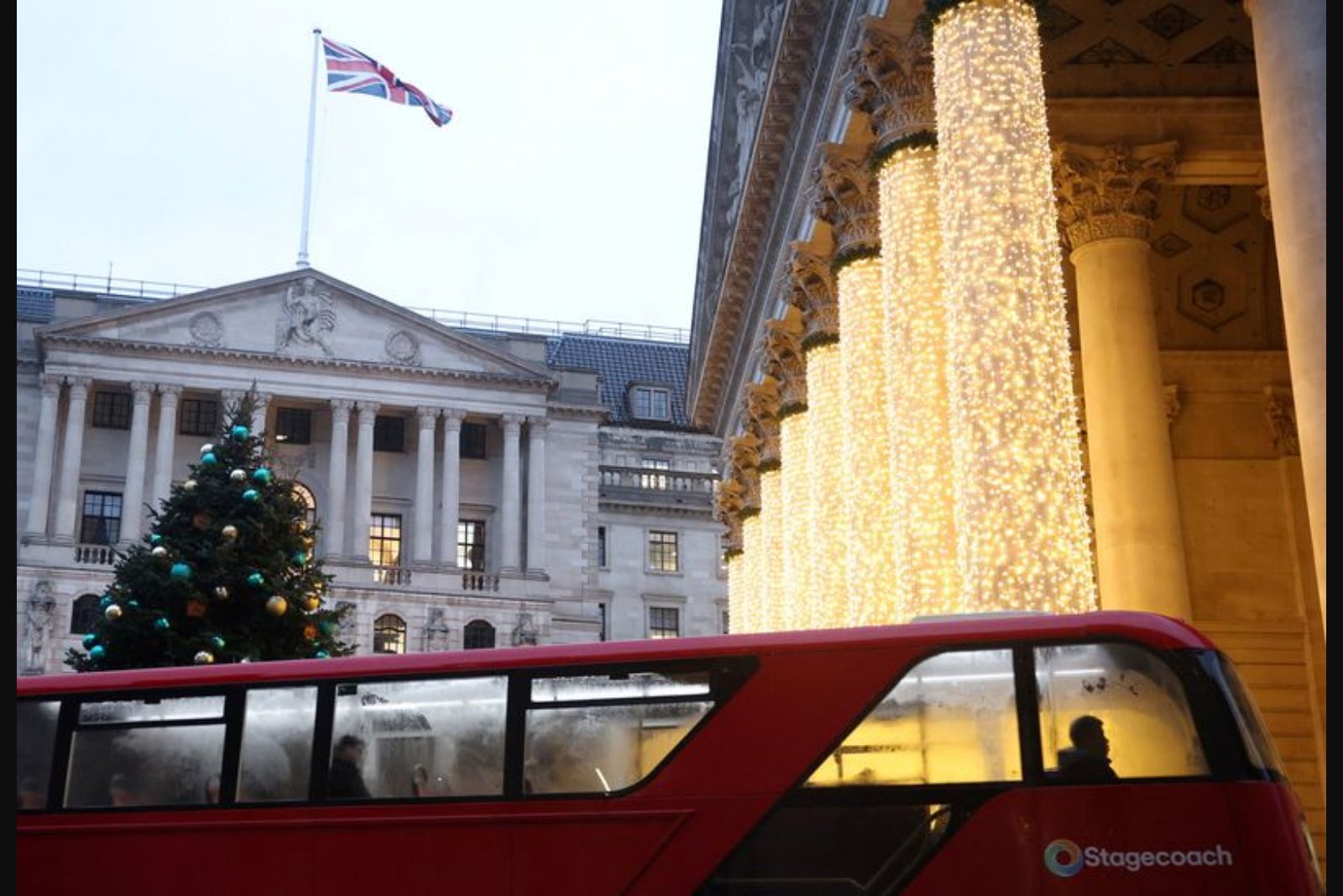
The Bank of England is expected to maintain Bank Rate at 3.75% for the rest of the year, according to a slim majority of economists surveyed in the March 20-26 poll. Respondents have largely abandoned prior expectations for reductions in interest rates but have not joined financial markets in predicting multiple rate hikes.
Heightened energy prices linked to the U.S. and Israeli war with Iran have altered earlier expectations that British inflation would decline steadily, prompting forecasters to raise both inflation and interest-rate outlooks. At the same time, recent unanimity on the Bank of England's Monetary Policy Committee to leave rates unchanged and the committee's stated readiness to tighten policy if required have produced unusually sharp shifts in UK rate forecasts.
Even as gilt yields rose sharply - with the benchmark 10-year gilt earlier trading above 5% - most economists in the poll expect policymakers to hold fire on rates rather than follow market pricing that implies nearly three rises this year.
Poll detail and near-term expectations
The poll found that 45 of 50 respondents - about 90% - expect the BoE to keep Bank Rate at 3.75% at its April 30 meeting. Five respondents anticipated a 25 basis-point increase at that meeting. Looking further ahead, 33 of the 50 economists surveyed - over 65% - forecast that the rate will remain at 3.75% through the end of September, and only 12% see rates moving higher over that period. A narrow majority of participants expect no change through the end of the year.
Those results mark a marked U-turn from a survey conducted two weeks earlier, when a similar group of economists showed much stronger expectations for cuts. In that earlier poll, 37 of 46 respondents - around 80% - expected the rate to be 3.50% or lower by the end of September, with 24 forecasting 3.25% or below. None of the respondents in that earlier snapshot forecast a hike.
Inflation outlooks and forecast revisions
About three-quarters of contributors to the latest survey revised up their year-end rate outlooks; roughly the same proportion raised their inflation forecasts. The updated median projections see inflation averaging 2.8% in the next quarter before rising to 3.4% in the second half of the year. By contrast, the previous poll had both quarterly and second-half inflation forecasts at around 2.4%.
These upward moves in inflation expectations reflect the immediate impact of higher energy costs. But forecasters still widely assume there is sufficient slack in the UK economy for policy makers to wait and observe whether the energy-driven rise in prices feeds through into broader, persistent inflation.
Market players and bank forecasters shift positions
Among 14 Gilt-Edged Market Makers (GEMMs) polled, all but two expected the BoE to hold rates through the end of the year; most of these firms had been looking for cuts earlier in the month. Major banks also altered their stances. JPMorgan removed expectations for two rate cuts and replaced them with forecasts for two hikes starting in April. Goldman Sachs and Citi abandoned forecasts for three reductions, reverting to a view of no cuts. Morgan Stanley and several other institutions discarded prior expectations for two cuts during the year.
Despite some banks switching to a hawkish stance, other economists remain cautious about the prospect of early rate rises. One major bank economist noted that while the risk of hikes has grown if the Middle East conflict continues, the baseline view remains that the Bank of England will stay on hold and allow time to assess any second-round inflation effects.
Economists' caveats and what would be needed for hikes
Several respondents emphasized that evidence of broadening second-round inflation pressures would be required before the majority of the Monetary Policy Committee would contemplate hikes. One chief UK economist observed that a central bank that had been preparing to cut rates before recent events is unlikely to pivot to hiking as rapidly as market prices currently imply. She added that significant additional evidence of persistent inflationary effects would be needed before the MPC changed course, and that a hike before the second half of the year remained unlikely even if Middle East oil and gas supply disruptions persisted.
What this means for markets and policy watchers
The poll results signal a consensus view among many economists that the immediate path for UK policy is one of patience rather than active tightening, despite market pricing and the recent uptick in gilt yields. Forecasters have raised both inflation and rate expectations, but most still prefer a wait-and-see approach that hinges on whether energy-driven price moves translate into persistent, economy-wide inflation.
While uncertainty remains, the narrow majority expecting rates unchanged through the year suggests policymakers have some latitude to monitor incoming data before committing to further action.