
Economy March 27, 2026

ECB’s Schnabel urges patience on policy as Middle East conflict fuels energy-driven inflation shock

Executive Board member calls for measured data-driven response amid rising inflation expectations and debate among policymakers

By Nina Shah
ECB’s Schnabel urges patience on policy as Middle East conflict fuels energy-driven inflation shock

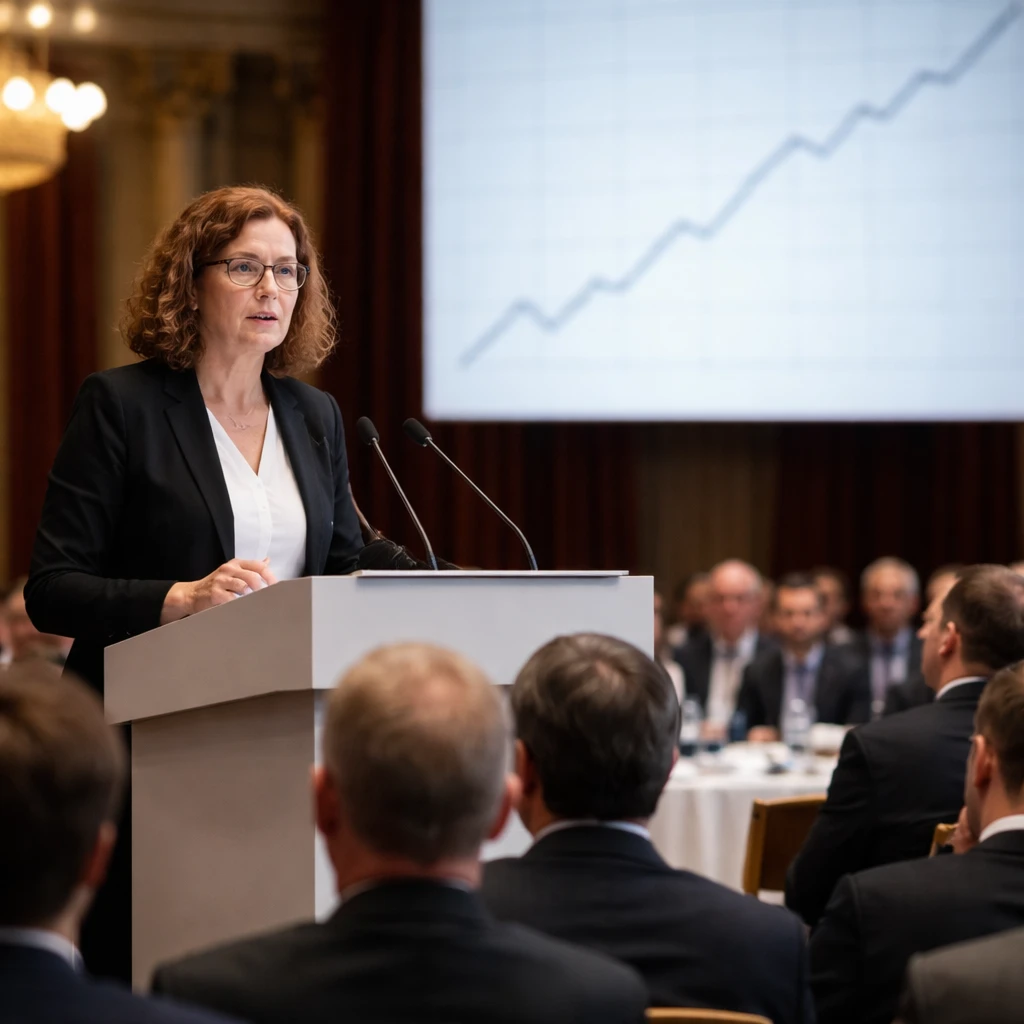
European Central Bank Executive Board member Isabel Schnabel said in Zurich that the bank should avoid hasty policy moves in response to the Iran war, urging careful monitoring of data to judge whether the energy-driven inflation shock is producing second-round effects and becoming entrenched in expectations and wages.

Key Points

  • Isabel Schnabel urged the ECB to avoid hasty policy moves in response to the Iran war, advocating a cautious, data-driven approach.
  • Schnabel noted a large energy price shock has led to a sharp rise in investors' inflation expectations and said the bank will study second-round effects, demand conditions, and potential entrenchment in wage growth.
  • Other ECB figures are split on timing - President Christine Lagarde stressed the need for sufficient information, while Bundesbank President Joachim Nagel and others have indicated a rate hike may be considered as soon as April; Belgian central bank chief Pierre Wunsch said action could be needed if the conflict continues beyond June.

European Central Bank Executive Board member Isabel Schnabel warned Friday that the institution should not rush into policy action in reaction to the Iran war, advocating a deliberate, evidence-based approach to monetary decisions.

Speaking in Zurich, Schnabel acknowledged that Europe is confronting a substantial energy price shock that has led to a sharp rise in investors' inflation expectations. Despite the pronounced market reaction, she said the ECB must weigh its options carefully rather than act precipitously.

"We have to be agile, we have to be vigilant, but there is no need to rush into action," Schnabel said, marking her first public remarks since last week's decision to hold borrowing costs steady.

Described within policy circles as the ECB's most hawkish rate-setter, the German executive emphasized that the bank has the latitude to study incoming data and evaluate whether the shock is producing broader effects. That work includes looking for signs of so-called second-round effects, assessing demand conditions, and determining whether the shock is becoming embedded in inflation expectations and wage growth.

Schnabel's comments mirror the broader discussion inside the ECB on how to respond to the economic consequences of the conflict in the Middle East. President Christine Lagarde has indicated that officials will not move without sufficient information, even as some colleagues have signaled swifter action could be necessary.

Bundesbank President Joachim Nagel and other unnamed officials have suggested that a rate increase may need to be considered as soon as April. Schnabel reiterated the ECB's commitment to its inflation objective, saying the bank will do whatever is needed to ensure inflation stabilizes at 2%.

The current surge in energy costs draws a parallel to the inflation shock experienced in 2022 following Russia's invasion of Ukraine, and economic effects are already appearing. Belgian central bank chief Pierre Wunsch told Bloomberg Television on Friday that policy intervention would probably be required if the conflict persists beyond June. While he urged patience, Wunsch added that a move is possible next month if circumstances demand it.


With officials divided on timing but united on the need for data, the ECB faces a balancing act: remain responsive to acute inflationary pressures while avoiding premature tightening that could misread a potentially temporary shock.

Risks

  • If the energy-price shock persists and triggers second-round effects, inflation could become entrenched in expectations and wages - a development that would complicate the ECB's mandate and potentially force policy tightening. - Sectors impacted: energy, consumer goods, financial markets.
  • Disagreement among policymakers on timing creates uncertainty for markets and borrowers, with suggestions that a rate increase may be considered as soon as April while others counsel patience. - Sectors impacted: banking, fixed-income, corporate borrowing.
  • Continued conflict extending beyond June could require policy action, adding near-term volatility to inflation and rates. - Sectors impacted: energy, inflation-sensitive consumer sectors, interest-rate-sensitive investments.

More from Economy

Trump Directs DHS to Tap Available Funds to Compensate TSA Staff Amid Ongoing Shutdown Mar 27, 2026 SEC Staffing Falls 18% as Administration-Driven Cuts and Attrition Bite, Watchdog Finds Mar 27, 2026 Trump Urges Deere, Case and Caterpillar to Lower Tractor and Equipment Prices Mar 27, 2026 Schnabel: ECB Should Hold Off on Swift Rate Hikes While Gauging Persistence of Inflation Mar 27, 2026 U.S. and Israel Strike Iranian Nuclear Sites and Steel Plants as Tehran Retaliates Across Gulf Mar 27, 2026