
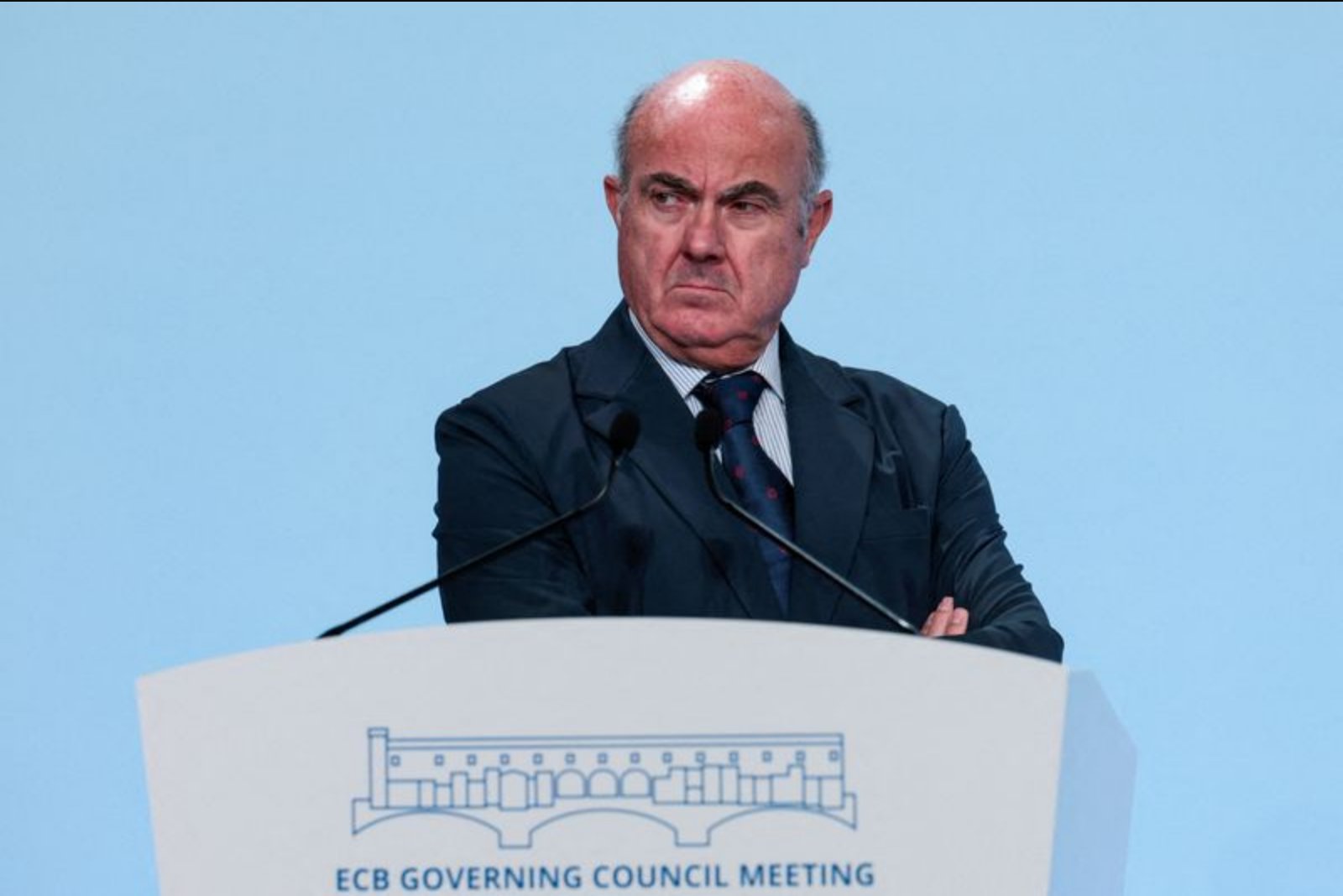
FRANKFURT, March 26 - European Central Bank Vice President Luis de Guindos said on Thursday that while euro zone banks hold limited direct exposure to the conflict in the Middle East, the ongoing U.S. and Israeli military action against Iran has strained financial markets and could still precipitate broader instability through existing interconnections.
Delivering remarks that touched on financial stability, de Guindos noted that recent market turbulence linked to the conflict has produced a measured selloff outside the Middle East. He also cautioned that some asset classes remain overvalued despite the contained nature of the rout.
Contained direct effects, but interconnected risks
De Guindos stressed that "Spillovers to the euro area financial sector have so far remained contained." He pointed to limited direct bank exposures to the region and described the banking system as "well positioned with strong profitability and robust capital and liquidity buffers."
He added that operators of market infrastructure - notably central counterparties that handle margining for markets including energy - have so far absorbed volatility by meeting margin requirements effectively.
Yet he warned of a distinct, broader vulnerability arising from linkages among financial institutions and markets. In his capacity overseeing financial stability at the ECB, de Guindos said the conflict, coming amid elevated global uncertainty, "could trigger the unravelling of interconnected vulnerabilities and cause systemic stress."
Channels of potential stress
According to de Guindos, the conflict threatens to undermine market sentiment at a time when valuations are high. That combination, he said, could force a sharp repricing of risk that would hit leveraged borrowers and sovereigns, while amplifying pressure in the non-bank financial sector.
Those remarks highlight transmission channels beyond direct exposure: funding strains and mark-to-market moves that could feed through to balance sheets across banks, shadow banks and sovereign debt markets if risk premia widened rapidly.
Monetary policy focus unchanged
Turning to the ECB’s price-stability mandate, de Guindos reiterated the bank’s caution that the conflict could push inflation higher while slowing growth, but said more time is required to gauge the full effects. He affirmed the ECB’s policy stance, saying: "We are unwavering in our commitment to ensuring that inflation stabilises at our 2% target in the medium term."
His comments underline the dual-channel challenge for policymakers: managing near-term market dislocations while preserving the medium-term inflation outlook as economic growth evolves.
Reporter note: The remarks reflect the ECB vice president’s assessment of current market strains and potential systemic pathways without introducing new data beyond his public statements.