
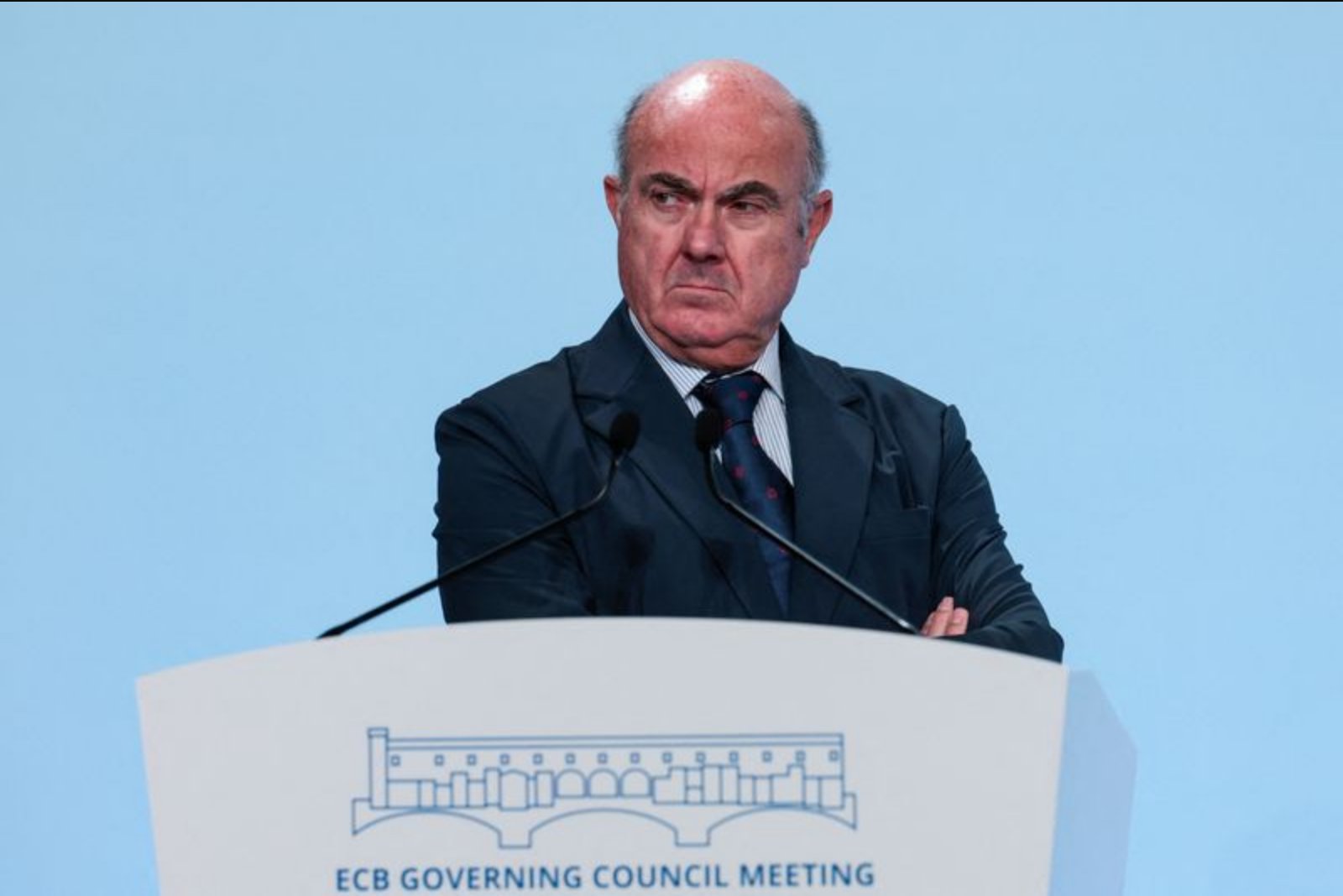
Economy May 11, 2026 12:06 AM

ECB Vice President de Guindos Urges Caution on Imminent Rate Move as Growth Outlook Weakens

Outgoing official warns of deteriorating growth data and calls for clarity on the Iran conflict ahead of projected June rate increase

By Sofia Navarro

European Central Bank Vice President Luis de Guindos, who leaves office at the end of May, advised colleagues to exercise prudence when considering an anticipated interest rate hike at the June meeting, citing a weakening growth outlook and the need for more clarity on the conflict in Iran. Markets expect a rate increase on June 10-11 and possibly further hikes by next spring to counter an energy-driven rise in inflation.

ECB Vice President de Guindos Urges Caution on Imminent Rate Move as Growth Outlook Weakens

Key Points

  • Luis de Guindos, the ECB's outgoing Vice President, recommended prudence on an expected rate hike, citing an anticipated weakening in growth data.
  • Investors expect the ECB to raise its key rate at the June 10-11 meeting and possibly one or two more times by next spring to address an energy-driven rise in inflation linked to the war in Iran.
  • Other ECB policymakers have signalled a likely rate increase next month unless the conflict is resolved or energy prices fall sharply - highlighting a balance between tackling inflation and monitoring growth.

FRANKFURT, May 11 - Luis de Guindos, the European Central Bank's outgoing Vice President, has urged a cautious approach to interest rate decisions in comments published on Monday.

Speaking in an interview that appeared this week, de Guindos said he anticipated that forthcoming growth data would be disappointing and that this deterioration should temper any haste to raise policy rates.

"My impression is that the data on growth over the coming weeks are not going to be good," he told the Financial Times. "That’s why I would call for prudence: the impact on growth is going to become much more visible over the coming weeks. And we need additional clarity with respect to the conflict."

De Guindos, whose term ends at the close of May and who therefore will not attend the ECB's June meeting, made the comments as investors have come to expect a rate increase at the central bank's June 10-11 policy meeting. Market participants also anticipate one or two further hikes by next spring to address an energy-led uptick in inflation linked to the war in Iran.

The outgoing vice president's warning for restraint contrasts with messaging from other policymakers at the ECB, who have indicated a rate rise next month is likely unless there is a settlement of the conflict or a sharp fall in energy prices. De Guindos' appeal for caution highlights the tension at the bank between combating inflation and avoiding undue pressure on growth as fresh data arrive.


Context and implications

De Guindos framed his remarks around two central points contained in the interview: the prospect of weaker growth readings in coming weeks, and continued uncertainty about the trajectory of the conflict driving energy price pressure. His position was presented as a final counsel ahead of the meeting he will not attend.

The statements reiterate the factors shaping expectations for ECB policy this summer - namely, efforts to curb inflation that has been pushed higher by energy disruptions, and the balancing act required if the economic expansion softens.


Direct quotes

"My impression is that the data on growth over the coming weeks are not going to be good."

"That’s why I would call for prudence: the impact on growth is going to become much more visible over the coming weeks. And we need additional clarity with respect to the conflict."

Risks

  • Weaker growth readings in the coming weeks - this could affect borrowing costs, financial markets, and sectors sensitive to economic slowdowns such as real estate and capital-intensive industries.
  • Ongoing uncertainty around the conflict in Iran and its effects on energy prices - sustained energy price pressure could feed inflation and complicate policy decisions for central banks.
  • Divergent signals within the ECB could increase market volatility if rate-setting officials disagree on timing - this may influence fixed-income markets and corporate financing conditions.

More from Economy

Trump Says He Will Discuss Iran with Xi in China Visit, But Says He Doesn’t Need Beijing’s Help May 12, 2026 U.S. Posts Reduced $215 Billion April Surplus as Refunds and Outlays Rise May 12, 2026 Bundesbank's Nagel Says Iran Conflict Could Force ECB to Raise Rates May 12, 2026 EIA Sees U.S. Electricity Use Climbing to New Highs Through 2027 May 12, 2026 Chicago Fed’s Goolsbee Flags Broadening Inflation, Cites Services as Main Concern May 12, 2026