
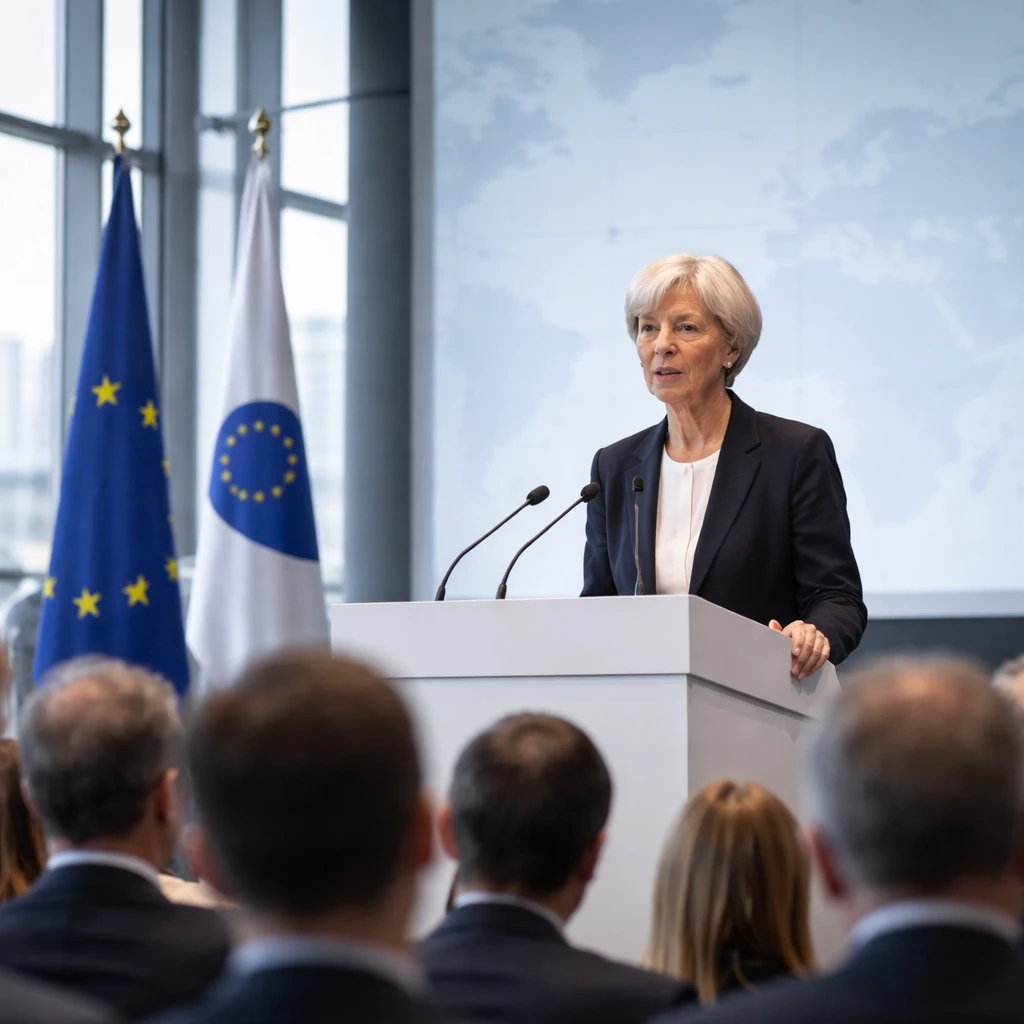
European Central Bank President Christine Lagarde said on Wednesday the bank is prepared to increase interest rates if a projected uptick in euro zone inflation turns out to be more than transitory.
Delivering remarks at "The ECB and Its Watchers" conference in Frankfurt, Lagarde said the central bank could justify a modest policy adjustment in the event of a pronounced but not long-lasting inflation overshoot.
"If the shock gives rise to a large, though not-too-persistent, overshoot of our [inflation] target, some measured adjustment of policy could be warranted," Lagarde said.
Lagarde added that neglecting to respond to an overshoot could create a communication problem, with the public potentially struggling to reconcile an unchanged policy stance with elevated inflation outcomes. She did not set out a timetable or explicit criteria that would trigger a rate increase.
The ECB held interest rates steady at its most recent monetary policy meeting. At that gathering the bank published a projection that euro zone inflation would average 2.6% in 2026.
Prior to the onset of the Iran conflict in late February, inflation in the euro zone had slipped below the ECB's 2% target. In February, the measure rose to 1.9%.
Lagarde and the ECB pointed to the war and Tehran's near-total blockade of the Strait of Hormuz as drivers of higher global oil and gas prices, which have in turn complicated inflation forecasts for Europe.
The bank set out a range of scenarios for inflation. In a more adverse path, it warned inflation could reach 4% this year. In a severe base case that assumes a stronger, more persistent energy price shock and further damage to Gulf energy infrastructure, inflation could peak above 6% early next year.
"If we expect inflation to deviate significantly and persistently from target, the response must be appropriately forceful or persistent," Lagarde said on Wednesday.
Separately, ECB chief economist Philip Lane said the bank will keep a close eye on businesses' expectations for future price increases and on wages for newly hired workers, identifying these as key indicators for the inflation outlook.
The comments underscore the ECB's stance that, while it currently maintains its policy settings, it remains ready to pivot if energy-driven inflation shocks result in a material overshoot of its target. Lagarde's remarks left the timing and specific triggers for a rate move intentionally unspecified, reflecting a data-dependent approach as risks to the outlook evolve.
Summary
The ECB signalled readiness to raise interest rates if a projected rise in euro zone inflation proves larger than temporary. Lagarde warned in Frankfurt that ignoring a clear overshoot could create communication issues, while the bank's forecasts include scenarios in which inflation reaches 4% this year or, in a severe case, exceeds 6% early next year. The ECB kept rates unchanged at its last meeting and will monitor firms' price expectations and wages for new hires as part of its assessment.