
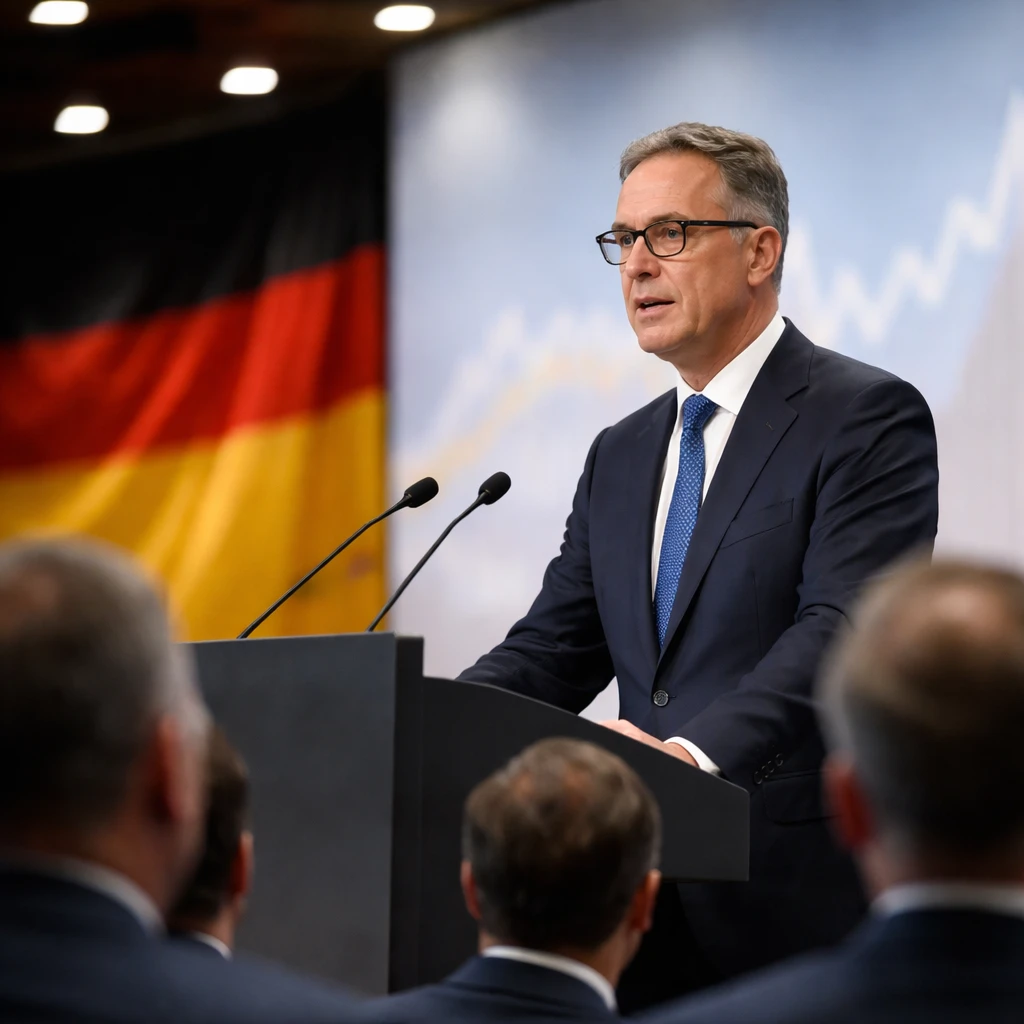
DARMSTADT, Germany - The European Central Bank is keeping a close watch on mounting inflationary risks linked to the Iran war and is prepared to act should rising energy costs feed into broader price pressures, Bundesbank President and ECB Governing Council member Joachim Nagel said on Friday in Darmstadt.
Nagel acknowledged that gauging the medium-term consequences of the conflict for inflation is challenging, but he underlined that policymakers are ready to respond if the situation warrants intervention. "The Governing Council is aware of the increasing risks to price stability and is highly vigilant," Nagel said. "We’ll do whatever is necessary to ensure that the energy-driven rise in prices doesn’t spread and become entrenched."
Coming off last week’s decision to leave interest rates unchanged, Nagel has repeatedly signalled that a rate increase at the ECB's June meeting is likely unless the inflation outlook improves substantially. He has voiced that conditionality several times, reflecting a readiness among some policymakers to tighten further if inflationary pressures persist. Other members have adopted a more cautious posture, resulting in differing views within the Governing Council.
Executive Board member Isabel Schnabel added to the chorus of concern on Thursday, saying the ECB will need to raise borrowing costs if the Iran conflict leaves a more lasting imprint on inflation. Schnabel noted that the prospect of second-round effects that could threaten medium-term price stability has risen in recent weeks.
On the domestic front, Nagel pointed to subdued growth prospects for Germany as an additional policy concern. He said Bundesbank analysts now estimate potential annual growth of roughly 0.4% over the coming years, a projection he described as a warning signal for policymakers.
To buttress long-term prosperity, Nagel urged reforms across several fronts, calling for measures to strengthen the labour force, improve the investment climate, and expand support for innovation. He framed these steps as necessary to secure the economic model over the longer horizon.
The ECB’s posture remains data-dependent: officials are monitoring how developments in energy markets related to the Iran conflict evolve, and they have signalled readiness to adjust monetary policy to prevent temporary energy shocks from becoming entrenched inflation. The June meeting is likely to be shaped by whether incoming data reduces or reinforces the current upside risks to price stability.