
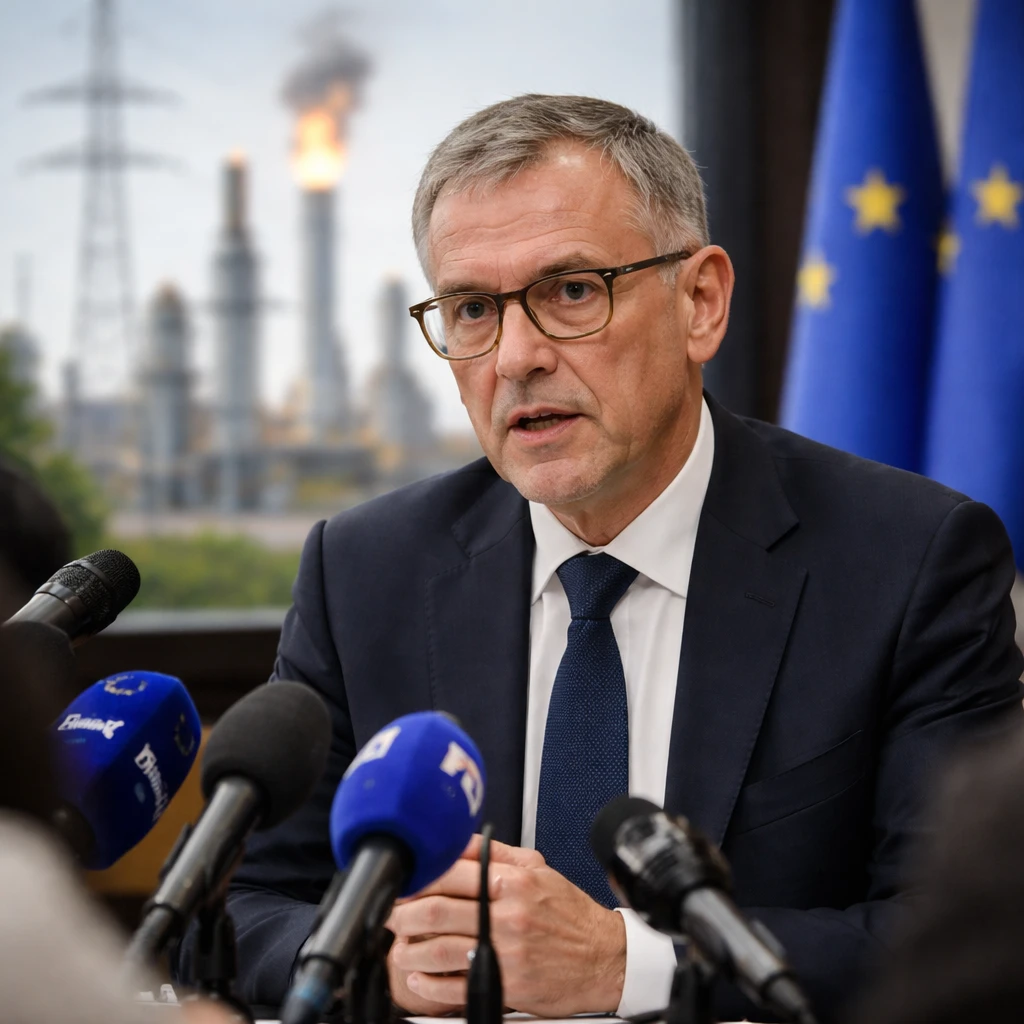
European Central Bank Governing Council member Boris Vujcic said on Tuesday that the rise in inflation expectations after the outbreak of the Iran war had been anticipated by the central bank.
Speaking to reporters in Zagreb, the Croatian official said: "This is what we have expected, what we have said - that inflation is certainly going to rise in connection to events in Iran."
Vujcic emphasized that a lengthier conflict or greater damage to energy infrastructure would likely push energy prices higher, a dynamic that would translate into broader inflationary pressure.
Officials at the ECB are reviewing price outlooks from consumers, firms and investors as part of their assessment of how to respond to rising energy costs. Those energy costs were a driver of the sharpest increase in euro-area inflation since 2022 in March, according to the central bank's assessment.
Some policymakers within the ECB have signaled that an interest rate increase could be necessary as soon as next month. When asked about the probability of a rate rise at the next policy meeting, Vujcic declined to offer a view on its likelihood.
He said: "Nothing is certain, there will be a lot of data and news by the time of our meeting in April." The comment underscored that upcoming indicators and developments will shape the council's decision-making process.
Context and implications
Vujcic's remarks underline that the ECB had factored in geopolitical risks tied to the Iran conflict when assessing inflation expectations. The central bank is actively monitoring how shifts in energy prices could ripple through consumer and business price expectations and financial market pricing.
Key areas under scrutiny include:
- Price outlooks from consumers, firms and investors used by ECB officials to gauge inflation trajectories.
- Energy-price developments and any escalation of damage to energy infrastructure that could heighten inflationary pressures.
- Incoming economic data and news flow ahead of the ECB's April meeting, which will inform policy deliberations.
Vujcic's public remarks reiterate the central bank's stance that responses to recent inflation movements will remain conditional on evolving data and developments rather than pre-committed actions.