
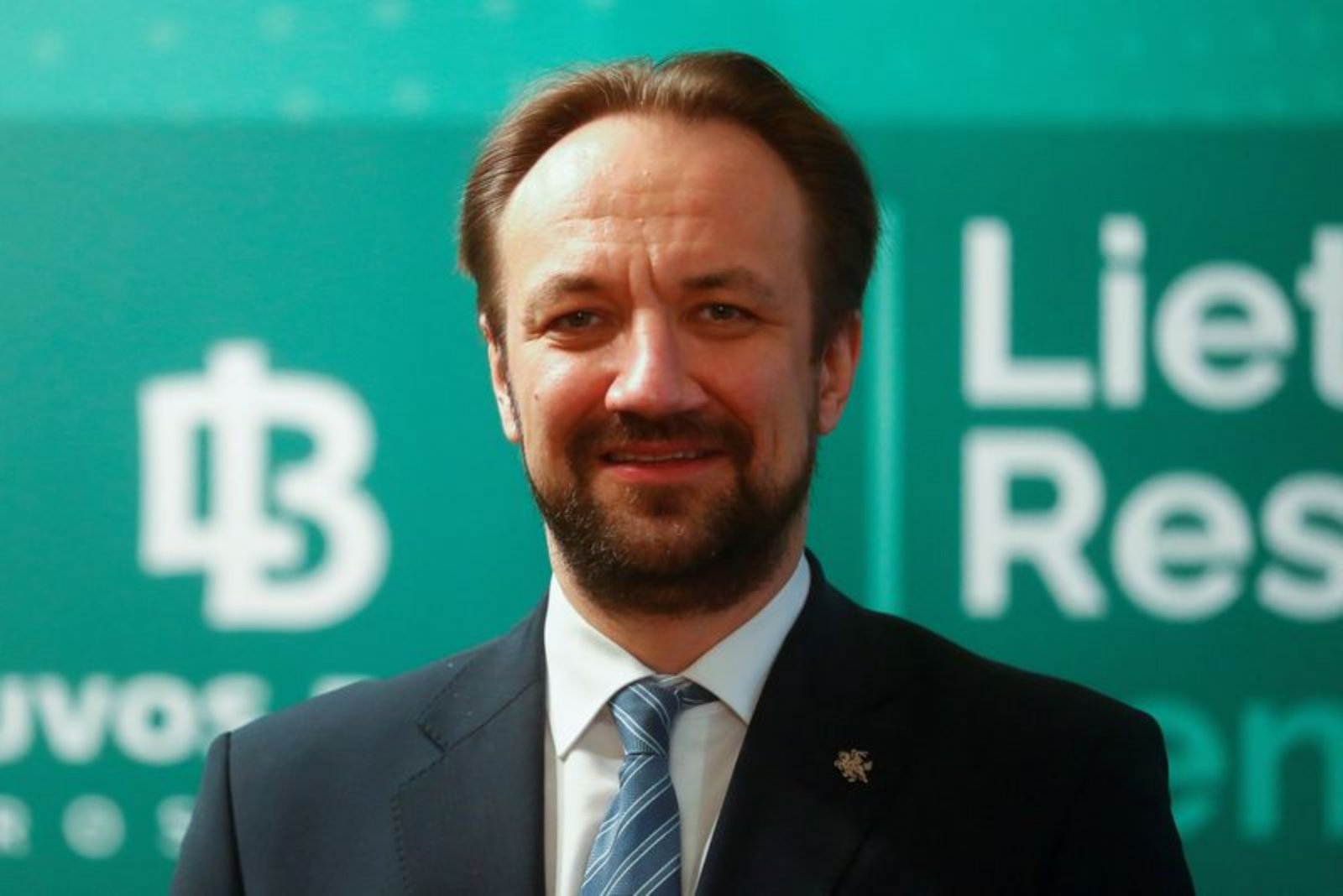
European Central Bank policy is suited to current conditions, and the euro zone economy has adapted reasonably well to recent volatility, ECB policymaker Gediminas Simkus said in an interview. Still, Simkus warned, the central bank must be ready for fresh shocks - potentially including military threats originating to the east - that could undermine the favourable configuration of inflation, growth and interest rates.
Simkus highlighted the ECB’s notable achievement last year in bringing inflation back to target, a feat he described as remarkable given an exceptionally uncertain backdrop. That uncertainty, he said, included U.S. tariffs, hostilities on the European Union’s eastern border, the dumping of Chinese goods and steep rises in food prices - all factors that kept the policy environment unpredictable.
Political turbulence, Simkus argued, has been a persistent feature of the past several years. He traces this volatility to the onset of the pandemic in 2020 and says it now extends to the geopolitical disruption stemming from Russia’s invasion of Ukraine. That ongoing instability, he cautioned, could easily upset what he called the central bank’s "good place" - namely inflation at target, growth running at potential and interest rates standing close to neutral.
On trade and external policy influences, Simkus noted that developments in the United States affect the euro area largely through trade channels. "We talk quite a bit about the U.S. but their policies involve us mostly on the trade front," he said. By contrast, the East presents a risk of a different nature - "a threat of military aggression," he warned.
Simkus pointed to the particular sensitivities of Lithuania and the other Baltic states - Estonia and Latvia - which, he said, have long voiced concerns about potential Russian aggression. Those concerns encompass cyber attacks, disinformation campaigns and incursions by drones and fighter jets, creating a security environment that can spill over into economic vulnerabilities.
Against that backdrop, Simkus urged the ECB to ensure that essential infrastructure remains robust. He singled out cash distribution and payment systems as elements that must be resilient to geopolitical shocks. "It’s obvious that if you face enhanced military risk, cash is something that people might be striving for, and you need to be very efficient," he said, arguing for preparedness on the operational side as well as in monetary policy.
He also identified climate change as another area where the bank should make sure the financial system is prepared, noting the importance of ensuring banks are ready to face climate-related risks.
Near-term policy outlook
Looking to the immediate policy horizon, Simkus described the ECB’s task as straightforward and said he expected policy to remain on hold at the next meeting on February 4, given that modest fluctuations in inflation around 2% are to be expected. Beyond that near-term outlook, however, he warned, there is far less certainty.
"I fully believe there is an equal chance that our next move, whenever it comes, is either an increase or a cut in rates," Simkus said, a formulation that implicitly pushed back on views expressed by other policymakers who have argued for a possible hike. Financial markets, he noted, currently assume no rate change this year but price in a series of increases next year on the assumption that Germany’s planned spending will revive activity and lift growth across the euro zone.
Simkus cautioned against offering guidance far beyond the immediate future. "The lesson of the past is that we cannot commit to any policy path or to a promise," he said. "We need to be open and accept that the environment is volatile and shocks are coming."
Data-driven restraint and trend recognition
While rising volatility could pressure the ECB to react swiftly, Simkus said policymakers must avoid knee-jerk responses. He argued that the economy itself has become less reactive to shocks and that forecasters frequently overstate risks.
"The key is not overreacting to every single change in data. We need to spot trends and the major forces shaping the economy," he said, emphasizing the importance of distinguishing noise from durable shifts.
In particular, Simkus noted that trade frictions such as tariffs tend to exert a smaller and more indirect effect on inflation, first denting growth and only gradually altering price dynamics. He said he will therefore watch economic activity closely to judge whether the ECB needs to change course. "These shocks impact growth more immediately while the effect on inflation takes time," he added.
In sum, Simkus framed the ECB’s challenge as twofold: sustain appropriate monetary policy today while strengthening the resilience of payments and banking systems against geopolitical and climate-related shocks that could disrupt the current equilibrium.