
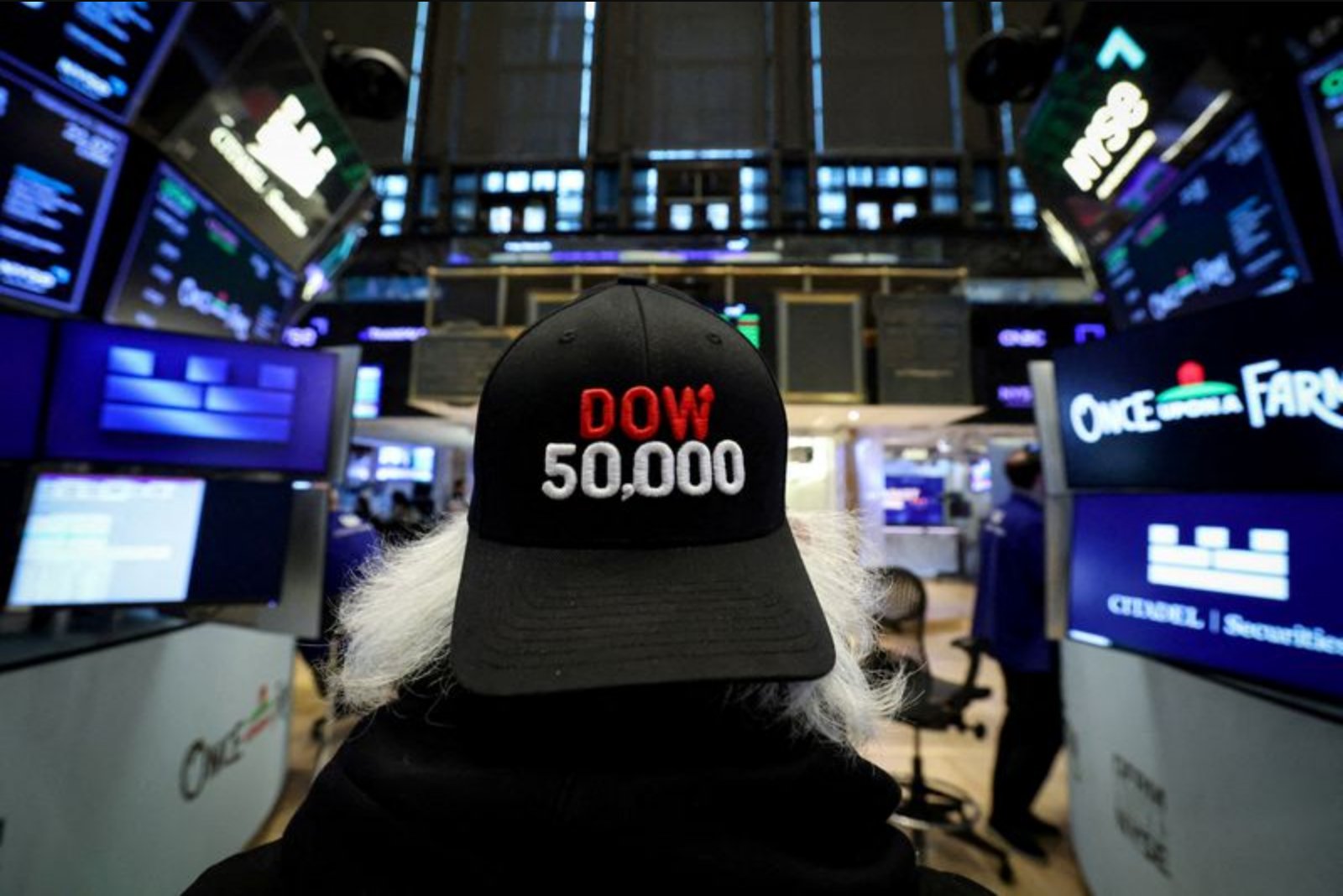
The Dow Jones Industrial Average declined 1.7% on Friday, cementing a correction after falling 10% from its record close on February 10. The pullback occurred during a broad selloff on Wall Street prompted by renewed uncertainty over the economic effects of the U.S. and Israeli war with Iran.
The recent weakness represents the Dow's steepest run of losses since April 2025, when markets were roiled after U.S. President Donald Trump announced a "Liberation Day" global tariff initiative that sent global markets into turmoil. In the latest stretch of volatility, the tech-heavy Nasdaq confirmed it has entered a correction as well - measured from its record close on October 29 - while the S&P 500 sits about 9% below its record close on January 27.
Though many institutional funds do not benchmark to the Dow, the 30-stock price-weighted index remains widely recognized among Main Street investors. Its recent decline is indicative of a broader deterioration in investor sentiment as market participants reassess risk amid the conflict.
Global financial markets have tumbled and oil prices have jumped since the United States and Israel launched a war against Iran on February 28. The Dow has lost more than 7% since the attacks began, a slide that has compounded worries about economic growth and inflation.
Soaring oil prices have heightened concerns that inflation will reaccelerate. That shift in inflation expectations is reflected in trading behavior: according to CME's FedWatch tool, traders now see it as more likely the Federal Reserve will raise interest rates by year-end than cut them. The evolving outlook on monetary policy has been a material factor for investors weighing valuations and risk across asset classes.
On Friday, a 2.4% drop in shares of Goldman Sachs Group exerted more downward pressure on the Dow than any other component. The individual-stock moves within the index have amplified the headline reading, underscoring how component-level declines feed into the price-weighted measure.
Market participants are confronting a narrowing set of possible scenarios. Some investors are asking whether the current downturn will prove to be a relatively brief pullback, similar to the rebound that followed the 2025 selloff, while others are concerned it could mark the beginning of a more prolonged risk-off period tied to the war. The available market signals reflect that uncertainty rather than resolving it.
For now, the trajectory of oil prices, the path of inflation, and evolving expectations for Federal Reserve action are central inputs to market pricing. With major indexes already in correction territory or nearing it, the interplay between geopolitical developments and monetary policy expectations will likely remain a focal point for investors.