
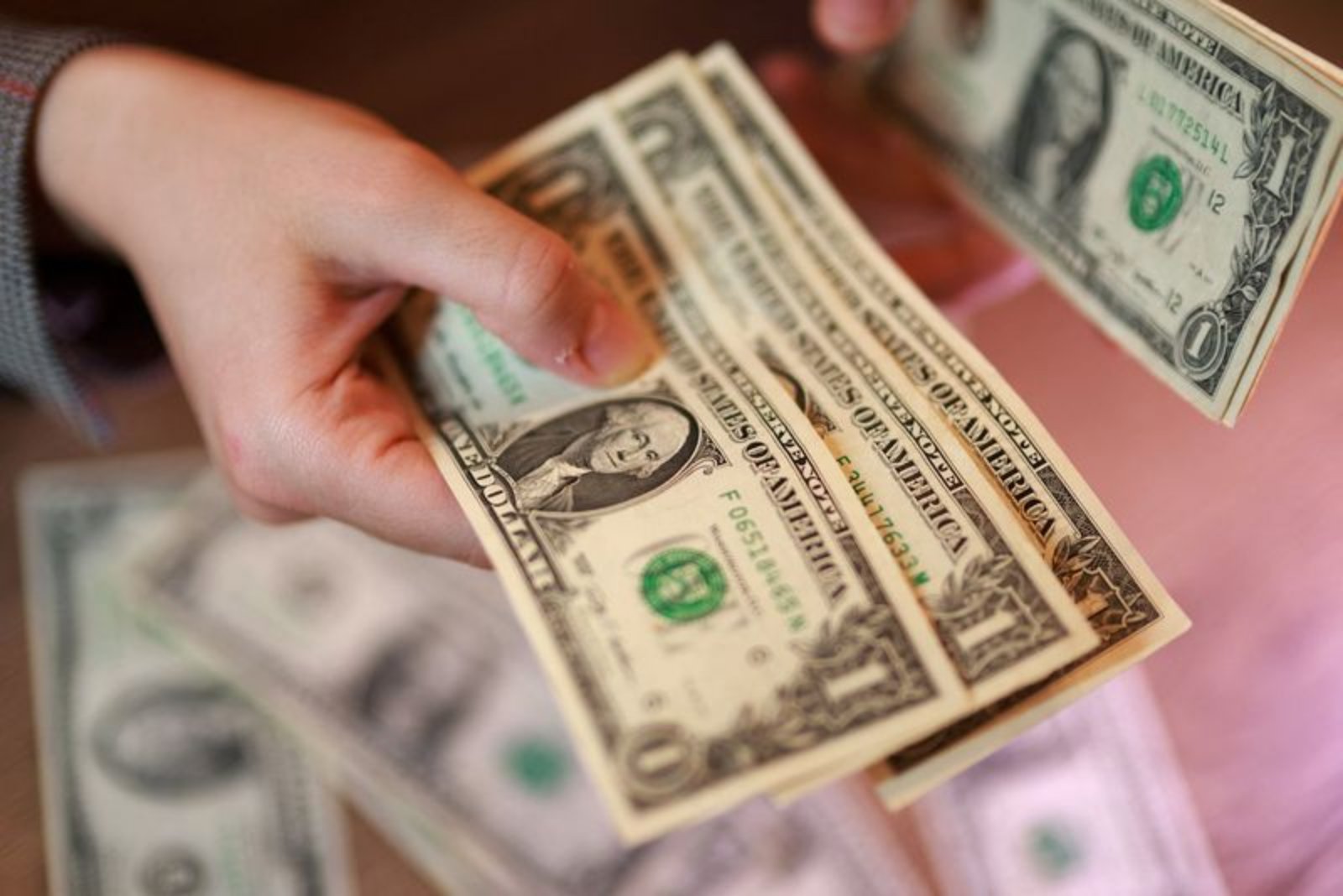
The U.S. dollar's modest advance in the weeks since the U.S.-Israeli war on Iran began a little over a month ago looks set to be temporary, according to a poll of nearly 70 foreign-exchange strategists carried out March 27-April 1. While the currency has gained ground against a basket of major peers, strategists say the move was small and driven largely by technical forces rather than a renewed, broad-based safe-haven bid.
Several indicators that typically reinforce demand for safe assets have not behaved in line with a sustained dollar rally. U.S. Treasury yields are notably higher and gold is down by more than 10% since the conflict began, while the dollar itself has risen by only about 2% against major currencies. Analysts said much of that increase reflected short-covering from previously deep net-short positions rather than fresh long positioning.
Analysts cited a number of factors that have weakened the dollar's appeal. Ongoing turmoil around U.S. tariff policy and lingering concerns about the independence of the Federal Reserve continue to put pressure on the currency. In addition, a rising risk premium - the extra compensation investors demand for the prospect of higher inflation - has removed market expectations for Federal Reserve interest rate cuts this year and broadly weighed on risk-sensitive assets.
Market participants have also reacted strongly to statements and actions from U.S. President Donald Trump, according to strategists, with swings between potential escalation and de-escalation in the conflict producing spikes in volatility across asset classes. Those oscillations have, at times, driven near-term flows into the dollar, but strategists note those moves lack depth.
Poll projections for the euro
Medians from the poll showed the euro holding near its current $1.16 level at the end of April and again at the end of June. That baseline view has the euro strengthening to about $1.18 in six months and to $1.20 in a year, implying incremental dollar weakness over the medium term if those medians hold.
Steven Englander, global head of G10 FX research at Standard Chartered, said many of the surprise policy moves by the Trump administration have a direct impact but that the indirect effect tends to be an increase in the risk premium on U.S. assets.
"For a lot of the surprise policy moves by the Trump administration, there’s a direct impact, but the indirect impact has almost always been to increase the risk premium on U.S. assets by increasing the range of uncertainty about the sets of policy reversals he’s willing to pull," he said. "But I don’t see much of the recent dollar-buying as enthusiastic. What strikes me is whenever there is a hope they’ll come to a resolution, you see the dollar sell off very quickly. As soon as things normalize and say, oil goes back below $90, euro-dollar would be above $1.18 before you could snap your fingers, which might be true if it happened tomorrow."
Oil prices provide a clear example of how market dynamics have affected currency flows. Brent crude eased from an early-March peak of $119.50 - roughly 65% above pre-war levels - to about $104 a barrel. Despite the pullback from the peak, oil remains more than 40% higher than before the conflict, and stock markets rallied on Wednesday.
Derek Halpenny, MUFG’s head of global markets research EMEA, noted that the scale of dollar appreciation to date is smaller than some cross-asset moves might have suggested.
"You’d have expected to see a 4-5% strengthening of the dollar based on a 60-70% jump in crude oil prices alone. But that’s not what we’ve had so far, it’s been far more modest," he said. "The safe-haven status of the dollar has been undermined to a degree."
Higher energy costs are also expected to weigh on U.S. growth prospects, potentially limiting any additional upward pressure on the dollar. Analysts warn that elevated oil prices could further slow an already-softening U.S. economy and amplify pressures on households.
Erik Nelson, head of G10 FX strategy at Wells Fargo, outlined two principal reasons for a bearish dollar stance.
"We’re bearish on the dollar for a couple of reasons. One, the dollar’s trading rich versus its fair value and the very sharp and sudden shift toward dollar-longs now looks pretty stretched," he said. "The other is this notion the U.S. is far more immune to the crisis than Europe or Japan or others. While that may be true in terms of energy imports, there are still going to be massive ripple effects in the U.S. from higher energy prices. Add to that an already-weak labor market backdrop and this is only going to exacerbate real income issues for consumers."
Overall, the strategists polled conveyed a view that the recent uptick in the dollar is shallow and likely reversible as market conditions normalize, energy prices fluctuate and uncertainty about U.S. policy developments persists. The combination of a stretched positioning in dollar-long trades, higher Treasury yields, sagging gold and potential economic pain from elevated energy prices points to limited upside for the dollar from current levels, according to the survey respondents.
Summary
A poll of nearly 70 FX strategists taken March 27-April 1 finds the U.S. dollar's modest gains since the U.S.-Israeli war on Iran began are likely to fade as its safe-haven appeal weakens. Higher Treasury yields, a greater risk premium, a drop in gold and shifting oil prices all contribute to a view that the dollar's advance is shallow and vulnerable to reversal.